




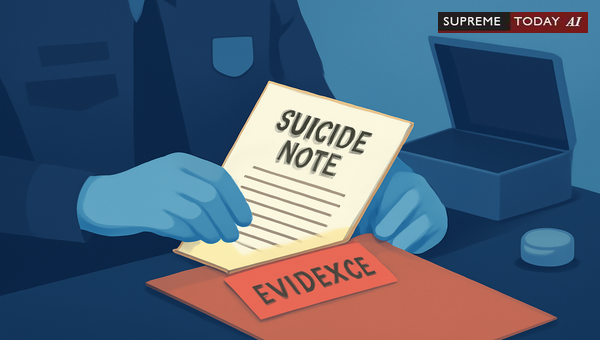
Proper Seizure of Suicide Note & Diary by Police: A Step-by-Step Guide
In sensitive criminal investigations, such as those involving suicides, the proper handling of evidence like a diary containing a suicide note can make or break a case. Mishandling can lead to doubts about authenticity, compromising the and potentially resulting in acquittals or overturned convictions. If an investigating officer is seizing a diary including a suicide note from the place of occurrence, how should it be done? This blog explores the established protocols, drawing from judicial precedents and legal guidelines to ensure .
Understanding the Legal Imperative for Proper Seizure
The seizure of sensitive items like diaries and suicide notes must follow strict protocols to preserve their value in court. Courts emphasize that failure to seal and document properly raises serious questions about evidence reliability, especially in forensic or sensitive matters. 2025 0 Supreme(SC) 1786
As highlighted in key rulings, the evidence must be sealed at the time of seizure to prevent tampering and to preserve its evidentiary value. 2025 0 Supreme(SC) 1786 This is crucial in suicide cases, where notes may provide insights into intent or , but any procedural lapse can undermine the prosecution's case.
Step-by-Step Procedure for Seizing a Diary with Suicide Note
Investigating officers typically adhere to guidelines under the , particularly , supplemented by forensic best practices. Here's a breakdown:
1. Secure the Scene and Prepare for Seizure
- Isolate the place of occurrence to prevent contamination.
- Conduct a preliminary observation, possibly preparing an or in the presence of witnesses. For instance, in one case, the officer prepared such documents at the scene with witnesses present. 2019 0 Supreme(Mad) 593
2. Document the Find
- Note the exact location, condition, and position of the diary and note (e.g., on the floor, in a drawer).
- Take photographs of the item in situ before touching it. Admissions of not taking photos have been noted as procedural lapses. 2025 0 Supreme(Gau) 2168
3. Seizure in Presence of Witnesses ()
- Involve independent (typically two) during seizure.
- Prepare a or detailing the item, case number, date, time, and location.
- Have witnesses, the seizure officer, and if applicable, the accused sign the memo.
Related precedents stress: All the samples must be drawn and sealed in the presence of the accused, witnesses and seizing officer, and all of them shall be required to put their signatures on each sample. The official seal of the seizing officer should also be affixed. 2023 0 Supreme(J&K) 593 Though from an NDPS context, this mirrors general evidence handling for sensitive items like suicide notes.
4. Sealing the Evidence
- Place the diary/note in a tamper-proof packet or envelope.
- Seal it immediately with the officer's seal, ensuring case details (FIR number, date) are marked on the outer packet.
- Obtain signatures from , the seizure officer, and others on the seal and packet.
The legal documents emphasize: Placing the articles in packets that bear case details. Obtaining signatures of , the accused, and the seizure officer on the packets. 2025 0 Supreme(SC) 1786 Proper sealing prevents tampering, as courts have ruled that absence thereof can cast doubt on the integrity of the evidence. 2025 0 Supreme(SC) 1786
5. Storage and Transmission
- Deposit sealed packets in the (property room) or safe custody.
- Maintain a form tracking handling until forensic analysis.
- Transmit to promptly; delays, like receiving samples post-occurrence, invite scrutiny. 2023 0 Supreme(J&K) 593
The Critical Role of
ensures evidence remains unaltered from seizure to trial. Lapses, such as not indicating sealing manner or improper storage, are fatal. Courts have held: The investigating officer's failure to indicate the manner of sealing and storage raises questions about the , which is critical in forensic and sensitive cases. 2025 0 Supreme(SC) 1786
In various cases, procedural flaws led to acquittals:- Failure to produce seized contraband or verify inventory preparer created reasonable doubt. 2022 Supreme(Online)(KER) 50022- Not seizing related items (e.g., matchsticks) or verifying ownership highlighted gaps. 2025 0 Supreme(Cal) 563- In suicide probes, mishandled notes fueled concoction claims, prompting transfers. 2013 Supreme(Online)(KER) 9364
Even in non-suicide contexts, like NDPS seizures, mixing samples without prejudice proof or minor weight discrepancies don't vitiate if chain is intact—but strict compliance is key. 2023 0 Supreme(Cal) 219
Judicial Perspectives on Evidence Handling
Courts consistently demand adherence:- Forensic Sensitivity: Suicide notes, like biological samples, require immediate sealing. Lack thereof affects admissibility. 2025 0 Supreme(SC) 1786- Witness Reliability: Hostile witnesses or absent corroboration weakens cases. 2022 Supreme(Online)(KER) 50022- No Exceptions Without Justification: While exigent circumstances may allow temporary seizure, documentation must follow. Generally, no shortcuts for sensitive evidence.
In a dowry death probe involving a suicide note seized from an accused, courts scrutinized timing and context but upheld protocols. 2020 0 Supreme(Chh) 217 Similarly, in cases, notes' authenticity hinged on proper recovery. 2018 0 Supreme(Mad) 2227
Common Pitfalls and How to Avoid Them
- No Sealing: Leads to tampering doubts. Always seal on-site.
- Lack of Witnesses: Use independents; family or officials alone insufficient.
- Delayed Dispatch: Prompt FSL forwarding prevents degradation claims.
- Incomplete Memos: Include all details; omissions fatal, as in vehicle seizure lapses. 2025 0 Supreme(Gau) 2168
Training reinforces: Officers must avoid being informant, seizer, and investigator simultaneously. 2023 0 Supreme(Gau) 1116
Recommendations for Investigating Officers and Courts
- Strict Adherence: Follow sealing, witnessing, and protocols religiously.
- Training: Regular sessions on evidence handling, especially suicide/forensic cases.
- Judicial Scrutiny: Courts should probe rigorously for sensitive evidence.
As one ruling notes, procedural mandates ensure fair trials; non-compliance risks acquittal. 2023 0 Supreme(J&K) 593
Key Takeaways
Properly seizing a diary with a suicide note safeguards justice:- Seal immediately with details and signatures.- Document via and photos.- Maintain unbroken chain to FSL.
While these guidelines are drawn from precedents, they represent general practices. Specific cases may vary by jurisdiction or circumstances—consult legal experts for advice tailored to your situation. This is not legal advice but an overview to promote best practices in investigations.
By prioritizing protocol, officers uphold , ensuring courts focus on merits rather than procedure.
#SuicideNoteSeizure #EvidenceChain #PoliceProcedure












