


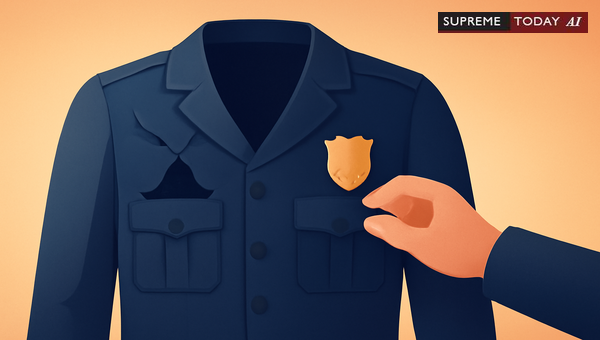
Damage to Police Uniform: Which Offence is Attracted?
In high-tension encounters with law enforcement, incidents like damaging a police uniform can lead to serious legal consequences. But what offence is actually attracted? The question Damage to Police Uniform Which Offence Attracted often arises in such scenarios, especially when key factors like the officer's attire come into play. This blog post breaks down the relevant laws, primarily under the and (IPC), drawing from judicial precedents to provide clarity.
Important Disclaimer: This article offers general information based on legal analyses and case law. It is not a substitute for professional legal advice. Consult a qualified lawyer for advice tailored to your situation.
Understanding the Legal Framework
Damaging a police uniform typically intersects with laws protecting and police functions. Courts scrutinize intent, knowledge of the officer's identity, and the context of the incident. If the officer was not in uniform, it significantly impacts the applicability of charges, as the accused may lack the requisite knowledge or intent. 2021 0 Supreme(Ker) 876
Key sections include:- : Targets interference with police duties, such as threats, obstruction, or assault to prevent duty discharge.- : Covers assault or on a public servant executing duties, aimed at deterring them.- : Addresses intentional insults intended to provoke a .
These provisions form the backbone of prosecutions in such cases, but their application hinges on specifics. 2021 0 Supreme(Bom) 1023 2020 0 Supreme(Kar) 1915
: Obstruction of Police Duties
This section penalizes actions that obstruct police officers from performing duties. However, a critical factor is the accused's awareness that the individual is a police officer. In one analysis, since the officer was not in uniform, there was no knowledge or intention on the part of the accused to prevent the officer from performing his duties. Thus, no offence under Section 117(e) was established. 2021 0 Supreme(Ker) 876
Case law reinforces this. In a matter, the court noted: In spite of the appealing arguments advanced by the learned counsel for the petitioner, it not possible to hold that the offence under is not attracted, since the question whether the petitioner had the to prevent the Officer from... The determination of intent must be evaluated through trial evidence, with compounding options available. 2025 Supreme(Online)(Ker) 56956
Key Takeaway: Absence of uniform often negates the offence, as it eliminates proof of . 2021 0 Supreme(Ker) 876
: Assault on Public Servant
Section 353 punishes whoever assaults or uses against a public servant in execution of duty, with intent to prevent or deter them. Essential elements include:1. The victim is a public servant on duty.2. Assault or force is used.3. Intent to deter duty performance.
The lack of uniform complicates this: If the officer was not in uniform, it complicates the application of this section, as the intent to deter may not be present. 2021 0 Supreme(Bom) 1023 2020 0 Supreme(Kar) 1915
Judicial scrutiny is vital. For instance, in a case involving alleged force against police, the witness stated: not even a button of uniform of any police officials was dislodged. If any force had been used or any of the police officials had been assaulted... then the uniform of the some of the police officials might have been torn. This undermined the prosecution's story of assault. 2019 0 Supreme(P&H) 734
: Intentional Insult Provoking
If the damage involves insults or provocative acts, Section 504 may apply. It requires:- Intentional insult.- Aimed at provoking a .
If the damage to the uniform involved insults or provocation, this section could be applicable. However, specifics must be examined. 2021 0 Supreme(Bom) 1023
This section offers a fallback when direct obstruction or assault charges falter due to evidentiary gaps.
Insights from Related Case Law
Broader precedents highlight police-related liabilities and defenses:
Uniform Integrity as Evidence: Courts often look for physical damage to uniforms to corroborate assault claims. The absence of even minor tears, like a dislodged button, can dismantle prosecution narratives. 2019 0 Supreme(P&H) 734
Police Inaction and State Liability: In cases of property damage during riots or attacks, courts have held states accountable for . For example: the damage was caused on account of on the part of the police. This underscores the duty to protect, inversely relevant to accused defenses. 2007 0 Supreme(Mad) 962
Compensation Principles: While not directly on point, rulings on riot damages emphasize fair assessment: Compensation awarded should not be inadequate... There can be no exact uniform rule for measuring the damage. 2005 0 Supreme(Del) 591
Jurisdictional Nuances: Offences involving may require special investigations, as seen in corruption cases where local police lacked jurisdiction. 2016 0 Supreme(MP) 1079
These cases illustrate how courts weigh evidence holistically, often favoring acquittals or quashments on technical grounds like intent or jurisdiction.
Summary of Findings
- No Offence Under Section 117(e): Lack of uniform means no knowledge of police identity, negating intent. 2021 0 Supreme(Ker) 876
- Potential Section 353 Application: Viable if assault during duty execution, but uniform absence weakens intent proof. 2021 0 Supreme(Bom) 1023 2020 0 Supreme(Kar) 1915
- Section 504 Consideration: Relevant for provocative insults, pending incident details. 2021 0 Supreme(Bom) 1023
Recommendations for Defense Strategies
Facing such charges? Consider:- Emphasize Lack of Intent: Highlight no uniform to argue absence of knowledge. 2021 0 Supreme(Ker) 876- Demand Thorough Investigation: Push for details on context, insults, or provocations.- Explore Compounding: Available for Section 117(e) offences post-trial evidence review. 2025 Supreme(Online)(Ker) 56956- Prepare for Alternatives: Address Section 504 if provocation evidence emerges.
Further investigation into the incident is crucial for a robust legal strategy.
Conclusion and Key Takeaways
Damaging a police uniform does not automatically trigger severe charges; context, especially uniform presence, is pivotal. Sections 117(e), 353, and 504 IPC form the primary framework, but defenses rooted in lack of intent often prevail. 2021 0 Supreme(Ker) 876 2021 0 Supreme(Bom) 1023
Key Takeaways:- Uniform absence typically bars Section 117(e) and weakens Section 353.- Scrutinize evidence like uniform damage for credibility.- Always seek professional counsel—outcomes depend on case specifics.
Stay informed, respect law enforcement, and navigate legal waters wisely. For more on Indian criminal law, explore our blog.
#PoliceUniformDamage, #IPCOffences, #IndianLegalCases















