


Can DNA Test Prove Paternity of a Pregnant Woman in India?
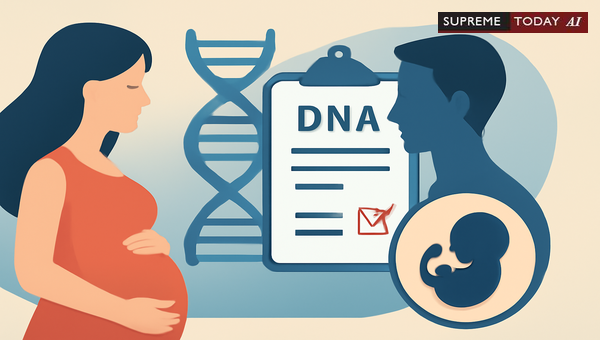
In the realm of family law, few issues are as emotionally charged and legally intricate as paternity disputes. A common question arises: Whether DNA Test can be Done for Paternity of a Pregnant Lady? This query often surfaces in matrimonial disputes, divorce proceedings, or allegations of infidelity, where establishing the biological father of an unborn child becomes pivotal. While scientific advancements make prenatal DNA testing feasible, Indian courts approach such requests with caution, balancing scientific accuracy against deeply rooted legal presumptions, privacy rights, and the welfare of the mother and fetus.
This blog post delves into the legal framework governing DNA paternity tests for pregnant women in India, drawing from judicial precedents and statutory provisions. We'll examine when courts may—or may not—order such tests, the procedural challenges involved, and key considerations for parties involved.
Legal Foundations: and Evidence Act
Under Indian law, paternity disputes are primarily governed by , which creates a strong . This section states that a child born during a valid marriage (or within 280 days after its dissolution) is conclusively presumed to be the legitimate child of the husband, unless is proven. This presumption is not easily rebutted and serves as a cornerstone in family matters. 2023 3 Supreme 418 2014 1 Supreme 27 2017 3 Supreme 385
Courts have repeatedly emphasized that DNA testing cannot be ordered routinely to dismantle this presumption. It requires an , where other evidence fails to resolve the dispute. As noted in judicial observations, DNA testing is permissible whenever such request is made in a matter where paternity of the child is in issue before the court. 2025 Supreme(Online)(J&K) 1353
Key Principles Guiding Court Orders
Indian judiciary applies several principles before directing a DNA test:
- : Tests are a last resort when traditional evidence is insufficient. 2010 6 Supreme 247 2015 3 Supreme 606
- and Privacy: Invasive procedures infringe on personal rights, especially for women. Courts discourage tests not directly relevant to core issues. 2022 0 Supreme(SC) 1640 2023 3 Supreme 418
- : Benefits must outweigh harms, including emotional distress and health risks. 2022 0 Supreme(SC) 1640
- Best Interests of the Child: Even for a fetus, welfare is paramount. Courts assess if the test serves the child's long-term good.
In one case, the court queried: Whether The Courts Have The Power To Order DNA Test On A Child To Determine Paternity? and further, Whether It Is In The Best Interests And Welfare Of Child C For The DNA Paternity Test To Be Ordered?
Feasibility of Prenatal DNA Testing
Scientifically, DNA testing for paternity during pregnancy is possible. It involves extracting fetal DNA through procedures like (after 15 weeks) or (CVS) (after 10 weeks). These methods collect cells from the placenta or amniotic fluid for comparison with the alleged father's DNA. Such tests boast over 99% accuracy and have been recognized in legal contexts. 2023 0 Supreme(Gau) 1519
However, these are invasive and carry risks, including miscarriage (0.5-1% for ), infection, or preterm labor. Courts weigh these against the dispute's necessity. 2023 6 Supreme 6 2023 0 Supreme(Gau) 1519
(NIPP), using maternal blood to isolate fetal DNA, are emerging globally but less common in India and still face legal scrutiny for reliability in court.
Court Stance on Ordering Tests for Pregnant Women
Directly addressing the question, it is highly unlikely for an Indian court to order a DNA test solely for the paternity of a pregnant woman. Here's why:
- Relevance to Pregnancy: Paternity does not directly impact the pregnancy itself; it's more pertinent post-birth in custody or maintenance disputes. 2023 6 Supreme 6
- Privacy and Autonomy Concerns: Forcing a pregnant woman undermines her rights and the fetus's. Courts prioritize avoiding harm. 2022 0 Supreme(SC) 1640
- Alternative Forums: Paternity can be addressed later via post-birth tests, which are simpler and less risky. In criminal cases like rape (under ), post-evidence DNA prayers are often deferred: Whether determination of paternity of the child is relevant or not through DNA test that can be decided in a different forum and not in this case. 2021 0 Supreme(All) 1327
Judgments reinforce caution. For instance, DNA test result is scientifically accurate and the same can be relied on to decide paternity under matrimonial laws, but refusal may draw only after evidence. 2022 0 Supreme(AP) 422 In family courts, Admittedly, to find out the paternity, DNA test is a scientific test and when the scientific test is available, the issue can be decided by such... 2019 0 Supreme(Guj) 602
Yet, courts have powers under (since ) for medical exams in criminal matters, and in civil cases if paternity is central. 2023 0 Supreme(Gau) 1519
Still, courts emphasize that DNA tests should not be ordered routinely or as a matter of course; they should be directed only when necessary. 2023 0 Supreme(Gau) 1519
Case Examples
- In divorce proceedings, courts may direct tests if denial of physical relations is alleged: prayer is made for DNA test of the children. 2019 0 Supreme(Guj) 602
- Refusal can lead to : if she refused to go for the DNA test... an can be drawn against her. Report in the DNA test will conclusively prove the paternity. 2019 0 Supreme(Mad) 2820
- Repeated applications may be dismissed if previously rejected. 2017 0 Supreme(Chh) 390
Integrating Broader Legal Perspectives
From additional sources:
- Civil and Family Cases: DNA is admissible but not speculative. 2024 0 Supreme(Ker) 654 2024 0 Supreme(Chh) 305 2023 0 Supreme(Ker) 440
- Conditions for Orders: Parties must lead prima facie evidence first; tests as last resort.
2024 0 Supreme(Mad) 914 2024 0 Supreme(All) 858
- Welfare Focus: Balances intrusion with resolution needs. 2024 0 Supreme(UK) 425
Prenatal testing is legally viable but rare, emphasizing child's best interests. 2023 0 Supreme(Gau) 1519
Conclusion and Key Takeaways
While prenatal DNA paternity testing is scientifically feasible in India, courts rarely order it for pregnant women due to the strong presumption under Section 112, privacy rights, procedural risks, and lack of . Decisions hinge on case-specific facts—paternity must be directly in issue, with insufficient alternative evidence.
Key Takeaways:- Consult a lawyer before seeking tests; courts require compelling grounds.- Post-birth testing is preferable and more common.- Refusal may invite adverse inferences but cannot force compliance.- Always prioritize welfare and .
This post provides general information based on judicial trends and is not legal advice. Laws evolve, and outcomes vary by facts. Seek personalized counsel from a qualified family law expert.
#DNAPaternityTest, #FamilyLawIndia, #PregnancyLaw















