


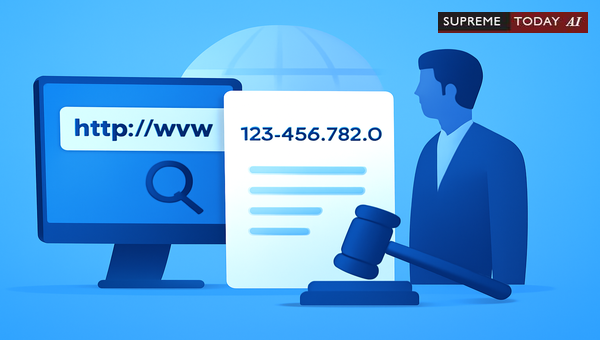
How to Get Opposite Party's IP & URL in Court Cases India
In today's digital age, online activities often become central to legal disputes, from defamation and cybercrimes to intellectual property theft. A common question arises: How can we get the IP URL address of the internet of the opposite party during case proceedings? Whether it's tracing anonymous posts, unauthorized streaming, or infringing content, obtaining Internet Protocol (IP) addresses and Uniform Resource Locators (URLs) is crucial for evidence. However, this isn't a DIY task—strict legal protocols under Indian law govern it to protect privacy and ensure due process.
This guide outlines the step-by-step process, drawing from judicial precedents and statutory provisions. Note: This is general information based on legal findings and should not be considered specific legal advice. Consult a qualified lawyer for your case.
Why IP Addresses and URLs Matter in Court Proceedings
IP addresses act like digital fingerprints, uniquely identifying devices on the internet, while URLs pinpoint specific web pages or content. Courts recognize their evidentiary value, especially in cases involving online harassment, copyright infringement, or piracy. For instance, in IPL broadcasting rights disputes, courts have ordered disclosures to curb rogue streaming sites
.
Without proper channels, accessing this data violates privacy laws like the (IT Act). Service providers and intermediaries won't disclose user data voluntarily due to under 2016 0 Supreme(Del) 4529.
The Legal Framework: Court Orders Are Essential
Main Legal Finding: To obtain the IP address or URL address of an opposite party during case proceedings in India, one must follow a formal legal process involving court orders directed at service providers, search engines, and online platforms 2015 0 Supreme(Del) 4387. This requires specific court directions for preservation and disclosure of digital evidence 2014 0 Supreme(Cal) 660.
Key statutes include:- IT Act, 2000 and : Mandate intermediaries to preserve data upon court order and disclose records.- : Allows courts to summon documents/evidence.- : Relevant for IP cases where block URLs/IPs 2025 Supreme(Online)(DEL) 470.
Courts can direct intermediaries to preserve all information and associated records relating to the offending content for investigation purposes 2015 0 Supreme(Del) 4387 2014 0 Supreme(Cal) 660.
Step-by-Step Process to Obtain IP and URL Data
Here's a summarized procedure based on judicial guidelines:
File a Formal Application/Petition: Approach the relevant court (civil, criminal, or cyber cell) with a detailed affidavit specifying the URL, suspected IP, account ID, or metadata. Highlight relevance to your case 2014 0 Supreme(Cal) 660.
Seek Court Order: Request directions to:
- Service providers (ISPs), search engines (Google), and platforms (social media) to disclose IP addresses, URLs, and subscriber details.
Preserve data for or as stipulated 2015 0 Supreme(Del) 4387. Law enforcement must furnish specific identifiers such as URL, IP address, account ID, and metadata 2014 0 Supreme(Cal) 660.
Court Issues Directions: Entities must comply within of written intimation, providing data like file name, Image URL, Web URL, Uniform Resource Locator, Account ID, Handle name, Internet Protocol Address X vs UNION OF INDIA AND ORS. - Delhi_Delhi_WP(CRL)-1082_2020 2021_DHC_1408.
Execution by Agencies: Police or investigators serve the order and collect records. In IPL cases, courts directed ISPs to block infringing sites and reveal details
.
Data Preservation and Proactive Measures: Orders often require pro-active monitoring by using automated tools to retain evidence 2015 0 Supreme(Del) 4387.
Real-World Examples from Case Law
IPL Piracy and Broadcasting Rights
In a high-profile IPL 2021 case, plaintiffs with exclusive rights sought injunctions against rogue websites streaming matches illegally. The court decreed blocking access and directed statutory authorities/ISPs to comply, emphasizing protection of IP rights
. This mirrors processes for obtaining URLs/IPs of pirates during proceedings.
Copyright Infringement and
in a cinematograph films case listed defendant domains/URLs with IPs in Schedule A and granted . Plaintiffs could implead mirror sites, with ISPs blocking access 2025 Supreme(Online)(DEL) 470. The details of the domain names and URL along with IP address of the defendant nos. 1 to 29, is attached as Schedule A 2025 Supreme(Online)(DEL) 470.
Domain Registrant Disclosure
Courts have ordered defendants to reveal the complete address and contact details of the Registrant of the domain like hmriworld.com, showing judicial power to unmask online actors 2024 Supreme(Online)(Del) 32796.
Intermediary Responsibilities
In MySpace cases, courts clarified intermediaries must remove content upon notice but need court orders for deeper disclosures. Once content was uploaded on the Internet, a unique address was generated called the Uniform Resource Locator (URL) 2016 0 Supreme(Del) 4529. Safe harbor applies absent actual knowledge 2016 0 Supreme(Del) 4529.
Exceptions, Limitations, and Challenges
- No Court Order, No Disclosure: Providers aren't obliged without judicial mandate due to privacy 2015 0 Supreme(Del) 4387.
- Anonymized Data: VPNs/masked IPs require advanced tracing via court-compelled logs.
- Timelines: 72-hour compliance, but delays occur in complex cases.
- Jurisdictional Issues: File where you reside (e.g., maintenance cases under ) 2023 0 Supreme(Cal) 72.
IP blocking methods like , and are used but circumventable 2019 0 Supreme(Del) 713.
Recommendations for Litigants
- Strengthen Your Petition: Cite IT Act Rules, attach screenshots/hashes/pixel matches
X vs UNION OF INDIA AND ORS.
. - Coordinate with Cyber Cell: They handle technical execution.
- Monitor Compliance: Track if intermediaries preserve data.
- Leverage Precedents: Reference IPL/copyright rulings for urgency.
Key Takeaways
Obtaining an opposite party's IP or URL demands a court order compelling disclosure from intermediaries—typically via formal application, judicial direction, and agency execution. Cases like IPL piracy highlight swift enforcement against online infringers
2015 0 Supreme(Del) 4387 2014 0 Supreme(Cal) 660.
While technology evolves, legal safeguards ensure balanced access. Stay proactive, document everything, and seek professional counsel to navigate this effectively. Digital evidence can turn the tide in your proceedings.
References:1. 2015 0 Supreme(Del) 4387: Court directions for preservation/disclosure.2. 2014 0 Supreme(Cal) 660: 72-hour compliance for IP/URL data.3.
: IPL rights enforcement.4. Others integrated as noted.
This post is for informational purposes only.
#DigitalEvidenceIndia, #CourtIPOrders, #LegalTechIndia















