


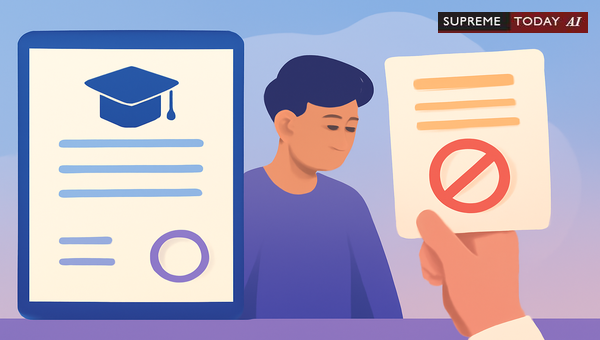
Can Colleges Withhold Study Certificates for Unpaid Fees?
Imagine completing your course or deciding to switch institutions, only to find your college refusing to hand over your original study certificates, transfer certificate, mark sheets, or degree because of pending fees. This frustrating scenario is all too common in India, leaving students stranded in their academic or professional pursuits. But is it legal? The short answer: No, generally not.
In this post, we explore the admissibility of study certificates—or more precisely, the illegality of withholding them—based on established Indian legal principles and court judgments. We'll break down why educational institutions cannot use original certificates as leverage for unpaid dues, highlight key rulings, and provide practical guidance. Note: This is general information based on precedents and not specific legal advice. Consult a lawyer for your situation.
The Legal Prohibition on Withholding Original Certificates
Indian courts, including the and various , have consistently ruled that educational institutions cannot lawfully withhold students' original certificates—such as transfer certificates, degree certificates, or mark sheets—on account of unpaid fees or other monetary claims. Certificates are not pledges or collateral for dues; they belong to the student as a matter of right.
This principle stems from the recognition that withholding documents is illegal, , and . Even if a student discontinues a course or skips years, institutions must release the originals promptly. For instance, in one landmark directive, the court ordered an institution to issue the transfer certificate and other originals without claiming further payment for unattended years, calling such withholding unjustified and illegal2009 0 Supreme(Mad) 5091.
Courts emphasize student rights to academic documents, holding that originals are not to be considered pledged or collateral. Refusal to return them as leverage violates principles of fairness and legality2024 Supreme(Online)(TEL) 4679.
Key Judicial Affirmations
- Multiple High Court Rulings: In cases involving medical colleges, courts have allowed against institutions not returning original academic qualification certificates to students who discontinued MBBS studies. Notably, judges clarified they express no opinion on fee recovery rights but firmly hold that withholding is impermissible 2024 0 Supreme(Telangana) 314 2025 0 Supreme(Telangana) 1915 2025 0 Supreme(Telangana) 989 2025 Supreme(Online)(Tel) 18832.
- Violation of Guidelines: Withholding amounts to blackmailing students, contravening () norms. One judgment noted institutions not returning certificates despite requests, labeling it a violation 2024 Supreme(Online)(TEL) 23027 2024 Supreme(Online)(Tel) 40484.
- Prompt Release Directives: Courts have ordered immediate return of certificates and degrees, even amid disputes 1989 0 Supreme(Kar) 376 2014 0 Supreme(Bom) 872 2014 0 Supreme(Bom) 859.
Exceptions, Limitations, and Common Scenarios
While institutions may pursue fees through legal channels like civil suits, internal policies do not justify withholding certificates. Courts have struck down attempts to retain originals for or illegal charges2020 0 Supreme(Telangana) 418.
Specific Contexts from Case Law
- Discontinued Courses: Even for full-course fees or bonds (e.g., Rs. 3 lakhs), colleges cannot retain originals. We are not expressing any opinion on the right of the 3rd respondent-College to recover amounts... but we hold that... 2024 0 Supreme(Telangana) 314.
- Government Orders Overruled: Provisions like mandating non-return of originals until completion were struck down 2025 Supreme(Online)(Tel) 18832.
- Post-Admission Issues: In cases, withholding transfer or 'No Dues' certificates for entrance exams was deemed
.
- Eligibility and Degrees: Delaying eligibility or degree certificates over resolved 'court cases' is devoid of logic and unjustified 2020 0 Supreme(Bom) 1127. Universities must issue mark-sheets/degrees to students permitted to appear for exams, regardless of penalties 2014 0 Supreme(Bom) 871.
Important Caveat on Fake Certificates: If certificates used for admission are proven fake (e.g., NSS or NIC participation fakes), admissions may be invalidated, but this doesn't retroactively affect completed exams or entitle withholding of legitimate documents 2024 0 Supreme(Telangana) 52. Courts protect completed studies once exams are passed.
Why This Matters: Impact on Students
Original certificates are essential for higher education, jobs, or further admissions. Withholding them creates a vicious cycle—students can't progress without them, yet can't pay fees without opportunities. Courts view this as , often directing immediate release and sometimes costs against institutions.
What Should Students Do? Practical Recommendations
If facing this issue:1. Send a : Demand immediate return, citing precedents like /High Court rulings 2009 0 Supreme(Mad) 5091 2024 Supreme(Online)(TEL) 4679.2. File a Writ Petition: routinely grant relief, as seen in MBBS discontinuation cases 2025 0 Supreme(Telangana) 1915 2024 Supreme(Online)(TEL) 23027.3. Reference Guidelines: Highlight violations to pressure compliance.4. Avoid Escalation: Courts allow separate fee recovery suits but prohibit certificate leverage.
Pro Tip: Document all communications and fees paid. Even disputed dues don't excuse withholding.
Conclusion and Key Takeaways
Under Indian law, withholding study certificates solely due to unpaid fees or disputes is illegal. Educational institutions must return originals promptly, as affirmed across judgments from (e.g., , ) and others 2024 0 Supreme(Telangana) 314 2025 0 Supreme(Telangana) 1915 2025 Supreme(Online)(Tel) 18832 2024 Supreme(Online)(TEL) 23027 2024 Supreme(Online)(Tel) 40484.
Key Takeaways:- Certificates are student property, not institutional security.- Courts prioritize access over dues enforcement via withholding.- Seek judicial help confidently—precedents strongly favor students.- Institutions: Comply to avoid or penalties.
This consistent judicial stance protects future generations from barriers. Stay informed, assert your rights, and remember: knowledge of the law is your strongest tool. For personalized advice, contact a legal professional.
#StudentRights #StudyCertificates #IndianEducationLaw












