


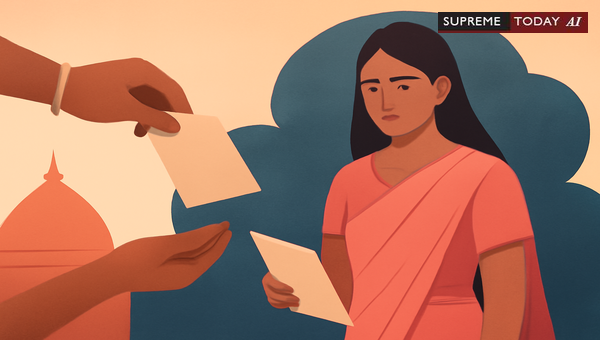
Proving Caste Custom to Exclude Daughters from Inheritance
In the realm of inheritance disputes, particularly within communities governed by customary laws, one contentious issue often arises: Can daughters be excluded from inheritance based on a caste custom? The legal question at the heart of many such cases is, . This blog post delves into the stringent burden of proof required to validate such customs, drawing from landmark judgments and legal principles. While this analysis provides general insights, it is not legal advice—consult a qualified attorney for specific cases.
The Burden of Proof: Who Must Prove the Custom?
Under Indian law, the party asserting a caste custom that deviates from general personal laws, such as provisions granting daughters equal rights, bears the heavy burden of proof. Courts consistently hold that is essential to establish such a custom. As emphasized in judicial rulings, . 2019 0 Supreme(Chh) 444
The general principle is straightforward: customs excluding daughters must be . Mere instances where daughters were overlooked in past successions do not suffice. 1972 0 Supreme(J&K) 63
Instead, the asserting party—typically defendants opposing daughters' claims—must plead and prove the custom with . This shifts the onus away from plaintiffs (daughters) to disprove exclusion; they need only highlight the lack of proof. 2021 Supreme(Online)(Chh) 2740 2021 0 Supreme(Chh) 341
Key Legal Principles Governing Customs
Customary laws can derogate from statutory personal laws, but only if rigorously proven. Courts apply principles of justice, equity, and good conscience, especially under of applicable acts for tribes or communities not fully governed by Hindu law. 2018 0 Supreme(Bom) 1719 2019 0 Supreme(Bom) 56
- : Any custom must be . Courts reject customs that discriminate without strong communal backing. 2021 Supreme(Online)(Chh) 2740 2021 Supreme(Online)(Chh) 2637 2023 Supreme(Online)(MAD) 43983
- : It is impermissible to assume females are excluded under customary law. The presumption of caste inheritance from the father is strong but not conclusive. 2025 0 Supreme(Bom) 600
- Pleading Requirement: The party must specifically plead the custom in their defense; failure to do so weakens the case. .
In the absence of proven custom, courts presume equality in inheritance rights, aligning with modern public policy favoring gender equity.
Landmark Case Laws: Lessons from the Courts
Indian courts have addressed this issue across castes like Uraon, Gond, Mewati, and Rajputs. Here are pivotal cases:
Uraon Caste Case: Defendants failed to prove a custom barring married daughters from inheriting. Plaintiffs (daughters) secured their share, underscoring the need for clear evidence. 2021 0 Supreme(Chh) 341
Babulal Bapurao Kodape Case ( High Court): The court ruled against assuming customary exclusion of females. The burden squarely lies on the asserting party. 2020 0 Supreme(Chh) 481 2020 0 Supreme(Chh) 328
Mewati Community Case: Insufficient evidence of Mewatis following Hindu law to exclude daughters; lack of succession disputes further undermined the claim.
Bilaspur District Rajputs Case: Exceptionally, the court upheld exclusion based on long-standing practice evidence. 1965 0 Supreme(HP) 16
Gond Caste Cases: Both parties often fail to prove specific customs, leading courts to apply justice, equity, and good conscience. Daughters as nearest relatives prevailed over distant kin. 2019 0 Supreme(Chh) 444 2013 0 Supreme(Chh) 14
Bhoyar Community Insight: Courts reject implications that daughters must prove inclusion, refusing to assume general exclusion.
Babulal VS Sau. Resmabai Narayanrao Kaurati - Current Civil Cases
These cases illustrate that while customs can be valid, proof is rarely straightforward. 2023 0 Supreme(Mad) 959
Evidence Standards: What Courts Demand
Proving a caste custom requires more than assertions. Courts demand demonstrating consistent community practice:
- Historical Records and Testimonies: Independent, elderly witnesses with deep community knowledge are crucial. Limited or interested-party testimonies fail. 2024 Supreme(Online)(CHH) 12090 2025 6 Supreme 613 2025 Supreme(Online)(Chh) 10338
- No Reliance on Absence of Disputes: The mere absence of claims or disputes does not establish a custom. 1972 0 Supreme(J&K) 63
- Community Acceptance: Evidence must show the custom is acted upon continuously and accepted as of right.
In one ruling, defendants' failure to establish practice among Hindus out and out or sufficiently Hindus doomed their claim. 2023 0 Supreme(Mad) 959 For Scheduled Castes or Tribes like Gonds, where Hindu law may not apply, proof gaps lead to equitable decisions. 2019 0 Supreme(Chh) 444
Strategic Recommendations for Litigation
For parties invoking exclusion:- Gather historical deeds, genealogical records, and affidavits from community elders.- Avoid mere oral claims; corroborate with documents.
For daughters claiming shares:- Challenge evidence quality and highlight public policy against discrimination.- Emphasize unproven customs default to statutory equality.
Recent trends favor concrete proof over assumptions, aligning with constitutional equality. 2020 0 Supreme(Chh) 481 2020 0 Supreme(Chh) 328
Conclusion: Prioritizing Proof and Equity
Establishing a caste custom to exclude daughters from inheritance demands rigorous evidence—ancient, continuous, and community-endorsed. Without it, courts uphold principles of justice, equity, and modern inheritance laws granting daughters coparcenary rights. This framework protects against unsubstantiated discriminatory practices while respecting proven traditions.
Key Takeaways:- Burden lies on the party asserting exclusion. 2021 0 Supreme(Chh) 341- Evidence must be clear, cogent, and policy-compliant.- In doubt, equality prevails.
For personalized guidance, seek expert legal counsel. Stay informed on evolving jurisprudence to navigate inheritance disputes effectively.
(Word count: 1028. This post references general legal principles and cited cases for informational purposes only.)
#InheritanceLaw, #CasteCustom, #DaughtersRights















