


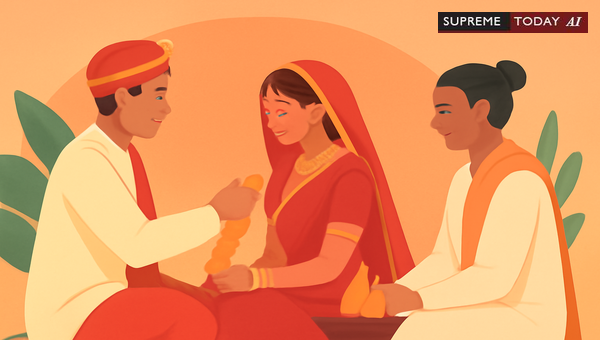
Key Issues in Validity of Marriage in India
Marriage is a foundational social and legal institution in India, governed primarily by personal laws like the , and procedural laws such as the . However, determining the validity of a marriage often raises complex issues, especially in disputes involving maintenance, bigamy, or divorce. Common questions arise, such as Draft Issues for Validity of Marriage, highlighting the need for clarity on jurisdiction, proof standards, and ceremonial requirements.
This post explores the key legal considerations for assessing marriage validity, drawing from judicial precedents. While these insights provide general guidance, they are not substitutes for professional legal advice—consult a qualified lawyer for your specific situation.
Jurisdiction of
play a pivotal role in matrimonial disputes. They hold exclusive jurisdiction over matters concerning the validity of marriage and a person's . This includes both (confirming a valid marriage) and (declaring it ). 2016 3 Supreme 236
For instance, courts have emphasized that are the appropriate forum to seek declarations on marital status, rather than registrars under state rules. In one case, petitioners challenged a marriage registration under , arguing invalidity, but the court upheld the registration absent proof of error or fraud, directing them to a for any declaration. 2025 0 Supreme(Ker) 1898 The Registrar is not empowered to conduct a comprehensive enquiry regarding the validity of the marriage or the competence of the parties to get married at the time of considering the memorandum.
This underscores that while registration offers evidentiary value, it does not conclusively determine validity—civil or do. 2025 0 Supreme(All) 2375
in Maintenance Proceedings
A critical distinction exists in the for marriage validity across proceedings. In summary proceedings under for maintenance, the threshold is relaxed compared to criminal trials like bigamy under . 2005 2 Supreme 503 1999 8 Supreme 602
Here, if parties have lived together as husband and wife, courts may a legal marriage, shifting the burden to the denying party to rebut it. 2005 2 Supreme 503 Strict proof of rites is unnecessary; cohabitation and conduct suffice. 2005 2 Supreme 503
This was affirmed in a case where a maintenance order under Section 125 remained unaffected by an acquittal in a cruelty case due to unproven marriage—the standards differ. 2006 0 Supreme(Gau) 30 The of marriage in such proceedings is not strict as is required in a trial of offence under Section 494, IPC.
Conversely, in bigamy or adultery cases, mere admissions by the accused do not prove validity; the second marriage ceremony must be independently established. 1965 0 Supreme(SC) 187
Validity of Marriage Ceremonies and Rites
Under Hindu law, validity hinges on performing essential ceremonies, particularly (seven steps) as per . However, in maintenance claims, imperfections in rites do not invalidate if a ceremony occurred. Parties cannot later deny marriage due to minor lapses. 2005 2 Supreme 503
Judgments clarify that a marriage certificate proves validity only if ceremonies were performed—no certificate substitutes for rites. In a appeal, the court set aside a decree where no witnesses or priest proved Hindu rites, stressing: For a valid marriage under the Act, requisite ceremonies have to be performed.
Arya Samaj marriages are valid if rites align with Hindu customs, regardless of registration. Registration of marriage itself cannot be a proof of valid marriage per se and would not be the determinative factor regarding the validity of a marriage, yet it has a great evidentiary value. 2025 0 Supreme(All) 2375
Admissions, Registration, and Evidentiary Limits
Admissions of marriage by an accused in bigamy cases are insufficient; independent proof is required. 1965 0 Supreme(SC) 187 Similarly, registrations under acts like the do not retroactively validate prior informal unions without scrutiny. 2016 0 Supreme(Bom) 388
In child marriage contexts, validity is judged by personal laws, but consummation with minors under 15 is criminal, and such unions are . 2012 0 Supreme(Del) 1749
Retrospective Validation and Special Cases
Legislation like the , retrospectively validated inter-caste marriages and legitimized offspring. 1963 0 Supreme(SC) 293
Challenges based on prior adultery or non-access do not automatically marriages unless proven.
In custody disputes, even marriages may not bar guardianship rights. 2005 0 Supreme(Cal) 320
Post-divorce remarriages require validity checks, as seen in appeals where courts deferred maintenance until marital status was resolved. 1977 Supreme(Online)(Del) 1
Proof in Criminal Contexts
In quashing applications under , courts assess marriage evidence. Averments admitting solemnization can establish bigamy grounds during a first spouse's lifetime. 2019 0 Supreme(All) 1653 However, in property or succession disputes, registered nikah may face validity challenges. 2016 0 Supreme(Bom) 388
Key Takeaways and Recommendations
- have exclusive jurisdiction over validity declarations. 2016 3 Supreme 236
- Maintenance under presumes marriage from cohabitation; strict rites unnecessary. 2005 2 Supreme 503
- Bigamy/criminal cases demand rigorous proof beyond admissions. 1965 0 Supreme(SC) 187
- Registration aids evidence but does not prove ceremonies or validity. 2025 0 Supreme(All) 2375 2025 0 Supreme(Ker) 1898
- Essential Hindu rites (e.g., ) are mandatory for validity.
When facing marriage validity disputes, context matters—summary vs. trial proceedings alter proof burdens. Courts focus on conduct over formalities in welfare cases but uphold strict standards in criminal matters.
Disclaimer: This article offers general information based on precedents and is not legal advice. Laws evolve, and outcomes depend on facts. Seek counsel from a family law expert for personalized guidance.
For more on Indian family law, stay tuned to our blog.
#MarriageValidity, #FamilyLawIndia, #HinduMarriageAct















