


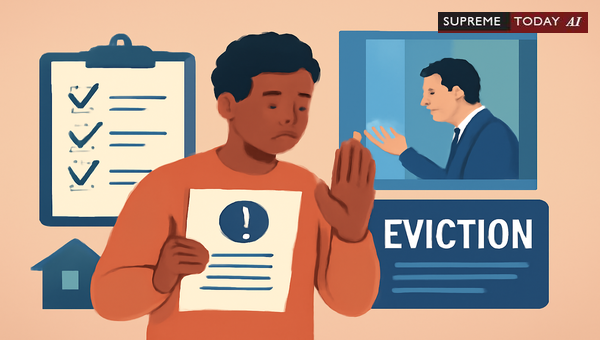
Proving in Court: A Comprehensive Guide
Introduction
Facing constant threats, unwanted intrusions, or pressure to vacate from your landlord? If you're dealing with Harassing Tenants situations—where landlords engage in undue interference—you're not alone. is a serious issue governed by , and proving it in court can secure your rights to of your property. This guide breaks down the legal framework, essential evidence, procedural steps, and judicial insights to help tenants build a strong case. While this provides general information, consult a legal professional for advice tailored to your situation.
Harassment typically involves actions that disturb your , such as intimidation, attempts, or coercion to leave. Courts require clear proof, but with the right strategy, tenants can succeed. We'll explore key elements, evidence types, and practical tips, drawing from legal standards and case references like 2025 Supreme(Online)(Tel) 16660.
Understanding the Legal Framework for
falls under tenancy statutes and civil laws protecting peaceful possession. Landlords have rights for maintenance or lawful evictions, but crossing into —like threats or inducement to vacate—constitutes harassment.
Key Elements to Prove Harassment
To establish a claim, tenants generally need to demonstrate:1. or Conduct: Threats, intimidation, or attempts beyond legitimate rights 2025 Supreme(Online)(Tel) 16660.2. Knowledge and Intent: The landlord's awareness and purpose to harass.3. Causation: Direct link to your distress or decision to vacate.4. Lack of Justification: No lawful or contractual basis for the actions.
Courts emphasize that proof must be clear, cogent, and convincing, often through direct or , including behavior patterns or prior complaints 2025 Supreme(Online)(Tel) 16660.
Related concepts like align here, defined as the action of troubling or harassing by aggression or interference 2011 0 Supreme(Bom) 558. This underscores how repeated interference erodes tenant rights.
Types of Evidence to Build Your Case
Success hinges on credible, . Here's what works:
1. Documentary Evidence
- Correspondence: Emails, letters, or notices with threats or pressure.
- Official Documents: Eviction notices or records showing breaches, like inducing new tenants against court orders 2025 Supreme(Online)(Tel) 16660.
- RTI-obtained documents proving unauthorized actions.
2. Testimonial Evidence
- Your Testimony: Detailed incident logs with dates, times, and impacts.
- Witness Statements: Neighbors or others who saw the harassment.
3. Electronic Evidence
- Call recordings, CCTV, photos of threats or damage.
4. Expert Evidence
- Psychological reports if distress is severe.
Evidence must be led through witnesses and documents in court; extraneous methods like unexamined are typically rejected 2025 Supreme(Online)(Tel) 16660.
Procedural Aspects and
The tenant bears the by a , meaning more likely than not. File in or , presenting evidence formally.
- Discharge the burden via credible witnesses and documents.
- Courts scrutinize authenticity; illegal collection renders evidence inadmissible.
In broader harassment contexts, such as police enquiries stemming from tenant disputes, courts caution against unnecessary actions. For instance, police must refrain himself or herself from harassing persons called upon for enquiry/investigation 2023 Supreme(Online)(Mad) 90972. Tenants reporting landlord harassment should ensure complaints don't veer into civil matters misusing police powers 2025 Supreme(Online)(Mad) 73430.
Judicial Approach and Relevant Case Law
Judges evaluate witness credibility and act severity. Harassment can be proven circumstantially, like patterns of complaints.
Key principles:- Clear proof of unlawful disturbance 2025 Supreme(Online)(Tel) 16660.- Distinguish legitimate landlord actions from harassment.
While tenant-specific, parallels exist in other disputes. Courts intervene in alleged police harassment during civil enquiries, directing closure if unwarranted: the second respondent is directed to close the matter forthwith and refrain from harassing the petitioner 2025 Supreme(Online)(Mad) 71493. Similarly, in family or commercial rows, unnecessary harassment under enquiry pretexts is curbed 2025 Supreme(Online)(Mad) 73247 2025 Supreme(Online)(Mad) 73249.
In dowry cases, persistent harassment like Accused-appellant started beating and harassing her leads to convictions when evidenced 2021 0 Supreme(All) 1302. These reinforce that courts demand concrete proof across harassment types.
Insurance disputes highlight service deficiencies via harassment claims: Appellant was unnecessarily harassing the respondent
. Tenants can draw from this for persistent landlord pressure.
Practical Steps for Tenants Facing Harassment
- Document Everything: Log incidents meticulously.
- Gather Evidence: Save all communications and media.
- Secure Witnesses: Get affidavits early.
- Report Formally: Lodge complaints with housing authorities or police judiciously.
- Consult Lawyers: Prepare .
- File Suit: Seek or damages.
Avoid extrajudicial evidence collection 2025 Supreme(Online)(Tel) 16660. If police involvement arises from your complaint, monitor for overreach, as seen in cases where the respondents are unnecessarily harassing the petitioners under civil guise 2023 Supreme(Online)(Mad) 90972.
Limitations and Important Cautions
- Admissibility: Only properly authenticated evidence counts.
- Onus on Tenant: Prove via court processes 2025 Supreme(Online)(Tel) 16660.
- Civil vs. Criminal: Harassment may be civil; criminal thresholds (e.g., threats) need police.
Courts often classify disputes as civil, closing unwarranted enquiries: the issue involved is a civil dispute and the respondent police are not harassing the petitioners 2025 Supreme(Online)(Mad) 73430 2025 Supreme(Online)(Mad) 74391.
Conclusion and Key Takeaways
Proving requires strategic evidence—documents, testimonies, electronics—to show unlawful interference with possession. The tenant's burden is met through court-led proof, yielding remedies like or compensation.
Key Takeaways:- Focus on clear, .- Document patterns for circumstantial strength.- Seek professional help early.- Beware procedural pitfalls like invalid collections 2025 Supreme(Online)(Tel) 16660.
This is general guidance; laws vary by jurisdiction. For personalized advice, contact a lawyer. Stay informed, document diligently, and protect your tenancy rights.
References:- 2025 Supreme(Online)(Tel) 16660: Stresses proper evidence leading.- 2023 Supreme(Online)(Mad) 90972, 2025 Supreme(Online)(Mad) 73430, etc.: Insights on harassment allegations in enquiries.- General landlord-tenant principles.
#TenantHarassment, #TenantRights, #LandlordLaw















