Searching Case Laws & Precedent on Legal Query.....!
Analysing the retrieved Case Laws
Scanned Judgements…!



Searching Case Laws & Precedent on Legal Query.....!
Analysing the retrieved Case Laws
Scanned Judgements…!
Courts require clear pleadings and evidence to establish a trust as public, especially under statutory provisions like Section 92 CPC, which mandates specific pleadings for intervention and scheme framing
P.BALASUBRAMANIAN vs VICTORIA @ BALASUNDARI AMMAL - Madras
,TRUSTEES OF THE WIJEYEWARDENE CHARITABLE TRUST v. COMMISSIONER OF INCOME TAX
,KUMARASAMY KURRUKAL v. KARTHIGESA KURRUKAL
.Private Trust
KUMARASAMY KURRUKAL v. KARTHIGESA KURRUKAL
,ISLAHUL SUNNI MUSLIM KHIDMAT TRUST, THRO MANAGING TRUSTEE vs COLLECTOR - Gujarat
.SITHAMPARANATHER MAILVAGANAM v. KUMARASWAMY KURUKKAL RAMANATHA AIYAR
.The primary difference lies in the purpose and beneficiaries: public trusts serve the community or public at large and are subject to specific legal protections and statutory provisions, whereas private trusts benefit specific individuals or families with clearly defined beneficiaries. Establishing whether a trust is public or private requires careful examination of its purpose, activities, and beneficiaries, often supported by pleadings and evidence in court proceedings
P.BALASUBRAMANIAN vs VICTORIA @ BALASUNDARI AMMAL - Madras
,TRUSTEES OF THE WIJEYEWARDENE CHARITABLE TRUST v. COMMISSIONER OF INCOME TAX
, 2024 Supreme(Online)(KER) 41760.References:- P.BALASUBRAMANIAN vs VICTORIA @ BALASUNDARI AMMAL - Madras_MAD_AS_1065_2003-
TRUSTEES OF THE WIJEYEWARDENE CHARITABLE TRUST v. COMMISSIONER OF INCOME TAX
-KUMARASAMY KURRUKAL v. KARTHIGESA KURRUKAL
- 2024 Supreme(Online)(KER) 41760- 2023 Supreme(Online)(All) 22163-ISLAHUL SUNNI MUSLIM KHIDMAT TRUST, THRO MANAGING TRUSTEE vs COLLECTOR - Gujarat
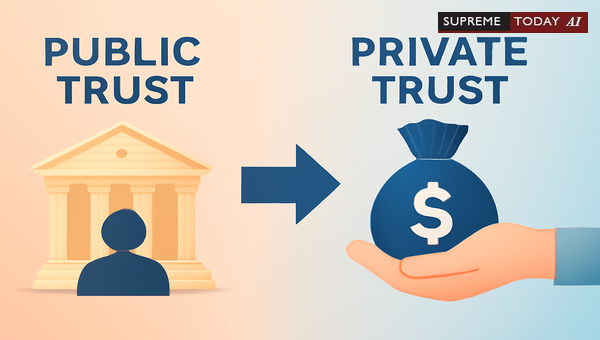
In the realm of , philanthropy, and property management, understanding the distinction between a and a is crucial. Many individuals and organizations grapple with the question: What is the difference between a and a ? This blog post breaks down the core differences, drawing from legal precedents and statutes to provide clarity. Whether you're setting up a or a , knowing these distinctions can help ensure compliance and achieve your intended goals.
Note: This article provides general information based on legal principles and is not a substitute for professional legal advice. Consult a qualified attorney for your specific situation.
The primary difference between a and a lies in the nature of the and the purpose of the trust. A is typically created for the benefit of the general public or an unascertainable section thereof, while a serves specific, ascertainable individuals or a definite group. This fundamental divide influences everything from management to regulatory oversight. 2023 0 Supreme(Mad) 1022
As one legal document notes, a trust benefits the general public or a section of the public, with being uncertain and fluctuating. 2023 0 Supreme(Mad) 1022
In a , the are not fixed; they can change over time, reflecting its permanent, public-oriented character. Courts emphasize that properties dedicated for public use—such as temples, dharamshalas, or charitable organizations—are public if intended for community benefit. 1959 0 Supreme(SC) 53 1956 0 Supreme(SC) 71
Conversely, private trusts have ascertainable within a definite period. A family trust, for example, benefits specific heirs, and its non-permanent nature allows for more flexibility. 2020 4 Supreme 529
The purpose further solidifies the classification:- Public Trusts: Dedicated to public or charitable aims, with properties protected from to preserve public use. Ongoing public services, like community education or religious sites open to all, characterize these. 1959 0 Supreme(SC) 53- Private Trusts: Geared toward private benefits, such as family estates or private religious practices. Even if endowed with charitable elements, the core private nature prevails if remain specific.
- 2021 25114
One case highlights: the suit trust is not a ''. It is a endowed with public and charitable purpose. The purpose or the nature of the charities will not make it a at all.
- 2021 25114
Public trusts face stricter controls:- Often require registration and .- Governed by specific enactments, unlike private trusts under general law. 1959 0 Supreme(SC) 53 1956 0 Supreme(SC) 71
Private trusts enjoy more autonomy but risk reclassification if they evolve to serve public purposes. Courts demand clear pleadings and evidence to deem a trust public, especially under provisions like . 2024 Supreme(Online)(Ker) 87572
In English law, charitable trusts equate to public trusts, but Hindu law distinguishes as potentially private or public based on access and intent. 1959 0 Supreme(SC) 53
Consider a temple open to the public: its trust is typically public due to fluctuating worshippers. But a family deity shrine used solely by descendants remains private. 1956 0 Supreme(SC) 71
From case law:- In disputes, defendants may argue a trust's private status despite charitable activities, stressing that the fact that the uncertain and fluctuating body of persons is a Section of the #HL_S... does not automatically make it public.
- 2021 25114
- Evidence is key: a decision as to whether the trust is public or private can be taken only after taking evidence. 2024 Supreme(Online)(Ker) 87572Educational trusts like S.B.O.A. School highlight private entities under specific regulations, distinct from public charitable ones. 2024 Supreme(Online)(Mad) 54485
Properties in public trusts cannot be freely sold, safeguarding community interests, while private ones allow greater trustee discretion.
The lines can blur:- A may become public if property access expands or use shifts to public benefit. 1956 0 Supreme(SC) 71 1976 0 Supreme(SC) 67- Mere public activities don't convert private trusts; intent and matter.
For instance, a family graveyard stays private unless public access is granted. 2024 Supreme(Online)(KER) 41760 2023 Supreme(Online)(All) 22163
Courts consider historical use, founder intent, and actual . 1976 0 Supreme(SC) 67
When establishing a trust:1. Clearly define and purpose to avoid disputes.2. For public trusts: Register, ensure transparency, and comply with statutes.3. For private trusts: Document private intent, but monitor for changes that could trigger reclassification.
In South African contexts, private trusts' discrimination policies differ from public ones, underscoring the divide. [Wilkinson and Another vs Crawford NO and Others [2021] ZACC 8 - 2021 23 - 2021 23](https://supremetoday.ai/doc/judgement/SA_ZACC_2021_ZACC_8)
In summary, public trusts serve indeterminate public with charitable permanence and regulatory strings attached, while private trusts target specific individuals with flexibility under general law. This distinction, rooted in beneficiary identity and purpose, is pivotal for legal compliance and effective management. 1959 0 Supreme(SC) 53
Key Takeaways:- Public: Uncertain , public purpose, statutory control. 2023 0 Supreme(Mad) 1022- Private: Definite , private aims, general governance. 2020 4 Supreme 529- Always examine intent, use, and evidence to classify correctly.
By understanding these differences, you can better navigate trust law. For tailored advice, seek expert counsel.
- 2021 25114
: with charitable purpose.,
: Pleadings for public status.


The 1st and 3rd defendants filed a separate written statement stating that the suit trust is not a 'public trust'. It is a private trust endowed with public and charitable purpose. The purpose or the nature of the charities will not make it a public trust at all. ... The fact that the uncertain and fluctuating body of persons is a Section of the #HL_S....

Of course, if the contention is that there is no public trust but only a private trust, a decision as to whether the trust is public or private can be taken only after taking evidence”. 4. ... He argued that perusing the entire plaint will not show that there was a pleading to the effect that there is a private or public tru....
Of course, if the contention is that there is no public trust but only a private trust, a decision as to whether the trust is public or private can be taken only after taking evidence”. 4. ... He argued that perusing the entire plaint will not show that there was a pleading to the effect that there is a private or public tru....
but nothing contained in clause i, clause (in) or clause (ii) shall operate to exempt from the provisions of the Act that part of the income of a private religious trust which does not ensure for the benefit of the public". The difference in language between Lord Macnaghten? ... But a trust for the benefit of the members of a family is of a private not of a public#HL_E....

The essential difference 10 between a private and public trust that in the former the beneficiaries are defined and ascertained individuals who within a definite time can be definitely ... It is further submitted that the Act, 1882 is defined and amend the law relating to private trust and trustees and it is not applicable to the public trust ....
Public and private services and ceremonies have been held, in which no doubt the services of the defendants and their predecessors have always been availed of. ... It is true that the mere fact that a temple is frequented by members of the public and that services are held which are attended by the public is not of itself sufficient to indicate that the temple is a charitable trust; but when such c....
Though there is a difference in form between our own conception and that of the Hindu religious law, there is no difference in substance. ... " It seems to me nothing less than fantastic to argue that this temple was mainly the private property of Karthigesa and his sons unencumbered by anything in the nature of a public religious trust, and that the various subscriptions. ... are to be considere....
![Wilkinson and Another vs Crawford NO and Others [2021] ZACC 8 - 2021 Supreme(SA)(ZACC) 23](https://cdn.supremetoday.ai/static/img/news-place-holder.png)
the private nature of the trust must be givendue consideration. ... The private and public divide in trust law does not mean thata court is permitted to countenance ... This matter concernsa private trust that has no public characteristics ... policy does not require that discrimination inprivate wills, unlike public#HL_EN....

Educational Trust, S.B.O.A. School and Junior College, No.18, School Road, Anna NagarWestern Extension, Chennai 600 001. 4. The Director of Private School Education, DPI Complex College Road, Chennai 600 006. ... ... Educational Trust, S.B.O.A. School and Junior College, No.18, School Road, Anna NagarWestern Extension, Chennai 600 001. 4. The Director of Private School Education, DPI Complex College Road, Chennai 600 006. ....

The fact that the owner permits such burials will not make any difference at all; (2) that if the grave-yard is a private a family grave-yard then it should contain the graves of only the founder, the members ... Once even in a family grave-yard members of the public are allowed to bury their dead, the private graveyard sheds its character and becomes a public grave-yard; (3) that in order to prove that a....


An indispensable Tool for Legal Professionals, Endorsed by Various High Court and Judicial Officers
Please visit our Training & Support
Center or Contact Us for assistance

Scan Me!
India’s Legal research and Law Firm App, Download now!


For Daily Legal Updates, Join us on :



 Back to top


