


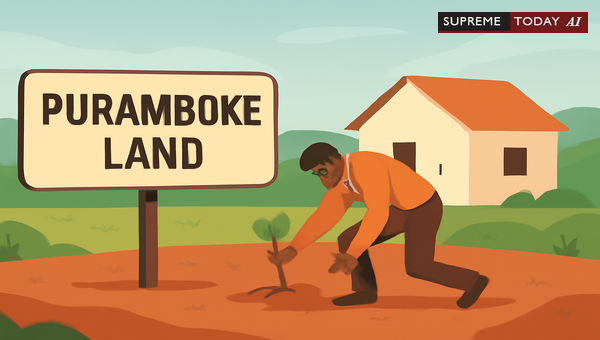
What Is in India? A Comprehensive Legal Guide
In India, land disputes often revolve around classifications that determine ownership and usage rights. One such term frequently encountered, especially in southern states like Kerala and Tamil Nadu, is . If you've ever wondered, What is a ?, you're not alone. Homeowners, farmers, and developers frequently grapple with this classification when checking revenue records or facing eviction notices.
This blog post breaks down the definition, types, legal implications, and practical advice on . Drawing from court judgments and revenue practices, we'll explore why this government-designated land remains off-limits for private ownership. Note: This is general information based on legal precedents and not specific legal advice. Consult a qualified lawyer for your situation.
Definition of
refers to land classified as or , often reserved for public purposes. It is typically owned by the government and not assigned to any individual or entity for private use. Common uses include roads, ponds, water channels, and communal facilities. This classification is crucial in legal disputes over ownership and encroachment.
As noted in revenue records, is identified in tax registers and survey documents as land without clear private ownership, used as a reserve or for public needs. It includes various subtypes like , river puramboke, rock puramboke, and . Sources: 2024 Supreme(Online)(KER) 27050, 2025 0 Supreme(Ker) 447, 2023 0 Supreme(Ker) 286, 2025 0 Supreme(Ker) 696, 2024 0 Supreme(Ker) 1651, 2024 Supreme(Online)(KER) 32231, 2024 Supreme(Online)(KER) 49769, 2024 Supreme(Online)(KER) 3679, 2025 Supreme(Online)(Ker) 25027, 2024 Supreme(Online)(KER) 31035.
In essence, is under government or control, emphasizing its public jurisdiction unless legally transferred.
Types of
isn't a monolith; it encompasses several categories based on intended use:
- : Often land previously used for agriculture but now government-classified. Long occupancy doesn't confer ownership 2018 0 Supreme(Mad) 4156.
- : Designated for water supply infrastructure 2017 0 Supreme(Ker) 903.
- : Reserved for public roads, strictly non-encroach-able 2011 0 Supreme(Ker) 1188.
- : Unassignable government land 2018 0 Supreme(Ker) 81.
- and : Coastal or backwater reserves, often restricted for mining or development 2016 0 Supreme(Ker) 1403. Major portion of the land in which mining operation sought to be carried out by first respondent is and Sea .
- Other Variants: River, rock, and water channel purambokes, common in densely populated areas.
These distinctions appear in revenue lists prepared under rules like , which mandates reserving lands for government or public purposes before any assignment 2022 0 Supreme(Ker) 526. It comes under of the Rules and it cannot be assigned, as rightly held by the Government in Exhibit P15 order.
Legal Context and Ownership Rights
Government ownership is the cornerstone: cannot be privately owned or assigned. Courts have upheld that individuals cannot claim it, even with long possession—sometimes over 70 years—without legal substantiation 2025 0 Supreme(Ker) 447, 2023 0 Supreme(Ker) 286, 2024 0 Supreme(Ker) 1651, 2024 Supreme(Online)(KER) 27050.
Under the , authorities can evict encroachers. Claims must go through civil litigation, as administrative decisions alone may not suffice 2018 0 Supreme(Mad) 4156. For instance, in quarrying cases, adjacent requires NOC from the District Collector, but operations on it are restricted 2020 0 Supreme(Ker) 841. On the eastern boundary of the said property, there is a Government . Similarly, The land on the eastern side of the said land is a Government Puramboke 2020 0 Supreme(Ker) 722.
Long-term possession does not automatically grant rights or compensation; verification of revenue records is key 2023 0 Supreme(Ker) 286, 2025 0 Supreme(Ker) 696, 2024 Supreme(Online)(KER) 3679, 2024 Supreme(Online)(KER) 31035, 2025 Supreme(Online)(Ker) 25027.
Encroachment, Eviction, and Dispute Resolution
Encroachment on is a serious offense. Governments are mandated to act, especially for types like Natham or 2018 0 Supreme(Mad) 4156. If classified as such, occupants without title are deemed encroachers.
Disputes often arise over assignability. Courts rule that Puramboke under government or control cannot be claimed privately without due process 2023 0 Supreme(Ker) 286. For example, mining policies reserve such lands to promote scientific utilization, aligning with national mineral policy 2016 0 Supreme(Ker) 1403.
To resolve claims:1. Verify classification via revenue records.2. File civil suits for title clarification.3. Seek additional documents if needed, though appellate courts may scrutinize under 2018 0 Supreme(Mad) 2810.
Practical Implications and Case Insights
Real-world scenarios highlight risks:- Quarrying Attempts: Petitioners seeking permits on adjacent Puramboke must produce NOC, but extraction from it is barred 2020 0 Supreme(Ker) 722.- Assignment Denials: Lands under Rule 11 cannot be granted registry 2022 0 Supreme(Ker) 526.- Mining Reserves: Coastal Purambokes are protected due to population density 2016 0 Supreme(Ker) 1403.
These cases underscore that Puramboke status in records generally prevents private assignment unless procedures are followed.
Key Takeaways
- is typically government-owned for public use and unassignable.
- Types include Natham, road, canal, and water-related variants.
- Encroachments lead to eviction; claims require civil court proof.
- Long possession alone doesn't confer ownership—check revenue records.
- Policies like Kerala's minor minerals rules reinforce restrictions.
Recommendations
If you suspect land is Puramboke:- Consult revenue officials for records.- Seek legal counsel before investments.- Consider civil suits for disputes.- Avoid encroachment to prevent eviction.
Disclaimer: Land laws vary by state; this overview draws from Kerala-focused precedents. Always get personalized advice.
In summary, understanding is vital for navigating India's complex property landscape. It protects public resources while challenging private claimants. Stay informed to avoid pitfalls. (Word count: 1028)
References:- 2018 0 Supreme(Ker) 81, 2017 0 Supreme(Ker) 903, 2011 0 Supreme(Ker) 1188, 2018 0 Supreme(Mad) 4156, 2022 0 Supreme(Ker) 526, 2020 0 Supreme(Ker) 841, 2020 0 Supreme(Ker) 722, 2016 0 Supreme(Ker) 1403, 2024 Supreme(Online)(KER) 27050, 2025 0 Supreme(Ker) 447, 2023 0 Supreme(Ker) 286, 2025 0 Supreme(Ker) 696, 2024 0 Supreme(Ker) 1651, 2024 Supreme(Online)(KER) 32231, 2024 Supreme(Online)(KER) 49769, 2024 Supreme(Online)(KER) 3679, 2025 Supreme(Online)(Ker) 25027, 2024 Supreme(Online)(KER) 31035
#PurambokeLand, #LandLawIndia, #PropertyRights












