


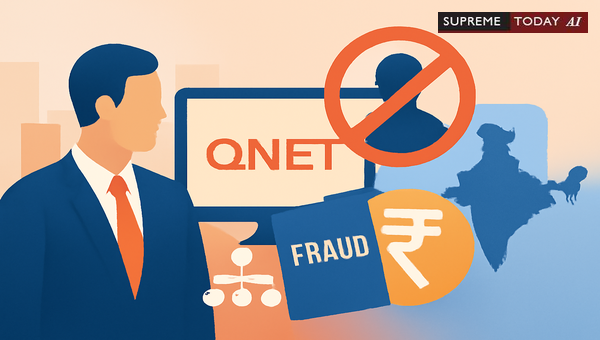
Is QNET Legal in India? MLM Status Explained
In the world of , few companies have sparked as much debate as QNET. Aspiring entrepreneurs often ask: Is Business Qnet Legal? With promises of financial independence through product sales and team building, QNET has attracted millions worldwide, including in India. However, allegations of fraudulent practices, , and regulatory scrutiny have put its operations under the microscope.
This blog post dives deep into the legal landscape surrounding QNET in India, drawing from court judgments, investigative reports, and official statements. We'll examine its business model, key legal challenges, and what it means for participants. Note: This is general information based on public records and not specific legal advice. Consult a qualified attorney for personalized guidance.
Understanding QNET's Business Model
QNET operates as a , offering products like wellness items, jewelry, and travel packages through a network of . At its core, the model relies on personal sales and recruitment, with commissions earned primarily from product sales rather than just enrolling others.
IRs must sign a declaration acknowledging that the business is not a get-rich-quick scheme and that income is based on personal efforts and sales of products, not recruitment. This emphasizes legitimate product sales over pyramid-like structures. 2021 0 Supreme(Ori) 491
However, critics argue that the emphasis on recruitment overshadows actual sales, potentially crossing into illegal territory under Indian laws governing MLMs.
Legal Scrutiny: Allegations of Fraud and Money Circulation
QNET's operations in India have faced intense regulatory and judicial review, particularly from the . Reports suggest the company may fall under the due to its alleged money circulation scheme rather than a . 2016 0 Supreme(Bom) 1961 2017 0 Supreme(Del) 159
The SFIO's analysis raises red flags: Does QNET comply with legal standards for legitimate direct selling? Key concerns include whether commissions are disproportionately tied to recruitment, a hallmark of banned schemes.
Cheating Charges Under
Courts have probed whether QNET's directors and IRs possess —the intent to cheat—under Section 420 of the Indian Penal Code (IPC). If proven that participants suffered foreseeable financial losses due to misleading promises, could follow. 2016 0 Supreme(Bom) 1961
In similar cases, promises of high returns (e.g., eight times the money invested within two years) have led to bail denials, citing risks of . While not directly about QNET, this highlights judicial caution toward MLM-like entities disguising money chains as legitimate businesses. 2011 0 Supreme(Ker) 762
Counterarguments: Defenses and Positive Rulings
Not all legal views paint QNET negatively. A significant court observation notes: A perusal of the material and the averments prima facie indicate that the activities of Qnet and i.e., the multilevel marketing companies, do not constitute offences under the . Thus, do not apply. 2019 0 Supreme(P&H) 3067
This ruling is crucial, as the , is the primary law targeting illegal schemes. If QNET avoids classification as a money circulation scheme, it sidesteps these prohibitions.
Additionally, in , the Union Finance Minister clarified in what distinguishes legitimate MLM from money chains: Deriving excess profit does not amount to cheating or breach of trust. The business conducted by the Company is permissible business and it is legal. This aligns QNET with parameters set by the Finance Ministry, provided it focuses on genuine product sales. 2011 0 Supreme(Ker) 762
Comparison with Other MLM Cases
QNET's situation mirrors other high-profile MLM probes in India. Courts consistently stress that valid MLMs must prioritize actual product sales and services. Schemes dominated by recruitment face prosecution. 2017 0 Supreme(Del) 159
For instance:- Legitimate MLMs: Emphasize retail sales, comply with Direct Selling Guidelines .- Illegal Schemes: Promise returns without corresponding product value, banned under the Act.
QNET's defenders point to its product catalog and global operations as evidence of legitimacy, but ongoing SFIO probes keep the debate alive.
Regulatory Framework for MLMs in India
India regulates direct selling via:- : Bans schemes without product delivery.- : Mandates fair practices, no recruitment pyramids.- : For cheating and .
QNET claims adherence, but allegations persist. Participants should verify if local operations register with authorities and provide .
Risks for Participants and Recommendations
Potential Pitfalls
- Financial Losses: Many IRs report minimal earnings despite heavy recruitment efforts.
- Legal Exposure: Involvement in probed schemes could lead to investigations.
- Reputational Harm: Association with fraud-labeled entities.
Key Advice
- Exercise Caution: Before joining, review contracts, earnings disclosures, and product demand.
- Seek Legal Counsel: Understand local laws; monitor SFIO and court updates.
- Verify Compliance: Ensure focus on sales, not endless recruitment.
For businesses eyeing MLM models, prioritize transparency to avoid QNET-like scrutiny.
Conclusion: A Gray Area Under Watch
Is QNET legal in India? It's not black-and-white. While some rulings affirm it doesn't violate the Prize Chits Act 2019 0 Supreme(P&H) 3067 and official statements deem similar models permissible 2011 0 Supreme(Ker) 762, SFIO findings and fraud allegations signal ongoing risks. 2016 0 Supreme(Bom) 1961 2017 0 Supreme(Del) 159
Key Takeaways:- QNET emphasizes product sales, but recruitment focus draws ire. 2021 0 Supreme(Ori) 491- No definitive ban yet, but vigilance is essential.- Participants: Proceed with eyes wide open; consult experts.- Stay updated—legal developments could shift the landscape.
This analysis synthesizes public documents for educational purposes. For tailored advice, reach out to a legal professional specializing in business law.
References:- 2021 0 Supreme(Ori) 491- 2016 0 Supreme(Bom) 1961- 2017 0 Supreme(Del) 159- 2019 0 Supreme(P&H) 3067- 2011 0 Supreme(Ker) 762
#QnetLegal #MLMIndia #BusinessLawIndia












