


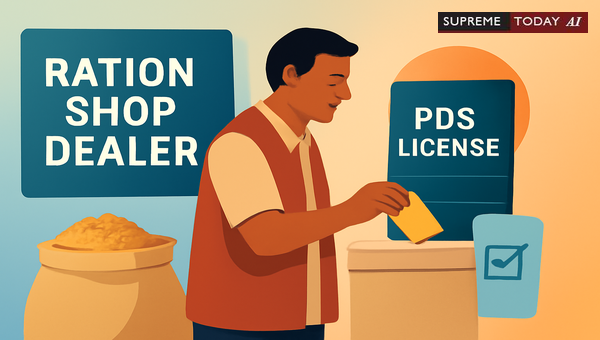
Ration Shop Dealer Eligible for Elections?
In India's vibrant democratic landscape, many small business owners, including ration shop dealers (also known as dealers under the or ), aspire to participate in local elections. But a pressing question arises: Is a ration shop dealer eligible for election, particularly in ? This issue intersects licensing laws, , and , often governed by frameworks like the or Control Orders.
This blog post delves into the legal nuances, drawing from court judgments and statutory provisions. We'll examine eligibility criteria for contesting elections, distinctions between voting and candidacy, and insights from related cases on dealer appointments and political activities. Note: This is general information based on legal precedents and not specific legal advice. Consult a qualified lawyer for personalized guidance.
Understanding the Core Legal Question
The question at hand is straightforward yet layered: Ration Shop Dealer Eligible for Election. Ration shops are vital for distributing subsidized essentials under , and dealers hold licenses subject to strict regulations. However, eligibility to contest elections—especially from reserved —hinges on more than just possessing a license. Courts have clarified that traders or dealers must meet precise . 2022 0 Supreme(Guj) 782
As outlined in key rulings, a trader with a valid license under relevant laws (e.g., ) is generally eligible to contest elections for , provided they meet prescribed criteria. These include holding a valid license, active trading in the relevant period (typically the previous financial year), and payment of fees. Mere licensure isn't enough; disqualifications can apply if conditions aren't fulfilled. 2016 3 Supreme 298 2022 0 Supreme(Guj) 782
Key for Contesting Elections
License and Trading Activity Requirements
Eligibility isn't automatic. A pivotal ruling states: A trader who is having license can cast vote, but, if he wants to contest the election, he should fulfill the qualification as provided under .2022 0 Supreme(Guj) 782
This underscores that:- Voting eligibility is broader: Requires a valid license and fee payment.- Contesting eligibility demands additional proofs, like trading in the previous financial year and settled fees. 2022 0 Supreme(Guj) 782
The authorized officer verifies these before including names in voters' lists or approving candidatures. Failure to trade or pay fees leads to disqualification. Courts emphasize objective, statutory criteria over arbitrary decisions. 2022 0 Supreme(Guj) 782
Distinction Between and
Inclusion in the for requires meeting basic license criteria, but contesting demands stricter scrutiny. Inflating voter lists doesn't arise if statutory norms are followed, but candidates must prove qualifications. If not, can be rejected outright. 2022 0 Supreme(Guj) 782
Insights from Ration Shop Dealer Cases
Ration shop dealers face unique regulations, which intersect with electoral eligibility. While primary sources focus on traders under APMC-like laws, cases provide context on dealer status and political involvement.
Eligibility for Dealer Appointment
Becoming a ration shop dealer itself requires residency in the locality, proper licensing, and category compliance (e.g., BC-E reserved). For instance, a dealer owning a separate kirana store elsewhere was deemed ineligible. 2023 Supreme(Online)(Tel) 26550 Similarly, appointments favor local residents, with disputes arising from external candidates.
In urban areas like Firozabad, dealers manage ration cards (e.g., 264 cards) and must verify IDs, Aadhaar, and proxies via EPOS machines. Non-compliance risks license issues.
Political Activities and Disqualifications
A critical caveat: dealers risk for political engagement. Under , direct or indirect election campaigning is prohibited. One case involved a dealer erecting a campaign stage near their shop, leading to scrutiny. Further, any such taking part by a dealer should have hampered the....2024 Supreme(Online)(AP) 3415
Another ruling distinguished dealer continuation post-election: Cases on contesting as Sarpanch don't bar holding the dealer license if norms are met, but active political roles demand caution. 2025 Supreme(Online)(TEL) 2827
Dealers have rights to operate but must remain accountable, not vulnerable to undue termination.
SOHANPAL SINGH vs JOINT COMMISSIONER (FOOD AND CIVIL SUPPLIES), MEERUT DIVISION AND 2 OTHERS - ()
Exceptions, Limitations, and Disqualifications
- No trading or unpaid fees: Automatic bar from contesting. 2022 0 Supreme(Guj) 782
- -specific curbs: Political activities during elections can cancel licenses, indirectly affecting electoral eligibility. 2024 Supreme(Online)(AP) 3415
- Verification role: Authorities independently check qualifications; objections go through statutory channels. 2022 0 Supreme(Guj) 782
Courts interpret laws strictly: The legislature has provided that only traders who meet these qualifications can contest...2022 0 Supreme(Guj) 782
Practical Recommendations for Traders and Dealers
If you're a ration shop dealer eyeing elections:1. Verify license validity and ensure trading records for the prior year.2. Pay all fees promptly.3. Abstain from political activities to safeguard your license. 2024 Supreme(Online)(AP) 34154. Raise objections formally if eligibility is disputed.5. Check local laws: APMC or rules vary by state.
Authorities should rigorously enforce verifications to uphold electoral integrity.
Conclusion and Key Takeaways
Generally, a ration shop dealer may be eligible to contest traders' constituency elections if they hold a valid license, traded actively, and paid fees, per statutory mandates. However, dealers must navigate additional political neutrality rules to avoid disqualification. 2016 3 Supreme 298 2022 0 Supreme(Guj) 782
Key Takeaways:- License alone isn't sufficient; prove trading activity. 2022 0 Supreme(Guj) 782- Voting > Contesting in qualification thresholds.- Political involvement risks dealer status. 2024 Supreme(Online)(AP) 3415- Always prioritize compliance for seamless participation.
This analysis draws from precedents like 2022 0 Supreme(Guj) 782, 2016 3 Supreme 298,
, 2023 Supreme(Online)(Tel) 26550,
,
,
SOHANPAL SINGH vs JOINT COMMISSIONER (FOOD AND CIVIL SUPPLIES), MEERUT DIVISION AND 2 OTHERS - ()
, 2025 Supreme(Online)(TEL) 2827, and 2024 Supreme(Online)(AP) 3415. For tailored advice, seek professional legal counsel. #RationShopDealer, #ElectionEligibility, #PDSTrader












