




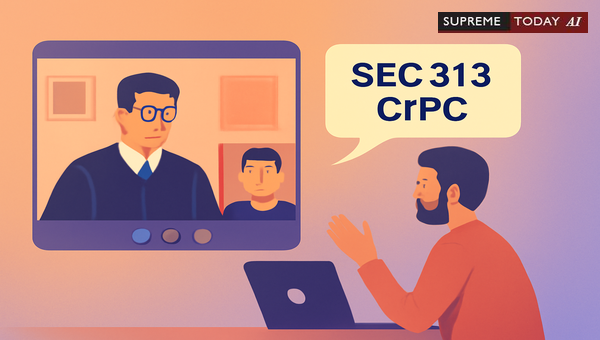
Can Trial Courts Record Accused's Evidence Under Sec 313 CrPC via Video Conferencing?
In today's digital age, the Indian judiciary has increasingly embraced technology to streamline proceedings, especially post-pandemic. But a pressing question arises: Whether the Trial Court can Record the Evidence of the Accused under Sec 313 Crpc through Video Conferencing? This issue touches on the balance between the accused's and the practicalities of modern litigation. is pivotal, as it allows the court to examine the accused directly to explain incriminating circumstances. Traditionally, this requires physical presence, but evolving case law suggests flexibility through virtual means.
This blog delves into the legal framework, landmark judgments, and practical considerations, drawing from authoritative sources. Note that this is general information based on precedents and not specific legal advice—consult a qualified lawyer for your case.
Understanding Section 313 CrPC and
Section 313 CrPC empowers the court to question the accused after the closes, enabling them to address any evidence against them. The provision underscores the accused's right to be heard, typically mandating physical presence to ensure solemnity and direct interaction.
However, courts have interpreted related provisions like to permit exemptions from under certain conditions. These include health issues, age, or logistical challenges, where video conferencing serves as a viable alternative [
#CrPCVideoConferencing, #Sec313CrPC, #VirtualCourtHearings












