


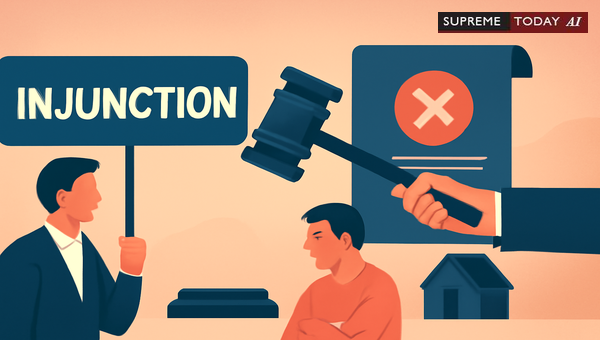
Remedies if Defendant Breaches in Property Disputes
Introduction
In property disputes, a serves as a critical court order preventing a defendant from interfering with the plaintiff's possession or rights over the property. But what happens if the defendant ignores this order and forcibly takes possession after the decree is granted? This scenario raises a pressing legal question: If the Defendant Forcibly Takes Possession of the Property in Suit after the Suit Decree is Granted, what Remedy will the Plaintiff have?
Disobeying a court injunction undermines judicial authority and can lead to severe consequences. This blog explores the procedural remedies available to plaintiffs, drawing from established legal principles, statutory provisions like the , and relevant case law. Note that this is general information and not specific legal advice—consult a qualified lawyer for your situation.
Legal Principles Governing Disobedience of Injunctions
have consistently held that orders, including prohibitory injunctions, must be obeyed. Wilful disobedience amounts to under the , and is punishable to uphold the rule of law. As emphasized in judicial precedents, disobedience of such orders cannot be ignored, as it threatens the integrity of judicial authority 2023 0 Supreme(SC) 837.
Key legal consequences of a breach include:- Restoring parties to their original position before the violation.- Imposing contempt penalties such as fines or imprisonment.- Awarding damages for wrongful acts.- Initiating proceedings if wilful intent is proven 2023 0 Supreme(SC) 837.
In property contexts, forcible dispossession post-injunction is particularly egregious, as it interferes with peaceful possession and enjoyment. Courts protect such rights, noting that obstruction to such right certainly amounts to interference with the peaceful possession 2024 0 Supreme(Ker) 92.
Procedures to Address the Breach
Plaintiffs have multiple avenues to enforce the injunction and seek redress. Here's a step-by-step overview:
1. Contempt Proceedings
The cornerstone remedy is filing a contempt petition under the . Courts can act or on application:- File a petition alleging wilful disobedience.- Court issues notice to the defendant ().- After hearing, impose fines or imprisonment if proven 2023 0 Supreme(SC) 837.
2. Civil Remedies under CPC
Under , courts can punish disobedience with imprisonment, property attachment, or both. This power persists even if jurisdiction is later challenged, as long as the breach occurred beforehand 1997 2 Supreme 395.
Additionally, courts use to:- Restore : Direct the defendant to vacate and restore possession, e.g., demolishing illegal structures 2023 0 Supreme(SC) 837.- Order specific compliance within a timeframe.
For execution of injunction decrees, applies. In one case, where respondents obstructed a compound wall construction post-decree, the court held that the decree for encompasses the right to construct... and obstruction to this right can be remedied under Order 21, Rule 32(5) 2024 0 Supreme(Ker) 92. The was allowed, emphasizing ascertainment of possession.
3. Police Assistance and Eviction
Courts may direct to restore possession in forcible dispossession cases 2023 0 Supreme(SC) 837. This includes evicting unauthorized occupants introduced in breach.
4. Criminal Remedies
For blatant violations, invoke for or , alongside civil actions 2023 0 Supreme(SC) 837.
Court Remedies and Judicial Discretion
Judges wield broad powers to rectify breaches:- Undoing the wrong: Restore previous positions to prevent undue gains 2023 0 Supreme(SC) 837.- Punitive measures: Fines, imprisonment, or property attachment.- Coercive enforcement: Arrest or police intervention.
Key Case Law Insights
- : mandated undoing breach acts, barring defaulting parties from benefits 2023 0 Supreme(SC) 837.
- : Acts in breach are illegal; courts must set things right 2023 0 Supreme(SC) 837.
- : bind courts to undo injunction wrongs 2023 0 Supreme(SC) 837.
Supporting precedents affirm possession protections:- A plaintiff in under an agreement to sell cannot be dispossessed without due process; suits for injunction are maintainable
.- Even against long possession claims, injunctions hold if title and encroachment are proven, without needing possession recovery first 2024 0 Supreme(Ker) 1707.- Forcible ousters entitle tenants to restoration, as a is not entitled to take the law into his own hands
SAMEEM M.U.M. v. DEP. W.W.
.Revenue entries presuming possession are rebuttable; continuous possession must be evidenced for injunctions 2024 0 Supreme(P&H) 564.
Practical Steps for Plaintiffs
- Document the breach: Gather evidence like photos, witness statements, and commissioner reports.
- File promptly: Approach the same court granting the injunction.
- Seek interim relief: Request urgent restoration or police protection.
- Combine remedies: Use contempt alongside execution petitions for comprehensive relief.
Courts prioritize peaceful possession, granting injunctions against true owners if plaintiffs prove lawful enjoyment, barring due process dispossession 2023 0 Supreme(HP) 276.
Conclusion and Key Takeaways
When a defendant forcibly seizes property post-, plaintiffs typically have robust remedies: contempt proceedings, CPC enforcement (Order 39 Rule 2A and Order 21 Rule 32), restoration, and . These measures deter violations and safeguard rights, as courts exercise to undo wrongs and punish contemners 2023 0 Supreme(SC) 837.
Key Takeaways:- Act swiftly to file contempt or execution applications.- Evidence of wilful breach is crucial.- Restoration of possession is a primary goal.- Professional legal counsel is essential for tailored strategy.
References: 2023 0 Supreme(SC) 837 1997 2 Supreme 395 2024 0 Supreme(Ker) 92
2024 0 Supreme(Ker) 1707
SAMEEM M.U.M. v. DEP. W.W.
2024 0 Supreme(P&H) 564This framework upholds judicial sanctity in property law—stay informed and protected.
#ProhibitoryInjunction, #ContemptOfCourt, #PropertyLaw















