


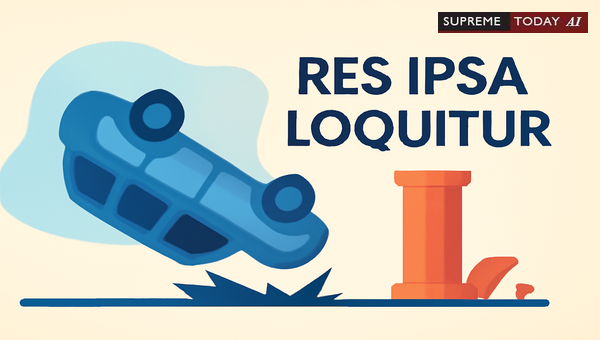
in Civil Cases: Key Applications
In the realm of civil litigation, particularly , certain legal doctrines can shift the dynamics of proving . One such powerful principle is , Latin for the thing speaks for itself. This doctrine allows plaintiffs to establish a based solely on the circumstances of an incident, without direct evidence of fault. But how does it apply in civil cases? If you've ever wondered about the Ras Ippo La Quito Things will Speak on themselves Doctrine Application of Doctrine in Civil Cases, you're likely referring to this very concept—often misspelled or garbled in searches but pivotal in claims.
This blog post delves into the application of in civil cases, drawing from legal precedents and principles. Note: This is general information and not specific legal advice. Consult a qualified attorney for your situation.
Overview of
Definition and Core Principle
is a rule of evidence that infers from the nature of the accident itself. It applies when:- The incident is one that ordinarily does not occur without .- The defendant had exclusive control over the instrumentality causing the harm.- The plaintiff did not contribute to the incident.
As explained in legal texts, It is, in this context, to mitigate the hardship of doctrine of '' has been evolved in the law of tort, which, in other words would mean, things speak themselves. 2022 0 Supreme(Guj) 1657 This doctrine eases the plaintiff's burden, especially when direct proof is elusive, such as in or cases. 2023 0 Supreme(AP) 809
Historical and Judicial Recognition
Originating in common law, has been widely adopted in civil jurisdictions. Courts recognize it to ensure justice where evidence is circumstantial but compelling. For instance, facts of the accident may by themselves constitute evidence of and to such a case the Doctrine of res ipsa loquitor apply which means the things speak for itself. 2020 0 Supreme(Kar) 1400 2020 0 Supreme(Kar) 933 2020 0 Supreme(Kar) 1060 This shifts the burden to the defendant to rebut the presumption. 2023 0 Supreme(AP) 809
Application in Civil Cases: Key Scenarios
The doctrine shines in tort claims where is inferred from glaring evidence. Consider these applications:
Accidents and Personal Injury: In vehicle collisions or falls from defective structures, if the event wouldn't typically happen without carelessness, res ipsa applies. The has noted it as an exception to the general rule that burden of proving lies on the person who alleges it. 2020 0 Supreme(Kar) 1400
: Surgical tools left inside a patient or unexplained surgical errors often invoke res ipsa, as these don't occur without under standard care.
and : Defective products exploding or objects falling from exclusive control (e.g., a barrel from a warehouse) are classic examples. 2023 0 Supreme(AP) 809
In one context, even suspicious circumstances like accepting a bribe under evident wrongdoing can trigger the doctrine, as the evidence is overwhelming and clearly indicates that the defendant's actions led to the harm. 2023 0 Supreme(AP) 809
Legal Precedents and Burden Shifting
Judicial interpretations emphasize its utility: The doctrine has been recognized in various legal contexts, particularly in , where the plaintiff may not have direct evidence of but can demonstrate that the incident would not have occurred without it. This principle helps to shift the to the defendant. 2023 0 Supreme(AP) 809 Courts uphold it when facts are clear and indicative of , reducing the need for extensive proof. 2023 0 Supreme(AP) 809
Related doctrines like can intersect, preventing relitigation of settled issues. For example, The doctrine of in its wider sense was applicable in the present case.
TACON DEVELOPMENT SDN BHD vs ANG CHIN SIONG & ORS (ENCLS 12 & 14) - High Court Malaya Muar
While not identical, these principles reinforce finality in civil proceedings.Limitations and Considerations
is not a silver bullet:- Rebuttable Presumption: Defendants can counter with evidence showing due care. It's a procedural tool, not substantive liability. 2023 0 Supreme(AP) 809- Specific Case Types: Best suited for scenarios like aviation disasters, elevator malfunctions, or anesthesia errors—where is inherently probable.- No Absolute Rule: Courts assess control and foreseeability. As noted, At times, direct evidence is seldom obtainable... this doctrine has been recognised and very well followed. But it requires strong circumstantial evidence. 2000 0 Supreme(Guj) 750
Exceptions arise if multiple parties share control or plaintiff fault contributes. Additionally, doctrines like may limit reapplications in related civil suits.
Integrating Broader Doctrinal Insights
While res ipsa focuses on inference, civil law employs allied principles for efficiency:- : Bars relitigation of decided matters, promoting finality. , both in its narrow and broad senses, is a fundamental doctrine in civil law.
Muslim Best Marketing (M) Sdn Bhd vs Majlis Amanah Rakyat
- : Prevents retrying specific issues, rooted in evidence law.
- : Parties can't contradict prior actions, aiding fairness in disputes. 2025 0 Supreme(Raj) 1343
In service and administrative cases, these ensure stability, mirroring res ipsa's role in torts. 2024 Supreme(Online)(CAT) 5714
Practical Tips for Legal Practitioners and Plaintiffs
- Evaluate Circumstances Early: Assess if the event screams (e.g., plane crash with no weather issues).
- Gather Indirect Evidence: Photos, expert opinions on standard practices strengthen the inference.
- Anticipate Defenses: Prepare for rebuttals like alternative causes.
Use this doctrine strategically in filings to pressure settlements.
Conclusion and Key Takeaways
remains a cornerstone of civil litigation, empowering plaintiffs in cases where direct evidence is scarce. By presuming fault from evident circumstances, it levels the playing field and upholds justice. Key takeaways:- Applies when incidents imply without proof.- Shifts burden to defendants in torts like accidents and malpractice.- Rebuttable, with case-specific limits.- Complements doctrines like for comprehensive civil strategy.
For deeper dives, reference precedents such as 2023 0 Supreme(AP) 809, 2022 0 Supreme(Guj) 1657, and 2020 0 Supreme(Kar) 1400. Always seek professional counsel tailored to your jurisdiction and facts.
#ResIpsaLoquitur, #CivilLaw, #NegligenceDoctrine















