


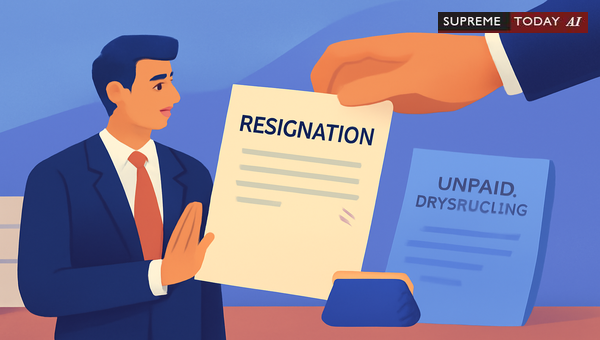
Can You Retract Resignation for in India?
Resigning from a job is a significant decision, but what happens when unpaid salaries, bonuses, or other entitlements surface afterward? Many employees wonder: after Resignation – can I retract the resignation and deem myself constructively dismissed? This question arises frequently in Indian employment contexts, especially in government and public sector roles governed by service rules.
In this post, we explore the legal landscape under Indian administrative and service laws. We'll break down key principles, judicial precedents, and practical recommendations. Note: This is general information based on legal documents and is not specific legal advice. Consult a qualified lawyer for your situation.
Understanding and
Once you submit your resignation, its fate hinges on acceptance by the competent authority. Under established principles, resignation becomes effective from the date of acceptance2020 5 Supreme 537 2001 0 Supreme(SC) 1945. A pivotal ruling states: When a public servant has invited by his letter of resignation the determination of his employment, his services normally stand terminated from the date on which the letter of resignation is accepted by the appropriate authority. 2020 5 Supreme 537
is typically allowed only before acceptance. Post-acceptance, is not permitted as a matter of right. As affirmed: Once his resignation is accepted there remains no between employee and employer and employee cannot claim for or resignation nor reinstatement in the post. 2001 0 Supreme(SC) 1945
This principle ensures finality in employment termination, preventing unilateral reversals that could disrupt organizational functioning.
Key Scenarios from Case Law
- Public Servants and Government Employees: Resignations lead to cessation of service, with no automatic right to reinstatement 2020 5 Supreme 537.
- Technical Resignations: In cases like joining another government role where prior service counts, it may not forfeit past service 2022 0 Supreme(Ker) 281 2010 0 Supreme(Ker) 310. However, standard resignations entail unless specified otherwise.
: Separate from Resignation Validity
Unpaid dues like salaries, increments, or pensionary benefits do not invalidate an accepted resignation. These are separate legal claims that can be pursued post-termination
2020 5 Supreme 537 1987 0 Supreme(SC) 919. For instance, in a case involving pensionary benefits after resignation due to ill health, the court upheld acceptance and denied benefits under , as the resignation was voluntary 2024 0 Supreme(Mad) 575. The employee had received other benefits, but pension was ineligible.
Attempting to link to resignation retraction fails because:- Unpaid dues alone do not imply invalidity of resignation.- They represent a contractual or statutory right enforceable independently.
: Not Triggered by Unpaid Dues Alone
occurs when an employer's actions breach the contract, forcing resignation. Mere do not constitute
. It requires fundamental breaches creating a hostile environment, not isolated payment delays.
Courts distinguish this from . Even in discussions of bank employees' claims, acceptance of resignation and were treated separately
.
Exceptions: When Resignation Can Be Challenged
While the default is finality, exceptions exist:- or : If resignation was obtained forcibly, it may be vitiated
. In one case, a Sarpanch alleged pressure by antisocial elements to sign a resignation form; the court noted disputes must go to the Collector under , Section 29(3), but allowed considerations 2018 0 Supreme(Bom) 1301.- : Lack of proper notice or verification can lead to disputes 2018 0 Supreme(Bom) 1301.- : Some rules allow within limits, e.g., for permanent employees within 90 days under certain conditions, or post-release if stipulated 2012 0 Supreme(Gau) 933. rules permitted review for reinstatement applications within 90 days.- Ill Health or Special Grounds: Resignations on medical grounds may affect benefits like pensions, but acceptance remains binding unless proven otherwise 2024 0 Supreme(Mad) 575.- Service Rules Specifics: note resignations to countable service appointments aren't full public service resignations, preserving some benefits 2010 0 Supreme(Ker) 310 2009 0 Supreme(Ker) 91.
These exceptions require strong evidence; courts emphasize timely grievances and statutory interpretation 2024 0 Supreme(Mad) 575.
Practical Recommendations for Employees
If facing this issue:- Before Resignation: Negotiate dues and obtain written settlements.- Post-Acceptance: File separate claims for via labour courts or civil suits; do not rely on retraction.- Challenge if Applicable: Gather proof of , threats, or irregularities. For elected roles, follow dispute mechanisms 2018 0 Supreme(Bom) 1301.- Pension and Benefits: Check specific rules (e.g., KSR Part III); resignations often forfeit unless exceptions apply 2022 0 Supreme(Ker) 281.- Seek Counsel: Review your appointment letter, service rules, and timelines.
Resignation having taken effect upon its acceptance, was of no consequence.2020 5 Supreme 537
Conclusion and Key Takeaways
In summary, under Indian law, you generally cannot retract an accepted resignation to claim or assert . Acceptance terminates the employment relationship irrevocably in standard cases 2001 0 Supreme(SC) 1945. Unpaid dues are pursued separately, and demands more than payment issues.
Key Takeaways:- Resignation is effective upon acceptance; only pre-acceptance 2020 5 Supreme 537.- ≠
.- Exceptions for or rules-based withdrawals are narrow
2012 0 Supreme(Gau) 933.- Always document everything and consult professionals.
Stay informed on your rights to navigate employment transitions smoothly. For personalized guidance, reach out to a legal expert.
References:1. 2020 5 Supreme 537: Effectiveness and irrevocability post-acceptance.2. 2001 0 Supreme(SC) 1945: No post-acceptance.3.
: Unpaid dues as separate issue.4.
,
: exceptions.5. 1987 0 Supreme(SC) 919: Separate recovery of dues.6. Additional cases: 2024 0 Supreme(Mad) 575, 2018 0 Supreme(Bom) 1301, 2012 0 Supreme(Gau) 933, etc., for contextual depth. #EmploymentLawIndia, #ResignationRights, #LabourLaw















