


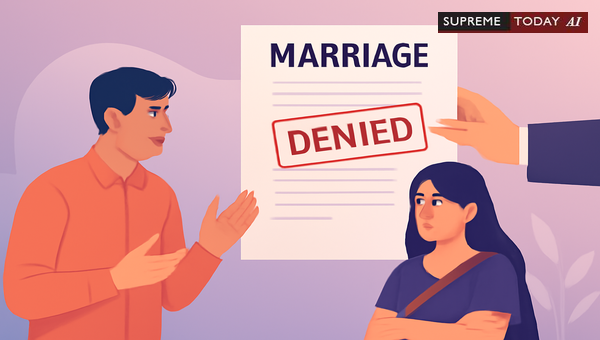
Wife Denies Court Marriage: Legal Ways to Bring Her Back in India
In India, court marriages under the , offer a simple path to without religious rituals. However, what happens if, after the court marriage, the wife denies the union or walks away? A common query from distressed husbands is: Agr Ladki Court Marriage Kar Ke Mukar Jaye to Kese Biwi Ko Wapas Laye? (If a girl does a court marriage and then denies it, how to bring the wife back?).
This situation raises complex issues of consent, marriage validity, and spousal rights. While emotions run high, legal remedies exist, but they must be pursued carefully to avoid escalation into criminal complaints like or dowry demands. This article provides general information based on Indian family law and is not a substitute for professional legal advice. Consult a qualified lawyer for your specific case.
Understanding Court Marriages and Wife's Refusal
Court marriages are legally binding if both parties give , are of legal age (21 for groom, 18 for bride), and follow notice procedures under the . Once registered, the marriage certificate serves as irrefutable proof unless challenged on grounds like fraud or coercion.
If the wife mukar jaye (denies or leaves), it may stem from family pressure, mismatched expectations, or allegations of duress. Courts view such withdrawals critically, but husbands aren't powerless. Key is proving the marriage's validity and absence of reasonable excuse for her departure. (The marriage between the instant petitioner and his wife was solemnized on .) 2024 Supreme(Online)(Del) 32834
Primary Legal Remedy:
Even for court marriages (governed by Special Marriage Act), under (or equivalent under SMA ) is a go-to remedy. This allows a spouse to petition the if the other has withdrawn from society without reasonable cause.
- Process: File a petition in the where you last cohabited or where the wife resides.
- What Courts Consider: Evidence of valid marriage, attempts at reconciliation, and rebuttal of her claims (e.g., , coercion).
- Outcome: If granted, the court orders the wife to return and resume . Non-compliance can lead to attachment of her property or even grounds for divorce later.
Success hinges on facts. Courts won't force reconciliation if abuse is proven. (: This section allows a spouse to file a petition for if the other spouse has withdrawn from the society of the petitioner without reasonable excuse.) 1991 0 Supreme(MP) 49
Validity of Marriage and Consent Issues
Challenging Consent
The wife may claim consent was under duress, invalidating the marriage. Courts scrutinize:- Marriage notice and objections period.- Witnesses and registrar's records.- Post-marriage conduct.
If proven coerced, under is possible. But mere denial post-marriage isn't enough; evidence is key. In threat-laden cases, escalation risks backfire: (Aaj goli bahar chalai hai eeb ki bari thare ghar mai koi nhi bacheja agar nhi maane sabko marwa dunga) 2024 Supreme(Online)(Del) 32834. Avoid such tactics, as they invite charges.
When Reconciliation Fails:
Courts increasingly recognize dead marriages. Under , may dissolve if irretrievable: (Courts have recognized that if a marriage has broken down irretrievably, it may be in the interest of justice to dissolve the marriage rather than force reconciliation.) 2013 0 Supreme(All) 1696
Related cases highlight caution:- In dowry death probes, are probed deeply for reliability. (In a case involving the unnatural death of a young bride within seven years of marriage, the court must be cautious in accepting .) 2013 0 Supreme(Del) 1569- Dowry demands post-marriage qualify as offenses: (The court held that the demand of dowry after marriage, as per the amended definition of dowry in the , constituted dowry.) 2004 0 Supreme(All) 262
These underscore avoiding pressure tactics.
Step-by-Step Guide to Bring Wife Back
- Gather Documentation:
- Marriage certificate.
- Proof of (photos, witnesses).
Communication records showing reconciliation attempts.
Attempt Amicable Resolution:
- Family counseling or mediation via .
Police panchayat (avoid formal complaints initially).
File Petition:
- Under /SMA .
- Jurisdiction: .
Timeline: 6-18 months typically.
Counter Allegations:
- If she files 498A or , defend with evidence.
(It is crucial to gather all relevant documentation regarding the marriage, including the marriage certificate, any communication regarding the marriage, and evidence of attempts to reconcile.) 2008 5 Supreme 198
Risks and Alternatives
- Criminal Cases: Wife's family may file false cases. Recent judgments stress evidence scrutiny in child-related or matters. (The admissibility of the child victim's statement to her mother as evidence, despite the child not being examined as a witness due to her tender age, was a central legal point.) 2017 0 Supreme(Del) 3001
- Mediation First: Courts favor it; success rates higher.
- Divorce Option: If restitution fails, file under /.
Beware unrelated escalations like in burn injury cases: (Ladki ki behen jo ki Naraina mein rahti hai aakar hamko samachar diya... Rajesh tatha uske dow bhayion ne hatapai ki) 2013 0 Supreme(Del) 1569.
Key Case Laws and Precedents
- Restitution Granted: Where withdrawal unjustified, courts order return. 1991 0 Supreme(MP) 49
- Breakdown Doctrine: No forced reunion in dead marriages. 2013 0 Supreme(All) 1696
- Dowry Contexts: Highlights harassment risks. 2004 0 Supreme(All) 262
Recommendations for Husbands
- Seek Legal Counsel Immediately: Family law experts navigate nuances.
- Prioritize Peace: Counseling over confrontation.
- Document Everything: Protects in court.
((Legal Action: The husband should consider filing a petition for under Section 9 of the Hindu Marriage Act. This legal action can compel the wife to return if the court finds the marriage valid and the withdrawal unjustified. Counseling and Mediation: Before pursuing legal action, it may be beneficial to explore counseling or mediation.) 1991 0 Supreme(MP) 49
Conclusion and Key Takeaways
Bringing back a wife who denies a court marriage is possible via restitution petitions, but success depends on validity, evidence, and no misconduct. Prioritize dialogue; courts favor willing unions. Generally, outcomes vary—always consult a lawyer.
Key Takeaways:- File under for restitution.- Prove consent and no excuse for leaving.- Avoid threats; they boomerang.- Mediation before litigation.
Stay informed, act wisely. For personalized guidance, contact a family lawyer today.
References: 1991 0 Supreme(MP) 49 2008 5 Supreme 198 2013 0 Supreme(All) 1696 2024 Supreme(Online)(Del) 32834 2013 0 Supreme(Del) 1569 2004 0 Supreme(All) 262 2017 0 Supreme(Del) 3001
#CourtMarriage #FamilyLawIndia #ConjugalRights












