


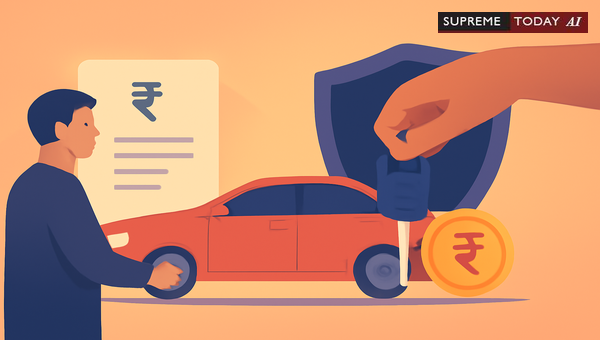
Seller Liable for Road Tax After Vehicle Sale and Export in Kerala?
Imagine selling your car or bike in Kerala, handing over the keys, and waving goodbye—only to receive a road tax notice months later. The buyer exported the vehicle without completing the ownership transfer under . Are you, the seller, still on the hook? This is a common pitfall for vehicle sellers, and the answer typically hinges on registration records. This post breaks down the law, key cases, and practical steps to protect yourself. Note: This is general information based on legal precedents and not specific legal advice. Consult a lawyer for your situation.
The Core Legal Question
If a person has sold the vehicle and it was subsequently exported by the buyer without completing transfer under Section 50 of the Kerala Motor Vehicles Act, will the seller be liable for road tax?
In short, yes—generally, the seller remains liable. Under the (which governs Kerala via state rules), road tax liability sticks with the until the transfer is formally recorded with the . Exporting the vehicle doesn't change the records, leaving the original owner responsible for taxes, fines, and even accident liabilities. 2001 0 Supreme(Guj) 10
Key Legal Provisions: Who is the 'Owner'?
The foundation lies in Section 2(30) of the , defining 'owner' as a person in whose name a motor vehicle stands registered. This isn't about who physically possesses the vehicle but whose name is in the RTO records. 2012 0 Supreme(Mad) 2355
Section 50 outlines the transfer process:- The seller () must report the sale to the RTO within .- The buyer () must apply for ownership transfer within (or as per rules).
Failure means the seller stays the . The definition of owner under , is the person in whose name the vehicle is registered. 2012 0 Supreme(Mad) 2355
Kerala follows these central provisions, with state taxation acts reinforcing that unpaid tax liability persists with the . Non-compliance doesn't invalidate the private sale but keeps statutory duties intact. 2019 0 Supreme(SC) 1413 2018 0 Supreme(SC) 1266
Case Law: Bears the Burden
Courts consistently uphold this. In , the court ruled: even if ownership transfers under (like ), the remains liable for road tax, accidents, or violations until RTO records update. The continued registration in the original owner’s name makes them liable for road tax and liability for accidents or violations. 2001 0 Supreme(Guj) 10
Another precedent: The judgment in 2001 0 Supreme(Guj) 10... emphasizes that even if ownership is transferred in , the remains liable until the transfer is registered with the RTO.
Supporting cases echo this:- In a motor accident claim, the court held the seller liable because they didn't report the transfer within : Reporting the transfer of vehicle as contemplated under section 50 of the M.V.Act. was mandatory. The appellant not having reported the transfer within the time prescribed by section 50 of the M.V. Act continued to be the owner. 2019 0 Supreme(Bom) 2162- : The of a vehicle remains liable for tax unless proper statutory notification of transfer is established.
- : Section 50 of The Motor Vehicles Act casts an obligation upon the and the to report the factum of transfer to the Registering Authority.
These rulings clarify: private agreements or possession handover aren't enough. RTO entry is key. 2009 0 Supreme(P&H) 1706
Impact of Export: Does It Change Anything?
Exporting the vehicle—say, to UAE or Africa—doesn't absolve the seller. If the buyer skips Section 50, the vehicle stays registered in your name. Road tax arrears accrue, and RTO demands payment from you. Merely exporting or removing the vehicle without completing the formal transfer does not terminate the original owner’s liability under the law. 2019 0 Supreme(SC) 1413
One case notes: The act of exporting the vehicle without completing the transfer does not automatically absolve the seller of liability under the Motor Vehicles Act, as the record of ownership has not been updated. Even if the vehicle leaves India, like tax persist until records reflect the change. Courts have seen similar disputes where sellers faced tax demands post-export due to incomplete paperwork.
Contrast with cases: Financiers retain rights post-seizure until formal termination, mirroring how sellers must formalize transfers. 2011 0 Supreme(Bom) 1138
Exceptions and Limitations
Limited relief exists:- Completed Transfer: If both parties comply with Section 50 and RTO records update, liability shifts. 2012 0 Supreme(Mad) 2355- Proof of Compliance: Sellers can challenge demands by showing RTO-intimated transfer.- Civil vs. Statutory Ownership: Some cases distinguish for accidents (e.g., actual owner liable), but tax typically follows registration. 2014 0 Supreme(P&H) 1653
However, The law does not recognize informal or non-recorded transfers as valid for absolving liability. No automatic exemptions for exports. 1966 0 Supreme(MP) 160
Practical Recommendations for Sellers
Protect yourself:1. Insist on Joint Reporting: Accompany the buyer to RTO for immediate transfer.2. Get NOC: Obtain a post-transfer.3. Document Everything: Keep sale deed, delivery note, and RTO acknowledgment.4. Notify RTO Yourself: Report within , even if buyer drags feet.5. For Exports: Buyers need export clearance, but sellers should verify transfer first.
Buyers: Complete formalities before shipping—avoid fines and disputes. In disputes, tribunals may direct recovery from the actual user, but you'll fight it first. 2019 0 Supreme(Bom) 2162
Conclusion and Key Takeaways
Under Kerala rules via the Motor Vehicles Act, selling and exporting a vehicle without Section 50 transfer leaves the seller liable for road tax—as the . Cases like 2001 0 Supreme(Guj) 10 and 2012 0 Supreme(Mad) 2355 confirm: update records or bear the cost.
Key Takeaways:- = Tax payer until formal transfer.- Export ≠ Liability end.- Act fast: Report within .- Always verify RTO records post-sale.
Stay proactive to avoid surprises. For personalized guidance, reach out to a local motor vehicles lawyer.
References: 2001 0 Supreme(Guj) 10 2012 0 Supreme(Mad) 2355 2019 0 Supreme(SC) 1413 2018 0 Supreme(SC) 1266 2019 0 Supreme(Bom) 2162
#RoadTaxLiability, #VehicleTransferKerala, #MotorVehiclesAct












