
Searching Case Laws & Precedent on Legal Query.....!
Analysing the retrieved Case Laws
Scanned Judgements…!
Searching Case Laws & Precedent on Legal Query.....!
Analysing the retrieved Case Laws
Scanned Judgements…!
Notice under Section 13(2) - Acts as a condition precedent for invoking Section 13(4). Once issued, the secured creditor can proceed with measures like taking possession or selling the secured assets. The notice also prevents the borrower from transferring the secured assets without creditor’s consent, acting as an attachment. Challenges to this notice are generally not entertained once the process under Section 13(4) begins, and the notice's validity is upheld unless procedural errors are evident. 2022 0 Supreme(Guj) 1531
Validity of Demand Notices and Service - Proper service of demand notices is crucial for initiating proceedings under sections like 138 of the NI Act. Notices must be issued correctly, and their content should match the cheque amount. Failure to serve a valid notice or issuing a notice in excess of the cheque amount can invalidate the proceedings. Courts have emphasized reading notices as a whole and ensuring compliance with procedural requirements. 2024 0 Supreme(UK) 316, 2023 0 Supreme(Bom) 1762
Challenging Notices and Procedural Compliance - Notices served via affixture or without proper judicial order can be challenged. Service avoidance or improper publication impacts the validity of subsequent legal actions. Courts scrutinize adherence to procedural rules such as Order V Rule 20 of CPC, and non-compliance can render notices invalid. Proper proof of service, including postal receipts, is essential. 2024 0 Supreme(Kar) 641, 2023 0 Supreme(AP) 1194
Legal Proceedings and Time Limits - Suit for recovery based on pronotes must be filed within three years from the date of the respective pronote. The issuance and receipt of cheques as security do not automatically imply enforceable debt unless linked with valid notices and legal procedures. Service of notices and their acknowledgment are vital in establishing the cause of action. 2023 0 Supreme(AP) 1194
Legal Notices and Cheque Amounts - Notices under Section 138 must demand the cheque amount specifically; any demand exceeding this amount is invalid. Proper issuance and service of such notices are fundamental, and failure to adhere to these principles can lead to dismissal of complaints. Courts have clarified that the demand must correspond to the cheque amount issued as security or debt. 2023 0 Supreme(Bom) 1762
Impact of Multiple Notices and Delay - Repeated notices or delays in service can bar subsequent proceedings if they are not properly justified or if the second notice is issued after the cause of action has lapsed. Courts have dismissed cases where the second legal notice was issued without proper grounds or after the expiry of the limitation period. Proper proof of service and timely issuance are critical. 2022 0 Supreme(P&H) 2003,
TATA CHEMICALS VS SKYPAK COURIERS PVT. LTD. - Consumer (2001)
Analysis and Conclusion:The core principle across these sources is that notices under Sections 13(2) and 138 of the NI Act are integral to the legal process and cannot be challenged lightly once procedural requirements are met. The notices serve as a mandatory step, and their validity depends on proper issuance, service, and content accuracy. Challenges to notices are generally limited to procedural flaws, and courts uphold their validity to ensure the enforcement process proceeds smoothly. Therefore, once a legal notice is properly issued and served, it cannot be challenged merely on technical grounds, and the process of recovery or enforcement can proceed.
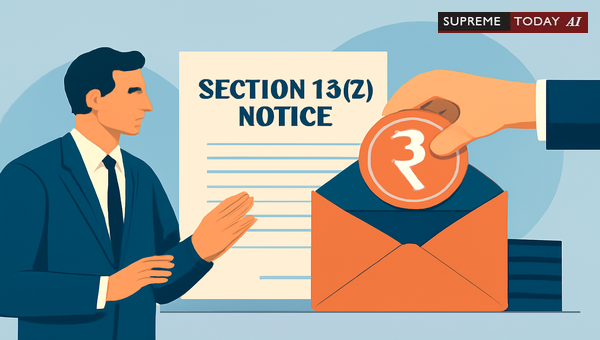
In the realm of debt recovery in India, the Securitisation and Reconstruction of Financial Assets and Enforcement of Security Interest Act, 2002 (SARFAESI Act) plays a pivotal role. One critical step in this process is the issuance of a notice under Section 13(2). But what happens when a borrower wants to question its validity? The legal question at hand—13(2) Notice Cannot be Challenged—captures a common concern for borrowers facing enforcement actions by secured creditors like banks.
This blog post delves into the validity of Section 13(2) notices, why they are generally not easily challengeable, key judicial precedents, exceptions, and practical advice. While this provides general insights based on court rulings, it is not legal advice—consult a qualified lawyer for your specific situation.
Section 13(2) of the SARFAESI Act requires a secured creditor to issue a notice to the borrower demanding payment of the outstanding dues within 60 days. This notice acts as a condition precedent for further enforcement measures under Section 13(4), such as taking possession of secured assets. It also restricts the borrower from transferring or disposing of the assets without the creditor's consent, effectively acting like an attachment. 2022 0 Supreme(Guj) 1531
Once issued, the borrower can respond under Section 13(3) with objections. However, the real debate arises: can this notice be challenged in court?
Courts have consistently held that a Section 13(2) notice is presumptively valid and cannot be lightly challenged. Here's why:
A notice issued by an advocate on behalf of the secured creditor is valid. It does not need to be signed personally by the creditor or an authorized officer; instructions from the creditor suffice. 2013 0 Supreme(Raj) 51
If the creditor has already taken measures under Section 13(4), challenges to the 13(2) notice are not maintainable before regular civil courts. The borrower's remedy lies under Section 17 before the Debt Recovery Tribunal (DRT). 2014 0 Supreme(Del) 3257
Challenges succeed only on grounds of lack of jurisdiction or non-compliance with mandatory requirements. If the notice complies and the borrower ignored interim orders, courts dismiss petitions. 2016 0 Supreme(Ori) 43
No bar exists on issuing a second 13(2) notice if the first wasn't acted upon, giving borrowers another chance. 2008 0 Supreme(Chh) 314
These principles ensure swift debt recovery while protecting creditor rights.
While robust, notices aren't invincible. Courts allow challenges in narrow circumstances:
Wholly Without Jurisdiction or Mandatory Non-Compliance: If the notice lacks jurisdiction or fails mandatory procedural steps, it can be questioned. However, if served and undisputed, challenges fail. 2016 0 Supreme(Pat) 346 2022 0 Supreme(MP) 435
Failure to Object Timely: Having failed to even object to the notice under section 13(2), respondents 1 and 2 cannot now turn around and question the validity of the notice issued under section 13(2) of the Act, merely on the ground that a higher quantum is demanded. 2022 0 Supreme(Ker) 285
No Prior Service: Proceedings under Section 14 are untenable without 13(2) and 13(4) notices. Notice dated 27.01.2017 issued by the District Collector-cum-District Magistrate... has been challenged... on the grounds that no notice has been served under Sections 13(2) & 13(4). 2017 0 Supreme(Mad) 1322
Additionally, general notice principles apply: proper service is crucial. Improper service via affixture without judicial order or lack of proof (e.g., postal receipts) can invalidate proceedings. 2024 0 Supreme(Kar) 641 2023 0 Supreme(AP) 1194
Similar rigor applies to notices under other laws, like Section 138 of the Negotiable Instruments (NI) Act. Courts emphasize:
Notices must demand exact amounts; excess invalidates them. 2023 0 Supreme(Bom) 1762
Service proof is mandatory; delays or multiple notices without justification fail. 2023 0 Supreme(Chh) 422 2022 0 Supreme(P&H) 2003
Unchallenged notices form a solid foundation: If the notice is challenged and found to be valid, or where the notice is not at all challenged, then in either case it cannot be said that notice is invalid. 2016 0 Supreme(P&H) 2474 2016 0 Supreme(P&H) 2481
These reinforce SARFAESI's approach: notices are foundational, challengeable only on procedural flaws. 2024 0 Supreme(UK) 316
Failure to object timely waives later claims. 2022 0 Supreme(Ker) 285
| Case Reference | Key Holding ||---------------|-------------|| 2013 0 Supreme(Raj) 51 | Advocate-issued notice valid. || 2014 0 Supreme(Del) 3257 | Post-13(4), remedy under Section 17. || 2016 0 Supreme(Ori) 43 | Challenge only on jurisdiction/non-compliance. || 2008 0 Supreme(Chh) 314 | Second notice permissible. || 2016 0 Supreme(Pat) 346 2022 0 Supreme(MP) 435 | Exceptions for jurisdiction flaws. || 2022 0 Supreme(Ker) 285 | No belated challenge on quantum. |
The prevailing judicial view is clear: Section 13(2) notices under the SARFAESI Act are generally valid and not easily challenged unless significant procedural defects exist, such as lack of jurisdiction or improper service. Courts prioritize enforcement efficiency, directing borrowers to statutory remedies like Section 17 DRT proceedings after creditor actions commence.
Key Takeaways:- Notices by advocates are fine if authorized. 2013 0 Supreme(Raj) 51- Challenge pre-13(4) only on strong grounds; post-13(4), go to DRT. 2014 0 Supreme(Del) 3257- Timely objections prevent waiver. 2022 0 Supreme(Ker) 285- Proper service is non-negotiable. 2023 0 Supreme(AP) 1194
Borrowers: Comply promptly and seek legal counsel. Creditors: Document everything meticulously.
Disclaimer: This is general information based on reported cases 2013 0 Supreme(Raj) 51 2016 0 Supreme(Ori) 43 2014 0 Supreme(Del) 3257 2008 0 Supreme(Chh) 314 2016 0 Supreme(Pat) 346 2022 0 Supreme(MP) 435. Laws evolve; professional advice is essential.
#SARFAESIAct, #DebtRecovery, #LegalNotice
(iv) Notice under Section 13(2) is a condition precedent to the invocation of Section 13(4) by the secured creditor and once notice under Section 13(2) is issued, the secured creditor is entitled to take any of the measures provided in Section 13(4). ... Kanji Manji (supra), it was the case before the Bombay High Court that a challenge to the #HL_STAR....
13. As in the instant case, no demand was made for payment of the cheque amount, we are of the opinion that the impugned judgment cannot be faulted.” 7. ... issued, does not as held by this Court invalidate the notice, there is no reason as to why a consolidated notice for two complainants cannot be issued. ... Arihant Fertilizers & Chemicals and another, (2008) 2 SCC 321, wherein the H....
2. This Miscellaneous First Appeal is filed against the order passed in Misc.No.25012/2022 rejecting the petition filed under Order 9 Rule 13 r/w Section 151 of C.P.C with cost of Rs.1,000/-. 3. ... Bhagya 2018 SCC Online KAR 4537, wherein also, in case notice was served by affixture on the board, without the judicial order having been passed in that regard order was challenged and Court having considered that there was n....
2. Ex.P.2-pronote is dated 13.11.1998. 3. A suit for recovery of money based on those pronotes, is to be filed within three years from the respective dates. 4. ... In evidence of it Exs.P.1 and P.2 pronotes were marked. The allegation is that towards repayment of that debt, the accused had given a cheque dated 13.05.2000. That cheque is Ex.P.3. ... These findings are challenged in this ....
Conspectus of both the decision lays down the proposition of law that the demand notice cannot exceed the cheque amount. The expression 'said amount money' agreeing in clause (b) and (c) to the proviso of Section 138 needs to be interpreted as the cheque amount only. 13. ... 13. As in the instant case, no demand was made for payment of the cheque amount, we are of the opinion that the impugned judgment cannot#HL....
2. Heard learned counsel for the parties and perused the record. 3. ... The petitioner through the medium of the present petition has challenged complaint filed by the respondent against him alleging commission of offence under Section 138 of NI Act. ... So far as the defence of the petitioner that notice of demand was never served upon him is concerned, there was no material available before the learned trial Magistrate to this effect at ....
frame, cannot and does not render the Legal Notice invalid qua the three cheques which are very much within limitation. ... 2. ... (2011) 13 SCC 88, learned counsel for the respondent submitted that since all the three cheques were issued by the petitioner no.2 as a partner and agent of the petitioner no.1 partnership firm, vide Section(s) 18, 19, 25 and 26 of the Partnership Act, 1932, the petitioners .....
13. ... Venkatachalam 2008 (2) RCR (Criminal) 409 (Madras) and R. Kanthimathi and 2 others Vs. Bank of India 2007 (4) RCR (Criminal) 191 (Madras), with due deference to the law laid down therein, are not applicable on the facts of the present case. 13. ... So in the present case second legal notice cannot be considered and complaint is barred by first legal notice and ....
Shah (2008) 13 SCC 689]. 21. ... 2. ... the postal receipt which is a necessary document to establish the fact that mandatory notice was issued to the accused. ... Shah, (2008) 13 SCC 689]. The counsel pointed out that by Amending Act 55 of 2002, a proviso was added to Section 142(b) of the NI Act. ... He would submit that it is a special Act and the delay cannot be condoned by the courts while exercisin....
The relevant paragraphs read as under: "13. ... 2. By means of this petition, the petitioner has challenged the order dated 10.12.2020 passed by the Court of Metropolitan Magistrate, Kanpur Nagar in complaint case no. 82 of 2020 (Ritesh Kumar Singh vs. ... The contention is that where no particular date of service of notice has been disclosed, the time period of 15 days cannot be presumed to run from som....
Having failed to even object to the notice under section 13(2), respondents 1 and 2 cannot now turn around and question the validity of the notice issued under section 13(2) of the Act, merely on the ground that a higher quantum is demanded. Had the borrower or the guarantor objected to the demand notice, necessarily the bank would have got an opportunity to correct the quantum in the reply to their objections. Therefore, I am of the view that the demand notice dated 21-11-20....
The Court has also observed that the respondent NCTE is at liberty to take fresh decision in view of the information supplied by the petitioner on 30.01.2019 in the light of the regulations prevailing as on date and therefore, the show-cause notice was issued. It is vehemently contended that the notice cannot be challenged in the writ petition. In support of his submission, the learned counsel has relied on the judgment of the Apex court rendered in case of Medical Council of....
4. In the abovesaid circumstances, notice dated 27.01.2017 issued by the District Collector-cum-District Magistrate, Thiruvallur, has been challenged in this writ petition on the grounds that no notice has been served under Sections 13(2) & 13(4) of the SARFAESI Act, 2002 and therefore, proceedings under Section 14 of the Act, is untenable.
But the same can be checked at the initial stage by challenging the notice. If the notice is challenged and found to be valid, or where the notice is not at all challenged, then in either case it cannot be said that notice is invalid. As such, if the notice is valid, then the foundation remains and the proceedings on the basis of such notice can go on. We may only reiterate here that once the proceedings have been initiated on a valid notice, it becomes the duty of the Assess....
But the same can be checked at the initial stage by challenging the notice. As such, if the notice is valid, then the foundation remains and the proceedings on the basis of such notice can go on. If the notice is challenged and found to be valid, or where the notice is not at all challenged, then in either case it cannot be said that notice is invalid. We may only reiterate here that once the proceedings have been initiated on a valid notice, it becomes the duty of the Assess....
Login now and unlock free premium legal research
Login to SupremeToday AI and access free legal analysis, AI highlights, and smart tools.
Login
now!
India’s Legal research and Law Firm App, Download now!
Copyright © 2023 Vikas Info Solution Pvt Ltd. All Rights Reserved.







