


Child Legitimacy vs Paternity: Indian Law Explained
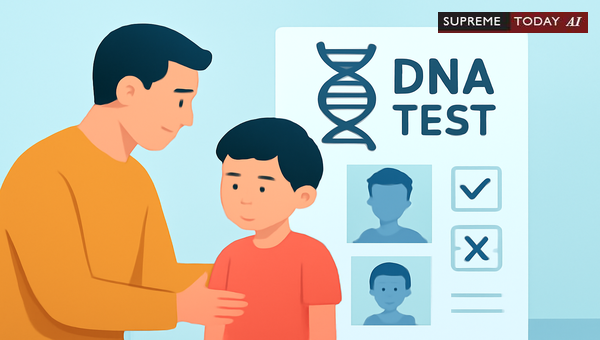
In family law disputes, few issues are as emotionally charged and legally complex as determining a child's legitimacy and biological parentage. Questions like Legitimacy Parentage of a Child often arise in divorce proceedings, maintenance claims, or inheritance battles, pitting legal presumptions against scientific evidence. Under Indian law, the balance favors protecting the child's status, but modern DNA testing adds layers of nuance.
This blog post breaks down the key principles from , the role of DNA tests, and judicial interpretations. Whether you're navigating a family court case or simply curious about your rights, understanding these concepts can clarify expectations. Note: This is general information based on legal precedents and not specific legal advice. Consult a qualified lawyer for your situation.
The Core Legal Presumption Under Section 112
Indian law establishes a for children born during a valid marriage. states that a child born during the continuance of a valid marriage or within 280 days after its dissolution (if the mother remains unmarried) is conclusive proof of the husband's paternity—unless rebutted by evidence of at the time the child could have been begotten. 2025 0 Supreme(Gau) 535
This presumption, rooted in the maxim (the marriage points out the father), prioritizes social stability and the child's welfare over mere suspicions of infidelity. Courts have repeatedly emphasized: The presumption of legitimacy under Section 112 is conclusive unless rebutted by proof of . 2005 3 Supreme 569
Why is the Key Threshold
means the husband had no opportunity to have marital relations with the wife during the conception window. Proving this is a on the challenger. Evidence of adultery alone won't suffice; it must be clear, strong, and satisfactory. 2005 3 Supreme 569
In one case, the court noted: The presumption of legitimacy is this, that a child born of a married woman is deemed to be legitimate, it throws on the person who is interested in making out the illegitimacy, the whole burden of proving it. 2023 0 Supreme(P&H) 1152
Distinguishing Legitimacy from Biological Paternity
Legitimacy (legal fatherhood) and paternity (biological fatherhood) are distinct concepts. Legitimacy protects the child's social and inheritance rights based on marriage and access. Paternity is a scientific fact, provable via DNA tests with over 99% accuracy. 1993 0 Supreme(SC) 532
Courts clarify: Parentage (biological paternity) and legitimacy are distinct concepts; legitimacy is a legal presumption based on marriage and opportunity for access, while paternity is a scientific fact that can be established through DNA testing. 2025 3 Supreme 600 1993 0 Supreme(SC) 532
DNA evidence doesn't automatically override the presumption. It serves as a rebuttal tool only after is shown. DNA tests are scientifically accurate and relevant for establishing biological parentage but do not automatically displace the legal presumption of legitimacy unless is proved. 2005 3 Supreme 569 2010 0 Supreme(Ker) 1004
When Can Courts Order DNA Tests?
DNA tests aren't routine. Courts order them only on a strong , respecting privacy rights and avoiding stigma. A DNA test cannot be ordered as a matter of routine and should only be ordered if a strong is made. The burden of proof lies on the litigating party. 2023 0 Supreme(P&H) 1152
In a maintenance dispute under , the court set aside a DNA order because the plaintiff failed to establish a , emphasizing: A party cannot be compelled to prove the case in the manner suggested by the contesting party. 2023 0 Supreme(P&H) 1152
Similarly, DNA tests for paternity are not warranted without explicit denial of paternity, and consent is ideal, especially for minors. 2025 0 Supreme(Bom) 1003 2013 0 Supreme(Ker) 993
Public policy reinforces this: The presumption of legitimacy can only be rebutted by proving lack of access. Public policy supports avoiding unnecessary challenges to legitimacy when access has not been clearly denied. 2025 0 Supreme(Bom) 1003
Balancing Child's Rights and Privacy
act as (guardian of minors), prioritizing the child's welfare. In a case involving a neglected child, the court justified probing paternity for social justice under Articles 15(3) and 39 of the Constitution. 2018 0 Supreme(Ker) 283
However, the child's right to identity must balance against privacy intrusions. Internationally recognized, this right influences Indian courts but doesn't displace Section 112. 2010 0 Supreme(Ker) 1004
Judicial Applications and Exceptions
- Matrimonial Causes: can decide legitimacy in divorce or maintenance suits but require proof. 2013 0 Supreme(AP) 1098
- Illegitimate Children: For children outside marriage, DNA tests may establish paternity if both parties agree. Legitimacy can be established by legal presumption; whereas it is desirable to establish paternity by scientific test (DNA test) particularly when both parties agree. 2013 0 Supreme(Ker) 993
- Acknowledgment: Under personal laws like Mohammedan law, acknowledgment can confer legitimacy if uncertain, but not if illegitimacy is proven. 2011 0 Supreme(Ker) 1147
In disputes, If a child is in possession of filiation acknowledged by the parents and has repute in the society, legitimacy should be presumed. 2011 0 Supreme(Ker) 1147
Exceptions are narrow:- Presumption holds unless proved (high standard). 2005 3 Supreme 569- DNA admissible but not to negate presumption routinely. 1993 0 Supreme(SC) 532- Child's privacy paramount in proceedings. 2023 0 Supreme(P&H) 1152
Practical Recommendations for Disputes
- Gather Evidence of : Affidavits, travel records, or witnesses are crucial before seeking DNA tests.
- Seek Consent: Courts prefer mutual agreement to avoid compulsion.
- Prioritize Child's Welfare: Courts weigh the child's best interests, often upholding legitimacy.
- File Strategically: In or guardianship cases, frame arguments around statutory presumptions.
In disputes over legitimacy, parties must present clear evidence of to rebut the presumption. 2005 3 Supreme 569
Key Takeaways
- Section 112 creates a robust shield for marital children—rebut only with proof. 2025 0 Supreme(Gau) 535
- DNA tests illuminate biology but respect legal legitimacy unless presumption falls.
- Courts demand prima facie cases, protecting privacy and welfare. 2023 0 Supreme(P&H) 1152
Navigating these issues requires careful strategy. For personalized guidance, reach out to a family law expert. This framework, drawn from precedents like Nandlal Wasudeo Badwaik and Goutam Kundu, ensures justice balances tradition and science. 2025 3 Supreme 600
Disclaimer: Laws evolve, and outcomes depend on facts. This post is for informational purposes only.
#ChildLegitimacy #IndianFamilyLaw #PaternityDNA















