


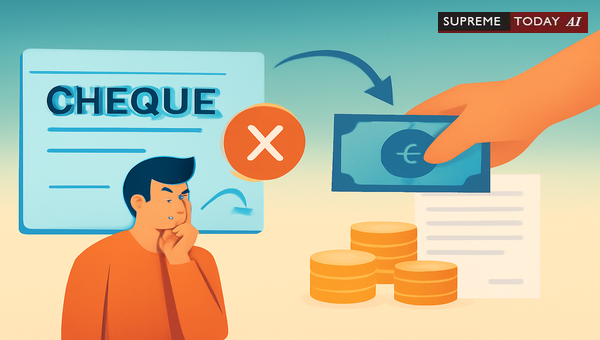
in Cheque Bounce Cases: Do They Absolve Liability?
In the fast-paced world of business transactions, cheques remain a common payment method in India. However, when a cheque bounces due to insufficient funds, it triggers serious legal consequences under (). A frequent question arises: Subsequent Payment Inniact – or more precisely, do payments made after the cheque dishonour absolve the drawer (accused) of criminal liability?
This blog post delves into this critical issue, drawing from established judicial precedents and legal principles. We'll examine whether later payments can wipe the slate clean or if the offence stands firm. Note: This is general information based on precedents and not specific legal advice. Consult a qualified lawyer for your situation.
Understanding Section 138 of the
Section 138 criminalizes the issued for discharge of a . The , provided the payee issues a within 30 days and the drawer fails to pay within 15 days of receipt.
The liability crystallizes at the point of dishonour – not later. Courts have repeatedly emphasized that the drawer cannot escape prosecution simply by making payments afterward. As one precedent notes, made after the cheque has been dishonoured do not negate the original offence. The liability remains intact as the offence is committed at the time of dishonour. 2007 0 Supreme(Mad) 1116
Key Legal Principles on
Here are the cornerstone principles upheld by Indian courts:
: The moment the cheque bounces (e.g., 'insufficient funds' or 'account closed'), Section 138 liability attaches. Subsequent remittances don't retroactively validate the cheque.
: Even if the complainant accepts later payments, prosecution can proceed. Courts have consistently held that , even if accepted by the complainant, do not absolve the accused of liability under Section 138.
Rationale: The law aims to ensure cheque credibility as a reliable payment instrument. Allowing post-dishonour payments to nullify cases would undermine this. In a case where no payment was made and the accused denied liability, early prosecution didn't prejudice the defence: when no payment has been at all made and the accused in his defence denied that such cheque was issued in discharge of any legally enforceable debts... it cannot be said that the accused has suffered any prejudice.
Judicial Precedents Reinforcing the Rule
Indian judiciary has solidified this stance through landmark rulings:
In multiple cases, courts ruled that post-dishonour payments don't bar trials. For instance, made by the accused after the offence was committed do not affect the prosecution's ability to pursue a case under Section 138.
Even re-presentation or revalidation of cheques (e.g., after account closure) doesn't exempt the drawer if dishonour recurs. A cheque returned 'account closed' in , revalidated in May, still attracted conviction.
These precedents underscore that the focus is on the initial breach, promoting accountability.
Exceptions and
While rarely absolve liability, they aren't irrelevant:
Sentencing and Appeals: Courts may consider them as evidence of remorse. A court may reduce the sentence based on the fact that the accused has made efforts to rectify the situation by making payments after the conviction. 2007 0 Supreme(Mad) 1116
Compounding or Settlement: Parties can compound the offence under post-conviction, but acceptance doesn't halt initiation.
Related contexts from other rulings highlight nuances:
In execution proceedings for decrees, instalment payments can revive petitions without fresh limitation issues: The present Execution Petition is to be treated as a revival of the earlier Execution Petition where the judgment debtor was granted time for payment of the decree amount in installments. 2011 0 Supreme(Ker) 383
For dues like electricity bills, late payments trigger charges from the due date, reconciled with limitation periods: Payment of outstanding dues by petitioners, cause of action for charging DPS arises on such date of payment. 2023 0 Supreme(Cal) 462
In labour disputes, post-reinstatement clean conduct influenced leniency, akin to how rectification efforts might sway sentencing. 2004 0 Supreme(Guj) 676
However, these don't override 's strict stance on cheque dishonour.
Broader Implications for Businesses and Individuals
For business owners, timely cheque clearance is crucial. Bounced cheques not only invite fines (up to twice the amount) and imprisonment (up to 2 years) but also damage credibility.
Accused drawers should:- Respond promptly to demand notices.- Document any payments meticulously for mitigation.- Explore settlement before trial escalation.
Complainants:- Proceed with legal action despite later payments to deter future defaults.- Use payments as leverage in negotiations.
In commercial loans, distinguishing 'exorbitant interest' claims from standard transactions shows payments' role in context: There have been initial payment, subsequent enhanced payment. All are contemporaneously recorded... transactions between the parties were purely commercial. 2022 0 Supreme(Mad) 2639
Practical Recommendations
To navigate this:- Advise clients on timely payments to sidestep dishonour altogether.- Prepare defences highlighting rectification in appeals or sentencing.- Monitor judicial updates, as interpretations evolve.
Stay proactive: Use digital payments or RTGS for high-value transactions to minimize risks.
Conclusion and Key Takeaways
after cheque dishonour under the do not absolve Section 138 liability. The offence locks in at dishonour, with later payments serving as mitigation tools rather than erasers. Backed by precedents like 2007 0 Supreme(Mad) 1116,
,
, , and
, this principle upholds financial trust.
Key Takeaways:- Liability persists post-dishonour regardless of later payments.- Use payments strategically for leniency, not dismissal.- Prioritize prevention through robust cash flow management.
References: 2007 0 Supreme(Mad) 1116
2011 0 Supreme(Ker) 383 2023 0 Supreme(Cal) 462 2022 0 Supreme(Mad) 2639
For tailored guidance, reach out to a legal expert. Share your thoughts below!
#ChequeBounce #NIAct #Section138















