



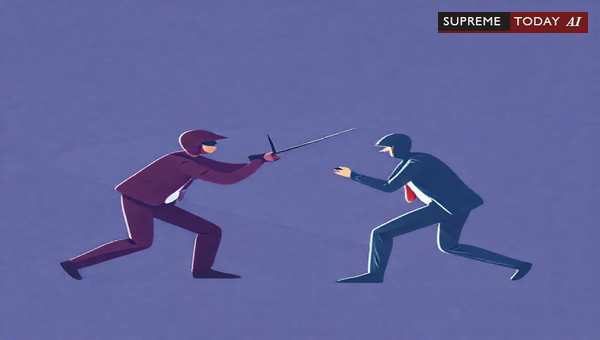
When a Defeats : How Courts Reject in
Indian criminal courts are frequently asked whether the doctrine of under can be used to convict every participant in a violent clash. The short answer is that in a genuine —where both parties voluntarily entered the combat with mutual intent to harm each other— generally cannot be invoked. This post examines why that is so, what the courts have said, and how liability is instead fixed on individual participants.
What Is a and Why Does It Matter?
A is a situation in which both sides willingly join the altercation. The decisive test, as articulated in the case law, is that both the parties should voluntarily enter into a fight and there should be mutual intent to harm each other
Mohar Singh ors. VS State of Rajasthan - Crimes (1989)
. Because each party has had the opportunity to seek help from the authorities, in neither party has anyMohar Singh ors. VS State of Rajasthan - Crimes (1989)
.This characterisation matters enormously for charging decisions. Where a clash is labelled a :
- Neither side can claim the protection of private defence
00500006539
Mohar Singh ors. VS State of Rajasthan - Crimes (1989)
- Each accused is responsible for his own act, and does not attach
00500006539
- provisions such as Section 34 and cannot be pressed into service 2023 0 Supreme(MP) 124
As one High Court put it succinctly, Once the court come to the conclusion that it is a case of , cannot be applied 2025 Supreme(Online)(P&H) 54012.
The Requirements of
Section 34 imposes vicarious criminal liability only where a criminal act is done in of all participants. The courts have consistently laid down two essential ingredients: apart from the fact that there should be two or more accused, two factors must be established: (i) and (ii) participation of the accused in the commission of an offence 1999 2 Supreme 145.
Crucially, requires a or a prior meeting of minds—though it may develop suddenly: requires a which can be even formed at spur of moment or simultaneously just before or even during attack 2022 4 Supreme 321.
Why Fails in a
The spontaneous, mutual nature of a typically destroys the very premise of Section 34. Since both parties act as aggressors on equal footing, there is no shared plan to commit a particular criminal act against a particular victim—each participant is simply fighting for himself. Where evidence of a and an overt act done in furtherance of it is absent, provisions of section 34, IPC cannot be invoked 2015 0 Supreme(MP) 791.
In one appeal, the accused argued that cannot be invoked in the facts of the case since on part of the two accused appellants was clearly lacking, and the court accepted that a between the parties could not be ruled out 2022 0 Supreme(All) 928. Similarly, where the record showed that there was between the parties, the appellate court held that Section 34 cannot be invoked and that the appellants could not be said to have acted in furtherance of a 2023 0 Supreme(Jhk) 1049.
Replaces Joint Liability
When Section 34 falls away, each accused answers only for the injury he personally inflicted. The settled position is that in case of 'free-fight', each individual accused is liable for the injury particularly caused by him and if the Court is unable to find which particular injury was caused by which particular accused, then that accused cannot be held liable for any of the injuries caused and is entitled to be acquitted 2017 0 Supreme(Raj) 2314. Courts have consequently set aside convictions under , convicting only the accused whose individual acts were proved
00500006539
.Parallel Position Under
The same logic applies to unlawful assembly liability. In free fights between two groups, conviction under Section 149 is clearly impermissible unless the common object and each member's specific role are established 2025 Supreme(Online)(AP) 18379. The Supreme Court's principle that in cases of , liability is individual, and Section 149 cannot be invoked for has led courts to suspend convictions founded on 2025 Supreme(GUJ) 777.
Versus : A Critical Distinction
The outcome also depends on distinguishing a from a sudden quarrel. A —relevant to —occurs without premeditation, in a in the heat of passion, and the fight in that exception is not defined in the IPC. It takes two to make a fight 2023 0 Supreme(Jhk) 1049 and 2022 0 Supreme(All) 928.
In sudden-quarrel cases, courts may still sustain Section 34 convictions where evidence shows a shared intent to cause serious harm, or they may alter murder convictions to culpable homicide under 2015 0 Supreme(MP) 791 and 2023 0 Supreme(Jhk) 1049. By contrast, where a court finds a true —often corroborated by injuries on the accused side—it has held that section 34 or section 149 of IPC cannot be pressed into service 2023 0 Supreme(MP) 124.
Exceptions and Practical Considerations
The rule is not absolute. Section 34 may still attach if a participant had a pre-existing formed before the fight began, or if the fight was not truly free but a one-sided assault preceded by chasing and pursuit, in which case courts have upheld its application 2015 0 Supreme(Del) 1318. Courts also examine exhortations, consistent witness testimony, and the nature of injuries to determine whether existed despite claims of sudden or free fighting
Kamlesh vs State
.Key Takeaways
- A is one where both parties voluntarily enter combat with mutual intent to harm; neither side enjoys the
Mohar Singh ors. VS State of Rajasthan - Crimes (1989)
. - requires proof of and participation; in a genuine , these ingredients are typically absent 1999 2 Supreme 145 and 2025 Supreme(Online)(P&H) 54012.
- Liability in a is individual: each accused is answerable only for injuries he personally caused, and acquittal follows where the specific inflictor cannot be identified
00500006539
2017 0 Supreme(Raj) 2314. - under is equally impermissible in free fights between groups 2025 Supreme(Online)(AP) 18379 and 2025 Supreme(GUJ) 777.
This discussion reflects general legal principles drawn from reported decisions and is not a substitute for advice on any specific case from a qualified advocate.
#Section34IPC #FreeFight #CommonIntention #IndianPenalCode #CriminalLaw







