Searching Case Laws & Precedent on Legal Query.....!
Analysing the retrieved Case Laws
Scanned Judgements…!



Searching Case Laws & Precedent on Legal Query.....!
Analysing the retrieved Case Laws
Scanned Judgements…!
Legal Validity of Marriage in Prohibited Degrees Marriages entered into within prohibited degrees of relationship are considered void and lack legal sanctity. Courts have clarified that such marriages do not constitute valid marriages under law, and therefore, the woman involved cannot be deemed a wife for the purposes of Section 498A IPC.References: ["2022 0 Supreme(Ori) 392"], ["2021 Supreme(Online)(MP) 419"]
Impact on Section 498A IPC Applicability Since the core requirement for Section 498A is the existence of a legal marriage, women married within prohibited degrees cannot be legally recognized as wives under this section. Consequently, allegations of cruelty or harassment based on such relationships are not maintainable under Section 498A.References: ["2022 0 Supreme(Ori) 392"], ["2021 Supreme(Online)(MP) 419"]
Relationship in the Nature of Marriage vs. Legal Marriage The law distinguishes between relationship in the nature of marriage (such as live-in relationships) and legally valid marriages. A relationship in the nature of marriage is recognized only if it meets certain criteria, including mutual consent, cohabitation, and intent to marry, but does not necessarily include relationships within prohibited degrees.References: ["2024 0 Supreme(All) 421"], ["2025 Supreme(Online)(Kar) 34819"], ["2023 0 Supreme(HP) 284"]
Deemed Wife Under Section 498A A woman married within prohibited degrees or in a void/bigamous marriage cannot be deemed a wife under Section 498A IPC, as the essential element of a valid marriage is absent. Even if she cohabits with the man or is treated as a wife socially, the legal recognition is lacking if the marriage is void or prohibited.References: ["2022 0 Supreme(Ori) 392"], ["2021 Supreme(Online)(MP) 419"], ["2023 0 Supreme(AP) 384"]
Live-in Relationships and Legal Recognition Courts have recognized live-in relationships as potentially falling within the scope of relationship in the nature of marriage only if certain conditions are met, and such relationships are not automatically equated with legal marriages, especially when entered into within prohibited degrees.References: ["2024 0 Supreme(All) 421"], ["2025 Supreme(Online)(Kar) 34819"]
References:- ["2022 0 Supreme(Ori) 392"]- ["2021 Supreme(Online)(MP) 419"]- ["2024 0 Supreme(All) 421"]- ["2025 Supreme(Online)(Kar) 34819"]- ["2023 0 Supreme(HP) 284"]
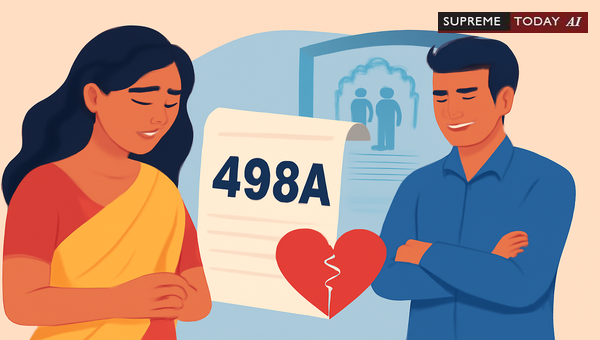
In India, is a powerful provision aimed at protecting married women from by their husbands or relatives. But what exactly does 'wife' mean in this context? A common question arises: Meaning of Wife under 498A IPC – particularly when the marriage falls within , such as like uncle-niece or cousin marriages banned by law.
This blog delves into the legal nuances, drawing from judicial precedents and statutes. Understanding this can prevent misuse of the law or unwarranted prosecutions. Note: This is general information; consult a legal expert for specific advice.
Section 498A IPC punishes a husband or his relatives for subjecting a woman to , which includes acts driving her to suicide, causing grievous hurt, or harassment for unlawful demands like dowry. However, the provision hinges on a . As courts have clarified, the most essential ingredient is, subjecting a woman to by her husband or relative/relatives of the husband 2024 0 Supreme(Ker) 595.
Without a legally recognized wife, the section doesn't apply. This is crucial in cases of invalid marriages.
The law presumes a valid marriage only if it's legally recognized. A woman married within prohibited degrees – void under personal laws like the (HMA), Section 11 – cannot be deemed a . Such unions are null and void from the outset 2024 0 Supreme(Ker) 1155.
Courts presume validity if rites are performed, but this is rebuttable. If proven within prohibited degrees (e.g., ), the marriage is . Marriages contracted within are considered null and void under law (e.g., , Section 11) 2024 0 Supreme(Ker) 1155. No spousal status exists for 498A purposes 1996 0 Supreme(Ker) 338.
Under HMA Section 5(iv-v), marriages between close relatives like siblings, uncle-niece, or within sapinda limits are prohibited unless custom permits (rarely upheld). The mirrors this in Section 4(d). J and N are within the prohibited degree of relationship. Therefore, there cannot be a valid marriage between them as per Section 4 (d) of the 2013 0 Supreme(Ori) 277.
Even ceremonies or cohabitation don't validate it. Society viewing her as wife doesn't override law if invalid 2005 0 Supreme(Ker) 283.
Indian courts, especially the , emphasize valid marriage as prerequisite.
This landmark case holds: only a claims 498A protection. Marriages in prohibited degrees are invalid; she isn't a wife 2004 1 Supreme 355. The Court clarified a purposive interpretation includes marriage-like relationships if society treats her as wife – but not void ones.
Explicitly: a woman in prohibited degree marriage cannot be deemed a wife under Section 498A IPC because no valid marriage exists 2010 0 Supreme(Ker) 966.
Related rulings reinforce: live-in partners aren't wives. The petitioner herein, who was not the legally wedded partner... would not come within the purview of definition of husband... in Section 498(A) 2024 0 Supreme(Ker) 595. Similarly, or ties don't qualify unless valid first marriage exists 2024 0 Supreme(All) 417.
In cases, second wives (if first marriage subsists) can't invoke 498A against first wife or others without validity checks 2021 Supreme(Online)(Gau) 469.
Bigamy prosecutions under IPC 494 require living spouse knowledge; relatives abetting need proof 2013 0 Supreme(All) 2064.
A woman in a prohibited degree marriage isn't a 'wife' under 498A IPC; such unions are void, denying protection. Key points:- Valid marriage essential 1996 0 Supreme(Ker) 338 2024 0 Supreme(Ker) 1155.- Presumption rebuttable by prohibited proof.- Live-in, bigamy differ but echo validity need.
This prevents law abuse while safeguarding genuine cases. Disclaimer: This outlines general principles from precedents; outcomes vary by facts. Always seek professional legal counsel.
References:- Shivcharan Lal Verma (2002) 2004 1 Supreme 355- HMA insights 2024 0 Supreme(Ker) 1155- Purposive scope 2005 0 Supreme(Ker) 283
Stay informed on matrimonial laws to navigate disputes wisely.
#IPC498A #VoidMarriage #MatrimonialLaw


No.2 is not the legally married wife of the Petitioner which is already established by the judgment of learned Judge, Family Court, Nabarangpur, the impugned order in this case has no sanctity under law and to attract an offence under Section 498(A) of IPC, there must be a legal relationship of husband ... There is no manner of doubt that the finding recorded by the High Court that Respondent No. 2 is not the wif....

Respondent No.2 is not the legally wedded wife of Petitioner No. 1, inasmuch as Petitioner No.1 has already been married; there could be no valid second marriage in favour of Respondent No. 2. His submission is that Petitioner is married to one Smt. Naveena has a daughter named Shravani. ... Despite the subsistence of that marriage, the Petitioner, by suppressing the existence of the first marriage, married Respondent No.2....

Sub-Inspector of Police, Women Police Station, Srikakulam investigated the case and filed charge sheet against A.1 and A.2 alleging that they committed offence under Section 498-A I.P.C. ... A.1 became a drunkered and being under the influence of his relationship with A.2 he was cruel towards his wife/PW.1. He was demanding his wife to bring Rs.1,00,000/- and as she failed to bring it, he used to beat her....

Velusamy (Supra), the Hon’ble Supreme Court has dealt with the question regarding the conditions in which a live-in relationship would fall within the purview of the term ‘relationship in the nature of marriage’. ... No doubt the view we are taking would exclude many women who have had a live-in relationship from the benefit of the 2005 Act, but then it is not for this Court to legislate or amend the law.....

Secondly, that you the above named accused person being the husband of Soma Paul, to who you were married for last 8 years according to social rites and rituals brought three different women and resided with them as husband and wife and introduced those women as your wife and that you thereby committed ... extra marital affairs, by bringing three other different women with whom you resid....

The relationship between the 1st petitioner and the complainant is that of husband and wife. The two get married after falling in love on 23-08-2023. ... It is a matter of serious concern that large number of cases continue to be filed under Section 498-A alleging harassment of married women. We have already referred to some of the statistics from the Crime Records Bureau. ... On 23-08-2....
(b) Polygamy, that is a relationship or practice of having more than one wife or husband at the same time, or a relationship by way of a bigamous marriage that is marrying someone while already married to another and/or maintaining an adulterous relationship that is having voluntary ... sexual intercourse between a married person who is not one's husband or wife, canno....

An extramarital relationship of a wife may be grounds for divorce for the husband, but the wife cannot be held guilty u/s. 306 IPC only because the husband committed suicide on account of it. ... by women police personnel trained and sensitised in the handling of matrimonial cases, not every case of suicide by a wife can disclose a case against the husband and other members of his family for the offence u....

Having been so, the petitioner herein, who was not the legally wedded partner of the defacto complainant, would not come within the purview of definition of husband, dealt in Section 498(A) of IPC. ... Thus, it appears that in order to attract an offence punishable under Section 498(A) of IPC, the most essential ingredient is, subjecting a woman to cruelty by her husband or relative/relatives of the husband. The term ‘husband @ hubby’ means....

(b) Domestic relationship between an unmarried woman and a married adult male: Situations may arise when an unmarried adult women knowingly enters into a relationship with a married adult male. ... (c) Domestic relationship between a married adult woman and an unmarried adult male: Situations may also arise where an adult married woman, knowingly enter....

6. Section 498 I.P.C is an offence for enticing or taking away or detaining or concealing a married women with intention that she may have illicit intercourse with any person is covered by Chapter XX of IPC. Relevant provision of Section 198 (1) I.P.C and 198(2) of the Code are quoted as under:- Section 198 of the Code provides that in matrimonial offences as provided under Chapter XX of the IPC, a prosecution can be launched only on the complaint made by the person aggrieved....
Husband or relative of husband of a woman subjecting her to cruelty: Whoever, being the husband or the relative of the husband of woman, subjects such woman to cruelty shall be punished with imprisonment for a term which may extend to three years and shall also be liable to fine. Cruelty to married women is defined in S.498-A of IPC as follows: “498A.

"J" and "N" are within the prohibited degree of relationship. Therefore, there cannot be a valid marriage between them as per Section 4 (d) of the Special Marriage Act. Parties had in acquaintance terms and the allegation, that the marriage was not consummated, was not believable. There is no pleading regarding any custom to marry a cousin by the parties.

Can it be said as an “extra-marital relationship” of such a degree which amounted to “cruelty” falling within the explanation to Section 498-A and also leading to an offence under Section 306 IPC. If that be so, we have to examine what type of relationship A-1 had with A-2.
8. Regarding offence under Section 494 IPC, it was contended that only such person can be punished for the offence under Section 494 IPC who, having a husband and wife living, married with another person and, therefore, applicant No. 1 cannot be held guilty of committing an offence punishable under Section 494 IPC and similarly applicant nos 2, 3 and 4, the mother and siblings of applicant No. 1 cannot be said to be guilty of the said offence and there was no abetment on thei....


An indispensable Tool for Legal Professionals, Endorsed by Various High Court and Judicial Officers
Please visit our Training & Support
Center or Contact Us for assistance

Scan Me!
India’s Legal research and Law Firm App, Download now!


For Daily Legal Updates, Join us on :



 Back to top


