


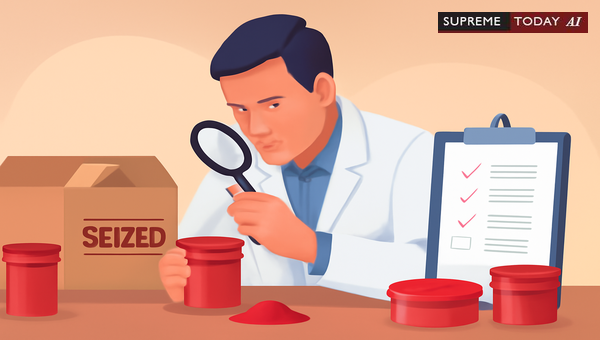
Procedure for Remaining Seized Synthetic Kumkum Stock
In the realm of regulatory enforcement, a drug inspector seizing a huge quantity of synthetic kumkum—a cosmetic item often scrutinized for compliance—raises critical questions about post-seizure handling. What happens next when a sample is collected and sent to the laboratory? Specifically, drug inspector seized huge quantity of synthetic kunkum. sample collected and sent to laboratory, what is the procedure to be followed regarding the remaining synthetic kunkumam? This blog explores the legal procedures under the Indian (D&C Act), drawing from key judicial findings and related cases to guide compliance. Note: This is general information, not specific legal advice—consult a qualified lawyer for your situation.
Legal Framework Governing Seizures
The D&C Act, particularly Sections 22 and 23, mandates strict protocols for sampling, seizure, and of drugs and cosmetics like synthetic kumkum. These provisions ensure the integrity of evidence and prevent tampering. Any deviation can the entire process, potentially invalidating prosecutions or analyses. 2020 0 Supreme(HP) 559
The legal procedures for handling seized synthetic kumkum and remaining stock must strictly adhere to the provisions of the Indian Drugs and Cosmetics Act and Rules, emphasizing proper sampling, , and procedural compliance. Any deviation, such as unauthorized sampling, improper , or procedural irregularities, renders the process vitiated and potentially invalid. 2020 0 Supreme(HP) 559
Similar principles echo in food adulteration cases under the , where improper sampling led to acquittals due to discrepancies in analysis. For instance, in a case involving synthetic syrup, the trial court noted inadequacies in proving adulteration because the analysis did not conform to standards for the product category.
Proper Sampling Procedure
Sampling must occur at designated locations—typically the manufacturing unit or retail premises—in the presence of the manufacturer or retailer. The sample is divided into three parts: one for the laboratory, one retained by the Drug Inspector, and one given to the manufacturer. 2020 0 Supreme(HP) 559
Key requirements include:- Proper authorization and notification.- Presence of relevant parties to witness the process.- Assignment of new sample numbers for re-sampling if needed (e.g., due to damage or insufficient quantity).
The case highlighted in 2020 0 Supreme(HP) 559 criticized sampling conducted on court premises without the manufacturer's presence, deeming it contrary to the statutory provisions. This underscores that evidence collection must be by authorized investigators, not judicial officers acting investigatively.
Insights from cases reinforce this: Samples must be drawn at the seizure site, properly sealed, and sent promptly to avoid delays that could fatalize prosecutions. In one instance, delays in sending samples to the led to acquittal. 2022 0 Supreme(Telangana) 391
of Seized Drugs and Remaining Stock
is a cornerstone of procedural validity. Seized drugs, including the remaining synthetic kumkum after sampling, should not be held solely by the Drug Inspector or manufacturer. Instead, a neutral third party is ideal to prevent tampering or contamination. 2020 0 Supreme(HP) 559
of seized drugs should be with a neutral third party to prevent tampering, not solely with the Drug Inspector or manufacturer. 2020 0 Supreme(HP) 559
For huge quantities, secure storage under supervision is implied, though the D&C Act does not explicitly detail disposal. Related NDPS judgments stress designated godowns with double-locking systems and periodic inspections to curb pilferage. 2016 3 Supreme 455 The has directed states to establish exclusive storage facilities, noting that malkhana storage leads to losses. 2021 0 Supreme(Mad) 1886
In a drugs case, failure to send retained control samples to the undermined the prosecution. 2025 0 Supreme(All) 3521 Similarly, under NDPS, the entire seized quantity must be evaluated holistically, with samples representing the bulk accurately. 2017 Supreme(Online)(KER) 10058
Handling the Remaining Synthetic Kumkum
Post-sampling, the remaining stock requires:- Secure storage: In a controlled environment to maintain .- Proper documentation: Detailed records of transfers, seals, and .- No unauthorized actions: Avoid creating ad-hoc rules or disposal without court orders.
The law implies awaiting lab results before further steps, such as potential or destruction. Procedural lapses, like sending multiple bottles to labs without justification, compromise validity. 2020 0 Supreme(HP) 559
From PFA cases, prompt analysis (within ) and sharing reports is crucial.
NDPS precedents warn against circulation of seized goods due to poor handling, urging judicial supervision for destruction. 2012 0 Supreme(MP) 369
Common Procedural Irregularities and Lessons
Courts frequently quash cases due to:- Additional sampling without notification or presence of parties. 2020 0 Supreme(HP) 559- Improper locations (e.g., court premises). 2020 0 Supreme(HP) 559- lapses leading to tampering risks.- Delays in analysis or complaint filing. 2022 0 Supreme(Telangana) 391
In an NDPS appeal, non-compliance with Section 52A (disposal certification) affected evidence , though deemed directory in some contexts. 2016 0 Supreme(Pat) 1438 For synthetic substances, THC percentage analysis determines quantity classification, emphasizing . 2015 0 Supreme(Del) 2125
Food cases parallel this: A dealer escaped liability for substandard drugs by proving purchase from a licensed source, highlighting the prosecution's burden. 2025 0 Supreme(All) 3521
Recommendations for Compliance
To safeguard against invalidation:- Conduct sampling at source with witnesses.- Transfer to neutral third parties or designated facilities.- Document every step meticulously.- Await lab reports before handling remaining stock.- Seek magistrate certification for large disposals, per NDPS analogies.- Implement anti-pilferage measures like CCTV and audits.
Ensure sampling is conducted at the manufacturing or retail location in the presence of the manufacturer or retailer. 2020 0 Supreme(HP) 559
Key Takeaways
Handling remaining seized synthetic kumkum demands unwavering adherence to D&C Act protocols. Improper or sampling can derail cases, as seen across drugs, cosmetics, and narcotics jurisprudence. Manufacturers and retailers should demand transparency and neutrality in processes. While specifics may vary, procedural rigor protects all parties. For tailored guidance, engage legal experts promptly.
This post synthesizes judicial insights for educational purposes. Laws evolve—verify current statutes.
#DrugsAndCosmeticsAct, #SeizedKumkumProcedure, #LegalSampling












