


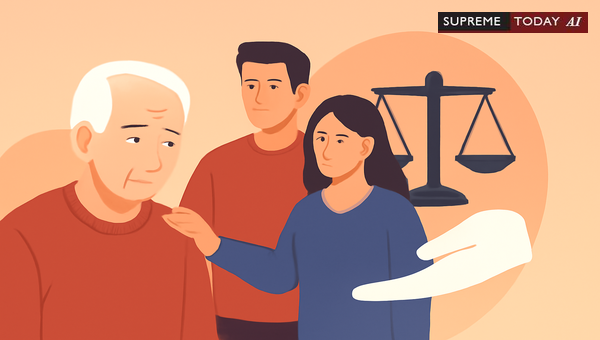
Can Seniors Claim from Siblings in India?
In an aging population like India's, where family structures are evolving, many face challenges in securing basic from their children. A pressing question arises: Does the (the 'Act') apply to brothers and sisters? This query often emerges when elderly parents seek support not just from sons but also from daughters or other siblings who may be financially capable. Understanding this law is crucial for families navigating elder care responsibilities.
This blog explores the Act's scope, relevant case laws, and practical implications. Note: This is general information based on precedents and is not legal advice. Consult a qualified lawyer for your specific situation.
Overview of the
Enacted to protect vulnerable seniors, the Act empowers (aged 60+) unable to maintain themselves to claim up to ₹10,000 monthly from their children or relatives. Section 4 is central: a senior citizen, including a parent, who is unable to maintain himself from his own earnings or out of the property owned by him, is entitled to make an application for . Crucially, it targets one or more of his children, not being minors.
Pooja Mehta VS Govt. of NCT of Delhi - Crimes ()
The Act defines children broadly, encompassing both sons and daughters—i.e., brothers and sisters from the parent's perspective. It also extends to in certain contexts, emphasizing welfare over property disputes. Tribunals handle these claims swiftly, focusing on the senior's needs rather than title issues. 2022 0 Supreme(Del) 2210
Does the Act Apply to Siblings (Brothers and Sisters)?
Yes, courts have consistently held that the Act applies to siblings. Here's why:
Broad Definition of 'Children': The term 'children' under this provision includes both brothers and sisters. Parents can approach tribunals against any child, regardless of gender.
Pooja Mehta VS Govt. of NCT of Delhi - Crimes ()
Inclusion of : (as amended) allows against son and daughter or legal heir for non- or ill-treatment. Siblings qualify as under inheritance laws. The Act applies to siblings, including sisters and brothers. 2022 0 Supreme(Del) 2210
Multiple Siblings' Liability: Tribunals can direct contributions from multiple siblings based on capacity. The applies to both brothers and sisters. The court affirmed that multiple siblings, including both brothers and sisters, may be liable to contribute to the of a senior citizen based on their financial capacity. One sibling living with the parent may be excluded if others are capable. 2025 0 Supreme(Ker) 1859
Over Family Disputes: Even in sibling rivalries, the Act prioritizes senior welfare. The Tribunal has jurisdiction to address disputes involving obligations between siblings. Daughters, like sons, share duties. 2014 0 Supreme(Raj) 593
These rulings underscore the Act's remedial purpose: shielding seniors from neglect by any child, promoting shared family responsibility.
Key Case Laws Supporting Sibling Liability
Indian courts have clarified the Act's reach through precedents:
Courts scanned similar disputes, affirming applications against siblings for .
Pooja Mehta VS Govt. of NCT of Delhi - Crimes ()
Pawan Kumar vs Divisional Commissioner
Delhi rules explicitly include daughters and (siblings). Proceedings target ill-treatment or neglect, not property ownership. 2022 0 Supreme(Del) 2210
Reiterated sibling obligations under the Act. 2022 0 Supreme(Del) 2210
Relevant Tribunal Rulings
- Multiple siblings liable per capacity; gender-neutral. 2025 0 Supreme(Ker) 1859
- Daughter-petitioner vs mother-respondent; all children accountable. The Act's purpose includes ensuring that are not neglected by any of their children, including sisters and brothers. 2014 0 Supreme(Raj) 593
These cases (e.g., Pooja Mehta vs Govt. of NCT of Delhi, Rajkanwar vs Sita Devi) show tribunals' practical application, often directing proportional contributions.
Additional Considerations: and Family Dynamics
While the Act focuses on financial support, related legal contexts highlight 'thinking'—perception, reasoning, and decision-making—as factors in elder claims. Seniors must demonstrate capacity to apply; mental health issues could impact proceedings.
Mental Illness and Legal Capacity: Courts distinguish disorders of thinking, mood, perception and orientation. A senior with substantial thinking disorders (e.g., poor abstract thinking, memory issues) may face challenges creating legal consequences, akin to idiocy under mental health laws. Psychological reports noting memory difficulties, abstract thinking poor, problem solving and decision making poor influence assessments.
- Karnataka
2023 Supreme(Online)(MAD) 44081Perception in Family Disputes: Cases show 'thinking' shapes allegations, like suspecting a deceased's location or projecting marital status. In claims, siblings' perceptions of neglect matter.
Broader Implications: Distorted 'thinking' (e.g., in governance or defamation suspicions) parallels family neglect claims. Original 'thinking' in creative works contrasts plagiarism concerns, reminding us of genuine intent in elder support. 2022 Supreme(Online)(GAU) 101 2024 Supreme(US)(ca2) 25 2023 Supreme(Online)(Mad) 71839
These insights emphasize holistic evaluations: financial capacity alongside cognitive health ensures fair tribunal decisions.
Practical Steps for and Families
If you're a senior or family member:1. File an Application: Approach the local with proof of need and respondent's capacity.2. Gather Evidence: Income details, property docs, neglect proof.3. Consider Eviction: For ill-treatment from siblings/ occupying property. 2022 0 Supreme(Del) 22104. Seek Conciliation: Tribunals prioritize amicable resolutions.5. Appeal if Needed: reviews tribunal orders.
Families should proactively discuss support to avoid legal battles.
Conclusion and Key Takeaways
The unequivocally applies to brothers and sisters, promoting gender-neutral family duties. Precedents like
Pooja Mehta VS Govt. of NCT of Delhi - Crimes ()
2022 0 Supreme(Del) 2210 2025 0 Supreme(Ker) 1859 2014 0 Supreme(Raj) 593 affirm this, with tribunals apportioning liability fairly.Key Takeaways:- 'Children' includes all siblings.- (siblings) liable for neglect.- Capacity-based contributions; mental health considerations vital.- Act prioritizes welfare over disputes.
As India ages, honoring elders strengthens society. For personalized guidance, consult legal experts. Share your thoughts below—have you faced similar issues?
#SeniorCitizensAct, #ElderlyRights, #MaintenanceLaw















