


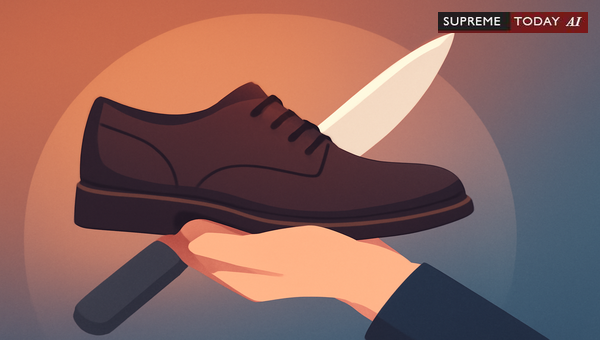
Is a Shoe a Under IPC? Key Analysis
Introduction
In heated altercations, everyday objects like shoes can sometimes be wielded as improvised weapons. But does picking up a shoe during a fight automatically make it a under Indian law? The question Shoe is Not a often arises in criminal cases involving assault or . Understanding this hinges on the , particularly , and pivotal rulings. This post breaks down the legal framework, key cases, and practical applications to clarify when—or if—a shoe crosses into dangerous territory. Note: This is general information, not legal advice; consult a qualified attorney for specific cases.
Legal Definition of a
Under of the IPC, a is defined as any instrument which, used as a , is likely to cause death. Crucially, classification isn't based on the object's inherent nature but on the factual circumstances of each case—no blanket generalizations apply. 2005 3 Supreme 618 2015 4 Supreme 762
Courts emphasize that the determination depends on factors like the weapon's nature, size, sharpness, and manner of use. As one ruling states, The facts involved in a particular case, depending upon various factors like size, sharpness, would throw light on the question whether the weapon was a dangerous or deadly weapon or not. 2023 0 Supreme(P&H) 682
This case-by-case approach prevents rigid categorizations. For instance, common items like stones or sticks aren't automatically dangerous unless their deployment suggests lethal potential. 2016 0 Supreme(Mad) 3331 2005 1 Supreme 215
Landmark Case Law on Weapon Classification
Indian courts have consistently ruled that context is king. Here are key precedents:
Mathai v. State of Kerala (2005): The held that even everyday objects can become dangerous based on usage. The determination of whether a weapon is dangerous must consider the facts of each case, including the nature of the weapon and the manner in which it was used.
2018 0 Supreme(Del) 3005
Prabhu v. State of M.P.: Reiterating the principle, the court noted classification is contingent upon the specific facts of the case, including the size and sharpness of the weapon. 2017 0 Supreme(MP) 157
Other Notable Rulings:
- Stones or sticks may not qualify unless causing grievous harm. 2014 0 Supreme(AP) 244 It is not that in every case a stone wound constitute a .
- Blades or sickles are scrutinized similarly: Whether weapon is a or not has to be gauged only on the factual basis. 2022 0 Supreme(Del) 741
These cases underscore that prosecution must prove the object's potential for death-like injury in the specific scenario.
Applying the Law: Is a Shoe a ?
Legal documents rarely mention shoes explicitly, but principles from above apply directly. Generally, a shoe is not classified as a under the IPC unless used in a way demonstrating potential for grievous harm or death. For example:
- Striking a vital area (e.g., head) with extreme force might elevate it, per case-specific facts.
- Mere slapping or throwing typically wouldn't suffice, lacking lethality. 2005 3 Supreme 618
The context reigns supreme: injury severity, intent, and force matter. Medical reports and witness accounts become pivotal evidence.
Insights from Broader Legal Contexts
Comparative analysis reinforces this. In other jurisdictions:
BB Guns and Resemblance: Courts classify BB guns as non-dangerous if incapable of death or serious injury, despite firearm-like appearance. BB guns are explicitly classified as dangerous weapons but not firearms because they are not capable of inflicting death or serious bodily injury. 2023 Supreme(US)(ca8) 421
Stones and Everyday Objects: The facts involved in a particular case... would throw light on the question whether in the case or would be applicable. An iron rod or stone isn't inherently dangerous without lethal use. 2014 0 Supreme(AP) 244 2022 0 Supreme(MP) 988
Sickles and Blades: A sickle qualifies only if used in a manner likely to cause death or serious injury. Size, weight, and deployment decide.
VICAR and Assault Contexts: U.S. cases under VICAR affirm assault with a as a crime of violence based on deliberate use, not mere possession.
Even in Sri Lankan law, charges require specificity: -Being armed with ... The charge is defective, in that it does not disclose what particular unlawful act.
These parallels highlight a universal judicial reluctance to deem mundane items dangerous absent compelling evidence of harm potential.
Factors Courts Consider
When evaluating objects like shoes:
- Nature of the Object: Soft sole vs. hard heel? Weight and material?
- Manner of Use: Force, target area, repetition?
- Injury Sustained: (e.g., fractures) vs. simple?
- Intent and Context: Sudden fight or premeditated assault?
The expression 'an instrument, which used as a , is likely to cause death' should be construed with reference to the nature of the instrument and not the manner of its use. 2022 0 Supreme(Del) 741
Prosecution bears the burden; defense can leverage precedents to argue non-dangerous status.
Practical Recommendations for Legal Professionals
If handling a case involving a shoe:
- Gather Evidence: Secure witness statements, CCTV, and medical reports detailing injuries.
- Cite Precedents: Reference Mathai and Prabhu to push for ( without ) over 326.
- Expert Testimony: Use forensic analysis on the shoe's properties.
Always tailor arguments to facts—courts prioritize specificity.
Conclusion and Key Takeaways
In summary, a shoe is typically not a under IPC unless extraordinary circumstances prove otherwise. Courts like in Mathai v. State of Kerala prioritize factual nuance over assumptions, a principle echoed globally.
Key Takeaways:- Classification is case-specific, focusing on lethality potential.- Everyday items rarely qualify without severe use.- Defense strategy: Emphasize context and cite binding precedents.
This analysis draws from established IPC interpretations and comparative sources. References: 2005 3 Supreme 618 2015 4 Supreme 762
2018 0 Supreme(Del) 3005 2017 0 Supreme(MP) 157 2016 0 Supreme(Mad) 3331 2005 1 Supreme 215 2023 0 Supreme(P&H) 682 2014 0 Supreme(AP) 244 2022 0 Supreme(Del) 741
Disclaimer: This post provides general educational insights based on public legal precedents. It does not constitute legal advice. Laws evolve, and outcomes depend on individual facts—seek professional counsel.
#DangerousWeaponIPC #IPCLaw #LegalAnalysisIndia















