Searching Case Laws & Precedent on Legal Query.....!
Analysing the retrieved Case Laws
Scanned Judgements…!



Searching Case Laws & Precedent on Legal Query.....!
Analysing the retrieved Case Laws
Scanned Judgements…!
Trauma and Abuse History Multiple sources (e.g., 2024 Supreme(Online)(Bom) 7257, 2024 Supreme(Online)(Bom) 422) reveal a woman’s traumatic childhood experience of being brutally raped in 4th standard, with recurring memories of pain and suffering. She expresses ongoing emotional scars and feelings of life being ruined due to past abuse.["2024 Supreme(Online)(Bom) 7257"], ["2024 Supreme(Online)(Bom) 422"]
Societal and Marital Concerns Several accounts (e.g., 2023 Supreme(Online)(All) 24518, 2023 Supreme(Online)(All) 27967, 2023 Supreme(Online)(ALL) 15982, 2023 Supreme(Online)(ALL) 13941, 2023 Supreme(Online)(ALL) 13940, 2023 Supreme(Online)(All) 28576, 2023 Supreme(Online)(ALL) 2756) describe her fears that once her husband learns she is not a virgin, he will leave or cheat on her, viewing her only as a means to her family’s wealth. She worries about societal judgments and her reputation, feeling her life has been severely impacted after marriage, with a sense of complete dislocation and despair.
Legal and Police Interactions Some sources (e.g., 2023 Supreme(Online)(All) 24518, 2023 Supreme(Online)(All) 27967, 2023 Supreme(Online)(ALL) 15982, 2023 Supreme(Online)(ALL) 13941, 2023 Supreme(Online)(ALL) 13940, 2023 Supreme(Online)(All) 28576, 2023 Supreme(Online)(ALL) 2756) mention that wrongdoings are often addressed by police arresting offenders and that agencies like CBI are involved, but the woman remains uninformed about ongoing legal processes. There is a recurring theme of justice being sought but not fully realized.
Personal Struggles and Mental Health Several sources (notably 2023 Supreme(Online)(ALL) 5628) highlight her ongoing mental health struggles, including thoughts of suicide, feelings of hopelessness, and inability to manage her life after repeated trauma and societal rejection.
Lack of Support and Family She describes having no substantial family support, with references to a kaccha parivaar (broken or incomplete family), which exacerbates her feelings of despair and abandonment.
The collective narrative underscores the profound psychological trauma faced by the woman, stemming from childhood abuse, societal stigma, and marital insecurity. Despite interactions with law enforcement, her sense of justice remains unfulfilled, and her mental health is critically affected. The recurring mention of her suffering and thoughts of self-harm indicate urgent need for psychological support and legal intervention.
Saja Hone Ke Baad Sajayafta Ko Chhutti Milna Bandi Ka Adhikar Hai?- Legal Perspective: Generally, once a person is convicted and sentenced for a crime, they may be eligible for leave or parole based on legal provisions and prison regulations. However, saja hone ke baad (after punishment), the rights to leave or parole depend on the severity of the sentence, prison policies, and judicial discretion.- Post-Conviction Rights: The right to leave or parole is not absolute and is subject to conditions such as good behavior, completion of a minimum sentence, and specific legal procedures.- Specific Context: The sources do not explicitly clarify whether the individual in question has been convicted or is awaiting trial. Therefore, the general principle applies: a convicted offender may be granted leave or parole, but it is not an automatic right and depends on legal and procedural norms.
In summary:- Saja (punishment) does not automatically grant the offender the right to leave or parole; it is governed by legal procedures.- The decision is made by authorities based on legal criteria, not solely on the fact of punishment.
References:- Legal principles on parole and leave rights post-sentencing (general legal knowledge).- Multiple personal accounts indicating ongoing trauma and legal interactions but no specific legal rulings or rights explicitly detailed in the sources.
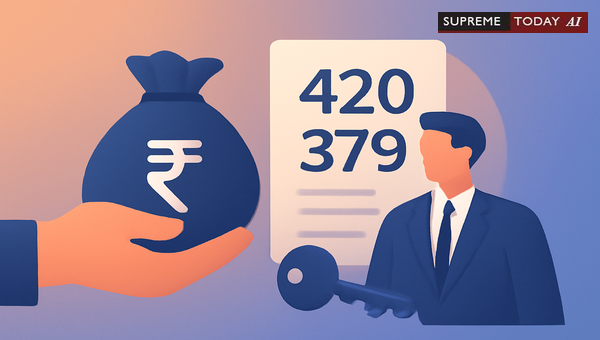
In Indian criminal law, individuals often search for clarity on specific provisions of the (IPC). A frequent question in Hindi-speaking regions is: Kya 420 IPC wa 379 IPC ki dhara ek saath lag sakte hai? This essentially asks whether Sections 420 () and 379 () can be invoked simultaneously in the same case.
The answer is yes, they generally can, if the facts establish the distinct ingredients of both offenses. These sections target different aspects of dishonest conduct— focuses on wrongful taking of property, while cheating involves deception. Courts frequently allow multiple charges when evidence supports them, as seen in various judgments. However, each must be proven beyond reasonable doubt.
This blog post breaks down the legal framework, judicial views, and post-conviction implications like remission or parole. Note: This is general information based on legal precedents and not specific legal advice. Consult a qualified lawyer for your case.
punishes , defined as taking any out of another's possession without consent, with . Punishment can extend up to 7 years imprisonment and/or fine.
Key ingredients:- Dishonest intention at the time of taking.- .- Absence of consent.
Standalone, it's straightforward, but often combined with other sections in complex cases.
addresses cheating with to deliver property or alter valuable security. It carries up to 7 years and fine.
Key ingredients:- Deception.- .- Delivery of property or .
This section requires proof of intent to cheat from the outset, distinguishing it from mere .
Yes, typically they can coexist if the transaction reveals both and cheating elements. For instance:- An accused deceives a victim to hand over goods (420), then dishonestly retains or takes them further (379).
Courts apply the principle that distinct offenses arising from the same act or series of acts can be charged together under , provided no prejudice to the accused.
Multiple sections are routinely charged when ingredients align:- In a dowry death case [
#IPCLaw, #CriminalCharges, #IPC420IPC379


Jabh me 4th standard me thi tabh i was brutally raped uske baad more 3-4 times exactly yaad nahi hai kitne baar but andaaza yaad hai ki bachhi thi na toh itna acchese yaad kaise hoga but pain abh tak yaad hai. ... nahi padta that my husband will leave me etc etc, becoz mujhe pata hai meri life konse spot pe aake kharab hone waali hai becoz I know after my life partner g....

Jabh me 4th standard me thi tabh i was brutally raped uske baad more 3-4 times exactly yaad nahi hai kitne baar but andaaza yaad hai ki bachhi thi na toh itna acchese yaad kaise hoga but pain abh tak yaad hai. ... pata hai meri life konse spot pe aake kharab hone waali hai becoz I know after my life partner get to know that I am not virgin he will leave me or either che....

similar to bandi, Ext. ... MATLAB KI KOI GALAT KAAM HOTA HAI TO POLICE USAY PAKADTI HAI, SAJA MILTI HAI, CBI KEY BARE MAI SUNA HAI LEKIN ABHI TAK MUJHE PATA NAHI THA KI. ... USKE BAAD MAI FIR 2000 MAI MERE SHAADI HUI, USKE BAAD MAI 2000 MAY SHAADI HONE KE BAAD PHIR MAI 225 SECTOR 28 ME MAJOR SWARAN SINGH KE PAA....

MATLAB KI KOI GALAT KAAM HOTA HAI TO POLICE USAY PAKADTI HAI, SAJA MILTI HAI, CBI KEY BARE MAI SUNA HAI LEKIN ABHI TAK MUJHE PATA NAHI THA KI. ... similar to bandi, Ext. ... USKE BAAD MAI FIR 2000 MAI MERE SHAADI HUI, USKE BAAD MAI 2000 MAY SHAADI HONE KE BAAD PHIR MAI 225 SECTOR 28 ME MAJOR SWARAN SINGH KE P....
MATLAB KI KOI GALAT KAAM HOTA HAI TO POLICE USAY PAKADTI HAI, SAJA MILTI HAI, CBI KEY BARE MAI SUNA HAI LEKIN ABHI TAK MUJHE PATA NAHI THA KI. ... similar to bandi, Ext. ... USKE BAAD MAI FIR 2000 MAI MERE SHAADI HUI, USKE BAAD MAI 2000 MAY SHAADI HONE KE BAAD PHIR MAI 225 SECTOR 28 ME MAJOR SWARAN SINGH KE P....

MATLAB KI KOI GALAT KAAM HOTA HAI TO POLICE USAY PAKADTI HAI, SAJA MILTI HAI, CBI KEY BARE MAI SUNA HAI LEKIN ABHI TAK MUJHE PATA NAHI THA KI. ... similar to bandi, Ext. ... USKE BAAD MAI FIR 2000 MAI MERE SHAADI HUI, USKE BAAD MAI 2000 MAY SHAADI HONE KE BAAD PHIR MAI 225 SECTOR 28 ME MAJOR SWARAN SINGH KE P....
similar to bandi, Ext. ... MATLAB KI KOI GALAT KAAM HOTA HAI TO POLICE USAY PAKADTI HAI, SAJA MILTI HAI, CBI KEY BARE MAI SUNA HAI LEKIN ABHI TAK MUJHE PATA NAHI THA KI. ... USKE BAAD MAI FIR 2000 MAI MERE SHAADI HUI, USKE BAAD MAI 2000 MAY SHAADI HONE KE BAAD PHIR MAI 225 SECTOR 28 ME MAJOR SWARAN SINGH KE PAA....
MATLAB KI KOI GALAT KAAM HOTA HAI TO POLICE USAY PAKADTI HAI, SAJA MILTI HAI, CBI KEY BARE MAI SUNA HAI LEKIN ABHI TAK MUJHE PATA NAHI THA KI. ... similar to bandi, Ext. ... USKE BAAD MAI FIR 2000 MAI MERE SHAADI HUI, USKE BAAD MAI 2000 MAY SHAADI HONE KE BAAD PHIR MAI 225 SECTOR 28 104 ME MAJOR SWARAN SIN....
MATLAB KI KOI GALAT KAAM HOTA HAI TO POLICE USAY PAKADTI HAI, SAJA MILTI HAI, CBI KEY BARE MAI SUNA HAI LEKIN ABHI TAK MUJHE PATA NAHI THA KI. ... similar to bandi, Ext. ... USKE BAAD MAI FIR 2000 MAI MERE SHAADI HUI, USKE BAAD MAI 2000 MAY SHAADI HONE KE BAAD PHIR MAI 225 SECTOR 28 ME MAJOR SWARAN SINGH KE P....

he tumko shanti milega apni zindagi m to hum tumko kisi ka nhi hone denge mere marne ke baad tum aajad ho **** photo abhi hum bhagwan ji aage sir ptakna shuru keye hai … Jb tak jaan nhi jaata ... that she cannot manage to save her love and matrimonial life, she sent Whatsapp message to petitioner that Abhinav abhi tak m strong the lekin ab suicide kr lene ka man aa raha h shayad uske baad

Lekin tumne is kahawat ko galat sabit kar diya hai. “Khubsurati aur aqlamandi ka ek jagah milna mushqil hota hai!
Upyogita ki drishtikon se adhik mahatvapurna hai aur uske liya saman dar per he pratikar dena uchit hai” Kukrail nala road purav main is bhumi se sati hui jati hai, jisse wahan awagaman ki suvidha uplabdh hai. Shahar se nikat hone ke karan is oar abadi ka vistar bhi ho raha hai. Atah bhumi bhavnik chhamta rakhne wali hai aur avas yojna hetu uttam asthan per isthit hai.

Isme iske maa baap ka koi dosh nahi, saara dosh ya toh Manju ka hai ya phir uski kismat ka kyonki shaadi ke liye haan toh kewal Manju ne hee ki thee. Raat ko niyam ke anusar Ram ka peekar aana, weh toh kisi ke saamne kuch keh bhi nahi sakti hai.
We have examined the grounds of detention and the language that was incorporated in the grounds is quoted as under: "aapko Ukt Adhiniyam Ki Dhara 8 Ke Anusaran Me Suchit Kiya Jata Hai Ki Aisa Aadesh Jiske Aadhin Aapko Nirudh Kiya Gaya Hai, Ke Birudh Aapko Rajya Sarkar Ko Pratyabedan Dene Ka Adhikar Prapt Hai. "
"kya VADGAT SAMPATTI KE BHAVAN HONE KE KARAN IS NYAYALAYA KO IS MUKADAME KEE SUNWAI KA KSHETRADHIKAR PRAPT NAHI HAI? Coming to the point (b) argued by the learned counsel it is to be seen that necessary facts in this regard were raised by the appellants in their written statement which they filed in Suit No. 280 of 1983 on which issue No. 3 to the following effect was framed by the trial Court; on this question finding was recorded by the trial Court along with issue No. 1 JA....


An indispensable Tool for Legal Professionals, Endorsed by Various High Court and Judicial Officers
Please visit our Training & Support
Center or Contact Us for assistance

Scan Me!
India’s Legal research and Law Firm App, Download now!


For Daily Legal Updates, Join us on :



 Back to top


