SupremeToday Landscape Ad
AI Thinking

AI Thinking...

Searching Case Laws & Precedent on Legal Query.....!

Scanned Judgements…!

Checking relevance for Pokala Brahmaniah VS Pokala Padma...

Pokala Brahmaniah VS Pokala Padma - 1989 0 Supreme(AP) 527 : In the case of Ataullah v. Maimunnissa Begum (1984) 3 APLJ 98 : (1984 Cri LJ 1522), the court considered a petition for arrears of maintenance for a period of 37 months. The court held that while the petition for execution of the maintenance order can be filed within one year from the date of the final order (in this case, the order in revision), the maximum period of imprisonment that can be awarded for default is limited to 12 months under the proviso to Section 125(3) Cr. P. C. The court reduced the sentence from 37 weeks (one week per month) to 12 weeks, stating that the proviso allows imprisonment only for a maximum of 12 months, even if arrears are claimed for a longer period. Therefore, a single petition for arrears of 37 months is maintainable only to the extent of the last 12 months preceding the application, and imprisonment cannot exceed 12 months.Checking relevance for Pokala Brabmaiah VS Pokala Padma...

Pokala Brabmaiah VS Pokala Padma - 1989 0 Supreme(AP) 531 : A single petition for arrears of maintenance for a period of 37 months is maintainable, but the maximum period of imprisonment that can be awarded for default in payment is limited to 12 months. The court held that while the petition for execution of the maintenance order can be filed within one year from the date of the order in revision, the proviso to Section 125(3) Cr. P. C. limits the imprisonment to a maximum of 12 months, even if arrears span a longer period. In the case cited (Ataullah vs. Maimunnisa Begum), arrears for 37 months were claimed, and although the petition was maintainable, the imprisonment was reduced from 37 weeks to 12 weeks (equivalent to 12 months), confirming that the maximum imprisonment is capped at 12 months regardless of the total arrears period.Checking relevance for T. RAYAPPA VS T. SUSHEELA...

T. RAYAPPA VS T. SUSHEELA - 2002 0 Supreme(AP) 605 : In P. Ataullah v. Maimunnisa Begum, 1984 (1) ALT 324, the court held that an application for recovery of arrears of maintenance can be made within one year from the date on which the order became final. In that case, the maintenance arrears were claimed for a period of 37 months, and the court upheld the application as maintainable because it was filed within one year of the final order. The court emphasized that the proviso to Section 125(3) of the Code of Criminal Procedure allows recovery of arrears for a period of one year from the date the application is filed, and the sentence of imprisonment awarded for default was reduced to 12 months, indicating that the claim for 37 months was not barred by limitation as long as the application was filed within the prescribed time. This establishes that a single petition can be maintainable for a period exceeding 12 months, provided it is filed within one year of the final order, and the court has the power to consider arrears for the entire period if the application is timely.Checking relevance for G. V. Rama Krishna Rao VS Arumilli Karuna Kumar...

Checking relevance for State of Himachal Pradesh VS Himachal Techno Engineers...

Checking relevance for M. Prabhudas VS Usirikayala Venkata Ramana...

Checking relevance for Bombay Slum Redevelopment Corporation Private Limited VS Samir Narain Bhojwani...

Checking relevance for Chintels India Ltd. VS Bhayana Builders Pvt. Ltd. ...

Checking relevance for Bandaru Satyanarayana, S/o. Dubaraju VS Siddantapu Satyasai Babu, S/o. Ramarao...

Checking relevance for Bandaru Satyanarayana S/o Dubaraju VS Siddantapu Satyasai Babu S/o Ramarao...

Checking relevance for S. M. Associates VS Commissioner of Health and Family Welfare & Mission Director...

Checking relevance for Shantha @ Ushadevi VS B. G. Shivananjappa...

Shantha @ Ushadevi VS B. G. Shivananjappa - 2005 4 Supreme 93 : The legal documents confirm that a single petition for arrears of maintenance covering a period of 37 months is maintainable. The court held that the liability to pay maintenance under Section 125(1) Cr.P.C. is a continuing liability, and it is unreasonable to insist on filing successive applications. The filing of a supplementary application (I.A.) in 1998 to specify arrears up to that date did not constitute a fresh application, but was merely incidental to the original Crl.Misc. Petition filed in 1993, which remained pending. Therefore, the claim for arrears from January 1993 to June 1998 (a period of 37 months) was maintainable under the same petition, and the bar of limitation under the proviso to Section 125(3) Cr.P.C. did not apply in these circumstances.Checking relevance for Vidya Vikas Mandal VS Education Officer...

Checking relevance for Sugarbai M. Siddiq VS Ramesh S. Hankare...

Checking relevance for Poonam VS Sumit Tanwar...

Checking relevance for GODREJ & BOYCE MANUFACTURING. CO. LTD. VS STATE OF MAHARASHTRA...

Checking relevance for Hari Shankar Singhania VS Gaur Hari Singhania...


AI Overview

AI Overview...

Analysis and Conclusion:A single petition for arrears covering a period of 37 months is generally maintainable if filed within the prescribed limitation period and without undue delay. Courts tend to dismiss petitions if there is significant delay or procedural lapses, as seen in multiple cases (M.Ganesan (Senior Citizen) vs The State Bank of India - Madras). The key considerations include the nature of the claim, whether settlement clauses exclude arrears, and adherence to limitation periods. Therefore, while a 37-month arrears claim can be filed as a single petition, its maintainability hinges on timely filing and compliance with procedural requirements.

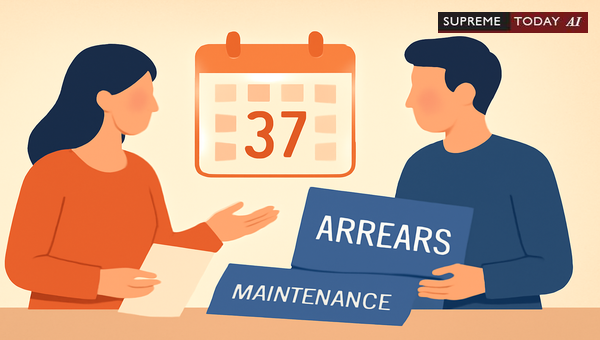
Is a Single Petition for 37 Months of Arrears Maintainable?

Is a Single Petition for 37 Months of Arrears Maintainable?

In family law matters, particularly under Section 125 of the CrPC, claiming maintenance arrears can be a complex process. One common question arises: Arrears Petition File for Period of 37 Months Whether Single Petition is Maintainable for Period of 37 Months. If you've been denied maintenance for an extended period, you might wonder if bundling a long stretch—like 37 months—into a single petition is permissible, or if multiple filings are required. This post breaks down the legal landscape, drawing from key judgments and principles to provide clarity.

Important Disclaimer: This article offers general information based on judicial precedents and is not a substitute for professional legal advice. Consult a qualified lawyer for your specific situation.

The Core Principle: Maintenance as a Continuing Obligation

At the heart of arrears claims is the recognition that maintenance liability under Section 125 CrPC is continuing. Courts have consistently held that the obligation doesn't lapse after a single period; it persists, allowing claimants to pursue unpaid amounts over time. A single petition for arrears covering 37 months is generally maintainable, provided it's filed within the applicable limitation period and treated as a comprehensive or ongoing claim rather than separate successive applications. Shantha @ Ushadevi VS B. G. Shivananjappa - 2005 4 Supreme 93

As observed in a key ruling: the liability to pay the maintenance as per the order passed under Section 125(1) is a continuing liability. Shantha @ Ushadevi VS B. G. Shivananjappa - 2005 4 Supreme 93 This foundational principle supports consolidating claims, avoiding the need for repetitive filings.

Legality of a Single Comprehensive Petition

Indian jurisprudence leans toward flexibility in arrears petitions. Filing one petition for a lengthy period like 37 months is permissible if:- It's within the limitation period (typically one year from when each installment becomes due, per the proviso to Section 125(3) CrPC).- The petition is viewed as a continuation of prior proceedings or a holistic claim.

For instance, courts have treated later applications as extensions of earlier ones filed timely. In one case: the application made by Lakshmi Dei in MC No. 20 of 1956 on 20th July, 1956, should therefore for all practical purposes be taken as continuation of the previous MC No. 4 of 1956 which was admittedly filed within time. Pokala Brabmaiah VS Pokala Padma - 1989 0 Supreme(AP) 531 This precedent bolsters the case for single petitions spanning multiple months.

Similarly, execution petitions for arrears can be filed within one year from relevant dates, such as a revision order, and ongoing proceedings may keep claims alive. Pokala Brahmaniah VS Pokala Padma - 1989 0 Supreme(AP) 527

Navigating Limitation Periods and Timing

Limitation is crucial but often misunderstood. The one-year bar applies to recovery proceedings for each arrears installment, not the underlying maintenance duty. Subsequent petitions can be seen as part of a continuous process if linked properly. Shantha @ Ushadevi VS B. G. Shivananjappa - 2005 4 Supreme 93

  • Key Rule: Arrears more than one year old may face challenges unless the petition demonstrates continuity or sufficient cause for delay.
  • Court View: the petition for execution of the maintenance order can be filed within one year from the date of the order in revision. Pokala Brahmaniah VS Pokala Padma - 1989 0 Supreme(AP) 527

From broader sources, delay can doom petitions. In a Madras case, a claim from 1994 to 2005 (over a decade) was dismissed due to delay and latches, underscoring that even single petitions must be timely. M.Ganesan (Senior Citizen) vs The State Bank of India - Madras

Single vs. Multiple Petitions: What Courts Prefer

Both approaches are viable, but a single comprehensive petition is often practical and upheld:- Pros: Streamlines proceedings, reduces costs, and aligns with the continuing liability doctrine.- Cons: Risk of partial dismissal if older arrears exceed limitation.

Multiple successive applications work too, but courts discourage fragmentation if a consolidated claim suffices. Varied rulings exist—some demand fresh petitions per year, but prevailing views favor continuity when proceedings are kept alive. Pokala Brabmaiah VS Pokala Padma - 1989 0 Supreme(AP) 531

Exceptions from Case Law:- In rent arrears contexts, courts direct payment of admitted arrears within fixed periods (e.g., two months), treating non-compliance seriously. MALIYEKKAL ABDU RAZAK vs KARUTHEDATH MOOSA HAJI - Kerala- Salary arrears petitions under government orders are maintainable if filed promptly, but procedural lapses (e.g., missing documents) can bar them. DARBARI LAL YADAV AND 2 OTHERS Vs STATE OF U P AND 3 OTHERS - Allahabad (2022)- Settlements may exclude arrears unless specified; courts uphold claims absent relinquishment clauses. KERALA FEEDS LTD vs THE PRESIDENT KERALAFEEDS WORKERS UNION - KeralaKERALA FEEDS LTD vs THE PRESIDENT KERALAFEEDS WORKERS UNION - Kerala

Potential Challenges and How to Overcome Them

While generally maintainable, single petitions for 37 months aren't foolproof:- Delay/Latches: Significant gaps can lead to dismissal, as in long-pending writs. M.Ganesan (Senior Citizen) vs The State Bank of India - Madras- Procedural Hurdles: Ensure all periods are specified; courts may condone minor delays with cause shown. REGIONAL PROVIDENT FUND COMMISSIONER II vs NORTH EASTERN ELECTRIC POWER CORPORATION EMPLOYEES PROVIDENT FUND TRUST - Meghalaya- Execution Limits: Maximum imprisonment for default is often 12 months, but arrears recovery continues. Pokala Brahmaniah VS Pokala Padma - 1989 0 Supreme(AP) 527

Other scenarios highlight risks:- Rent control petitions halted for possession, with arrears limited to admitted amounts. MALIYEKKAL ABDU RAZAK vs KARUTHEDATH MOOSA HAJI - Kerala- Revision petitions deemed non-maintainable post-trial court orders on arrears clearance. RAJESH DUA vs RAJIV GOYAL & ANR. - Delhi

Practical Recommendations for Filing

To maximize success:1. File Promptly: Lodge a single petition covering the full 37 months within limitation for recent arrears, arguing continuity for older ones.2. Document Thoroughly: List exact periods, prior orders, and payments to preempt challenges.3. Seek Continuation Status: Reference earlier proceedings explicitly.4. Prepare for Alternatives: Have backups like successive petitions if needed.

Courts typically accept comprehensive claims as valid continuations. Shantha @ Ushadevi VS B. G. Shivananjappa - 2005 4 Supreme 93

Conclusion and Key Takeaways

A single petition for 37 months of maintenance arrears is typically maintainable under Section 125 CrPC, thanks to the continuing nature of the obligation and supportive precedents. However, success depends on timing, procedural compliance, and framing as an ongoing claim. While cases like Pokala Brabmaiah VS Pokala Padma - 1989 0 Supreme(AP) 531 and Shantha @ Ushadevi VS B. G. Shivananjappa - 2005 4 Supreme 93 affirm this, exceptions for delay remind us to act swiftly.

Key Takeaways:- Leverage continuing liability for consolidated claims.- Watch limitation—one year per installment, but continuity helps.- Document meticulously to avoid dismissals.- Single petitions save time but require strong justification.

For personalized guidance, reach out to a family law expert. Stay informed, and protect your rights proactively.

References

  1. Pokala Brahmaniah VS Pokala Padma - 1989 0 Supreme(AP) 527 - Limitation and execution of maintenance orders.
  2. Shantha @ Ushadevi VS B. G. Shivananjappa - 2005 4 Supreme 93 - Continuing liability under Section 125 CrPC.
  3. Pokala Brabmaiah VS Pokala Padma - 1989 0 Supreme(AP) 531 - Petitions as continuations of prior proceedings.
  4. Additional insights from M.Ganesan (Senior Citizen) vs The State Bank of India - Madras, MALIYEKKAL ABDU RAZAK vs KARUTHEDATH MOOSA HAJI - Kerala, DARBARI LAL YADAV AND 2 OTHERS Vs STATE OF U P AND 3 OTHERS - Allahabad (2022), etc.
#MaintenanceArrears, #FamilyLawIndia, #LegalPetition
Chat Download
Chat Print
Chat R ALL
Landmark
Strategy
Argument
Risk
Chat Voice Bottom Icon
Chat Sent Bottom Icon
SupremeToday Portrait Ad
logo-black

An indispensable Tool for Legal Professionals, Endorsed by Various High Court and Judicial Officers

Please visit our Training & Support
Center or Contact Us for assistance

qr

Scan Me!

India’s Legal research and Law Firm App, Download now!

For Daily Legal Updates, Join us on :

whatsapp-icon telegram-icon
whatsapp-icon Back to top