


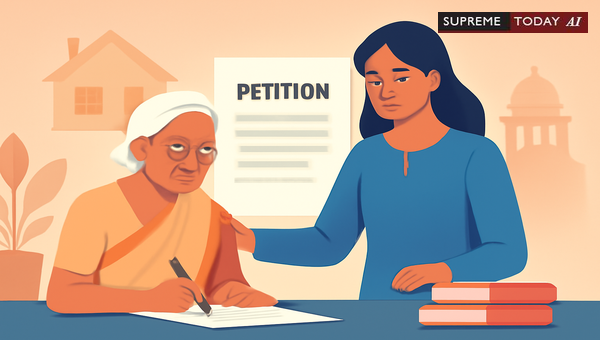
Can a Sister-in-Law File a Against the Real Sister?
In family disputes over inheritance and property, tensions often run high, especially when senior citizens' welfare is at stake. Imagine a scenario where a sister-in-law seeks to challenge or revoke an heirship claim made by the real sister of her spouse. This raises critical questions about rights under Indian law, particularly the (the Act).
The core issue— by Sister in Law against Real Sister—highlights intra-family conflicts involving maintenance, property transfers, and elderly care. While the Act primarily protects senior citizens, it opens doors for family members, including in-laws, to intervene. This blog explores whether such petitions are viable, drawing from legal precedents and principles. Note: This is general information, not specific legal advice. Consult a qualified lawyer for your situation.
Understanding the Legal Framework
The , is a designed to secure the rights and welfare of senior citizens amid eroding family support systems. 2025 1 Supreme 130 Its object is to provide for elderly persons facing neglect or needing maintenance. 2025 1 Supreme 130
Key provisions include:- : Empowers tribunals to order maintenance, , or welfare measures.- Broad jurisdiction for claims related to elderly welfare, often involving family disputes over property and heirship.
The Act does not explicitly restrict who can file petitions. Instead, it emphasizes protection, allowing family members including siblings to approach tribunals. 2025 1 Supreme 130 This extends logically to in-laws acting in the senior citizen's interest.
Can a Sister-in-Law Initiate Proceedings Against the Real Sister?
Generally, yes, a sister-in-law may file a against the real sister, particularly if it concerns the welfare of parents or senior citizens. The Act's supports family members, including sisters or in-laws, acting as representatives or claimants. 2025 1 Supreme 130
Key Legal Principles
- No Explicit Restrictions: There is no legal bar preventing a sister-in-law from filing against a blood relative like the real sister. The focus remains on elderly protection, not limiting familial relationships. 2025 1 Supreme 130
- Role of Family Members: Sisters, brothers, and even in-laws can petition if demonstrating the senior citizen's rights are violated, such as through neglect or improper property transfers. 2025 1 Supreme 130
- Tribunals have wide jurisdiction to order possession, maintenance, or revocation of property transfers made under duress or neglect. 2025 1 Supreme 130
In practice, proceedings often arise when family members clash over inherited property. For instance, the Act facilitates actions by or on behalf of senior citizens, implying representatives like a sister-in-law can intervene.
Insights from Relevant Case Law
Legal documents reveal patterns in family disputes:
In one case, the petitioner's sisters and brother-in-laws allegedly trespassed into property, leading to an FIR and tribunal proceedings under the Act. The tribunal was directed to hold enquiry by providing sufficient opportunity.
This shows in-laws and siblings are active parties in such conflicts.
Another instance involved petitioners (brother and sister), both handicapped, who inherited land but faced neglect after property transfers. The tribunal ordered maintenance, highlighting the Act's role in heirship and welfare disputes. 2025 Supreme(Online)(Mad) 58622 The court stressed speedy resolution to prevent hardships for vulnerable individuals misled by family members.
Pending civil suits saw a brother attempting to trespass, prompting injunctions alongside Act appeals. This underscores how maintenance tribunals handle overlapping heirship claims. 2025 Supreme(Online)(Mad) 68871
These cases reinforce that family members, including in-laws, can engage in petitions for maintenance or property revocation, aligning with the Act's social welfare goals. 2014 0 Supreme(Raj) 593
Jurisdiction and Proceedings
Tribunals under the Act offer a streamlined forum:- Filing Eligibility: Petitioners must show a nexus to the senior citizen's welfare, such as representing parental interests against a sibling's heirship claim.- Revocation of Property Transfers: Common in heirship disputes, where transfers to children (like a real sister) can be revoked if neglecting the elderly. 2025 1 Supreme 130- Procedural Aspects: Provide evidence of neglect, trespass, or deceit. Courts mandate timely disposal to avoid delays, as in directing appeals to conclude within months. 2025 Supreme(Online)(Mad) 58622
Exceptions and Limitations
- Procedural Hurdles: Must establish ; mere family ties may not suffice without welfare concerns.
- Family Dynamics: Courts consider evidence of violation, not just relational status.
- Overlaps with Civil Suits: Act proceedings may coexist with inheritance suits, but tribunals prioritize elderly relief. 2025 Supreme(Online)(Mad) 68871
Practical Recommendations
If considering such a petition:1. Document Welfare Issues: Gather proof of neglect, property misuse, or heirship violations affecting seniors.2. Establish Standing: As sister-in-law, highlight your role in elderly care.3. Consult Tribunal Rules: Ensure compliance for effective jurisdiction invocation.4. Seek Speedy Relief: Leverage the Act's emphasis on prompt hearings. 2025 Supreme(Online)(Mad) 58622
Integrating Broader Family Disputes
Other sources illustrate real-world applications:- Trespass and Damage: Sisters and brothers-in-law facing criminal complaints alongside Act petitions show the interconnectedness of heirship and welfare claims.
- Handicapped Siblings: Unmarried brother-sister duos deceived into transfers underscore tribunal powers in protecting vulnerable heirs. 2025 Supreme(Online)(Mad) 58622
These examples demonstrate the Act's flexibility for in-laws challenging blood relatives' claims.
Conclusion and Key Takeaways
Under the , a sister-in-law typically can pursue a against the real sister when elderly welfare is implicated. The legislation's beneficial nature and tribunal jurisdiction support such actions, as affirmed in precedents. 2025 1 Supreme 130 2014 0 Supreme(Raj) 593
Key Takeaways:- Interpret the Act liberally for senior protection.- Family members, including in-laws, may act as petitioners.- Focus on evidence of neglect or property issues.- Prioritize speedy tribunal proceedings.
Family harmony is ideal, but the law empowers intervention for the vulnerable. For personalized guidance, reach out to a legal expert.
References:- 2025 1 Supreme 130 – for tribunals' wide powers.- 2014 0 Supreme(Raj) 593 – Broad scope in family welfare claims.-
, 2025 Supreme(Online)(Mad) 68871, 2025 Supreme(Online)(Mad) 58622 – Case illustrations of family disputes. #SeniorCitizensAct #FamilyLawIndia #HeirshipDisputes












