


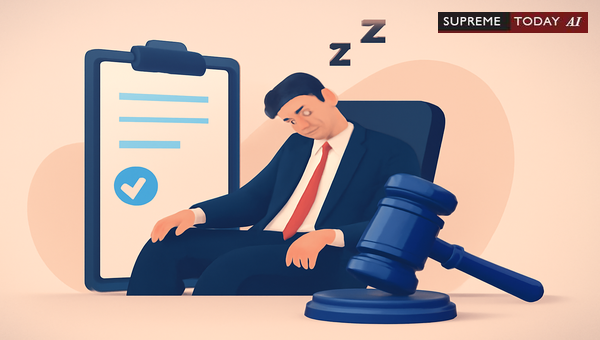
Sleeping Director Liability: Accountable or Not?
In the complex world of corporate governance, the role of a director can vary dramatically—from hands-on managers to passive figureheads often dubbed . But what happens when a company's cheque bounces under (NI Act)? Is a sleeping director automatically on the hook? The question Sleeping Director Not Accountable arises frequently in legal disputes, particularly in India and Malaysia. This post delves into the legal nuances, court precedents, and practical advice to clarify when—or if—such directors face liability.
This article provides general insights based on judicial trends and is not legal advice. Consult a qualified lawyer for specific cases.
What is a Sleeping Director?
A sleeping director is typically a director who holds the position on paper but remains uninvolved in the company's day-to-day management or operations. As noted in legal documents, merely holding the position of director does not automatically make a person liable for actions such as issuing cheques under Section 138 of the Negotiable Instruments Act, unless they are actively involved or responsible for conduct of business
2005 0 Supreme(Kar) 629
.
This passive role often serves as a shield in criminal proceedings for dishonored cheques. Courts emphasize that the label sleeping or dormant implies non-involvement, which can be a strong defense 2007 0 Supreme(Del) 2376
.
Key Characteristics of
- No active management: Not participating in daily affairs.
- Nominal position: Appointed but not exercising powers.
- Potential defenses: Resignation, lack of authority over specific transactions.
Liability Under Section 138 NI Act: Active Involvement is Key
Section 138 NI Act penalizes the drawer of a dishonored cheque, but for company directors, liability attaches only to those at the time of the offense. Courts consistently rule that a sleeping director escapes accountability unless proven otherwise.
For instance, a director who is not involved in the day-to-day affairs and has tendered resignation or is inactive cannot be held liable unless it is proven that they had authority or responsibility for the issuance of the cheque or conduct of the business at the relevant time
. The focus remains on actual involvement, not mere directorship 2005 0 Supreme(Kar) 629.
In Indian jurisprudence, passive status exempts directors from liability if they did not participate in the offending act 2007 0 Supreme(Del) 2376. Similar principles apply in Malaysia, where actual responsibility trumps nominal office-holding 1996 7 Supreme 740.
Judicial Approach in India and Malaysia
Indian Courts' Stance
Indian courts prioritize evidence of responsibility. A director's resignation, if accepted and notified to the , absolves them of post-resignation liabilities. As one ruling states, a director - whose resignation has been accepted by the company and that has been duly notified to the - cannot be made accountable and fastened with liability for anything done by the company after the acceptance 2024 0 Supreme(Raj) 638.
Mere allegations of involvement are insufficient; the onus is on prosecutors to prove active role. Mere directorship does not create automatic liability under the Act. The law has consistently held that only those who are responsible for the day-to-day conduct of business can be held 2025 0 Supreme(Del) 733.
Malaysian Perspectives
In Malaysia, distinctions between sole directors, active managers, and passive ones are clear. For example, where one director handles operations while another is merely nominal, the passive one avoids liability for breaches like
. Courts here, like in India, demand proof of involvement in financial misconduct.
Exceptions and Counterarguments
While generally prevail, exceptions exist:- Signing the cheque: If a director signs, liability may arise if it involves breach of trust 2024 0 Supreme(All) 210.- : Those not formally appointed but acting as directors (held out by the company as such) can be liable 2025 0 Supreme(Del) 733.- Failure to prove non-involvement: Directors must substantiate their passive status; unsubstantiated claims fail, as in cases where the onus is upon the directors... to prove that he was not associated with the affairs of the Company 2019 0 Supreme(P&H) 368.
Absence of prior proceedings doesn't guarantee immunity—evidence rules all.
Insights from Related Cases
Additional precedents reinforce these principles:- Resignation defenses: Formal procedures are vital; post-resignation actions don't bind ex-directors 2024 0 Supreme(Raj) 638.- Zero shareholding irrelevant: Even without shares, active directors may be liable, but passives are not 2019 0 Supreme(P&H) 1985.- Distinguishing roles: In multi-director setups, only those in charge face accountability
.
These cases highlight that liability stems from active management, protecting truly dormant directors.
Practical Recommendations for Directors
To minimize risks:1. Document non-involvement: Maintain records showing passive status.2. Formal resignations: Ensure acceptance and ROC notification 2024 0 Supreme(Raj) 638.3. Clear roles: Companies should delineate active vs. nominal directors.4. Defense strategy: In Section 138 cases, highlight lack of authority, resignation, or inactivity
.
Key Takeaways
- are typically not accountable under Section 138 NI Act absent active involvement or responsibility
2007 0 Supreme(Del) 2376
.
- Courts in India and Malaysia focus on evidence, not titles.
- Proper documentation and resignation procedures are your best defenses.
In summary, while directorship carries duties, passivity offers protection. Stay informed, document diligently, and seek professional advice to navigate these waters.
Word count: 1028. References are to specific legal documents for illustrative purposes.
#SleepingDirector, #DirectorLiability, #Section138















