Searching Case Laws & Precedent on Legal Query.....!
Analysing the retrieved Case Laws
Scanned Judgements…!



Searching Case Laws & Precedent on Legal Query.....!
Analysing the retrieved Case Laws
Scanned Judgements…!
Father and Son Settlement & Partition Rights - When a father is alive, his son is generally entitled to a share in the ancestral property, and the nature of that property (joint or individual) depends on the circumstances of the partition and subsequent events. For instance, if there is a partition between the father and his sons, each son, including the son born after partition, is entitled to a share, which may become coparcenary property ["2022 Supreme(Online)(Mad) 98854"], ["2024 0 Supreme(Mad) 961"], ["
Vasumathi VS R. Vasudevan - Madras
"].Legal Framework for Partition & Coparcenary - Under Hindu law, a son’s share in the father’s estate, acquired after partition, is treated as personal property unless specific provisions or family arrangements indicate otherwise. The law recognizes that a son born after partition becomes a coparcener with rights in the ancestral property, and if the father dies intestate, the son or his heirs can claim a share based on the coparcenary rights ["2024 0 Supreme(Pat) 890"], ["2024 0 Supreme(Mad) 961"].
Impact of Family Arrangements & Deeds - Family agreements, such as relinquishment deeds or partition panchayats, influence property rights. For example, if a father transfers or relinquishes his share to a son or another family member, this affects subsequent claims. In some cases, a father’s will or deed can limit or specify the extent of his property rights, impacting partition suits ["2023 0 Supreme(Kar) 692"], ["2021 Supreme(Online)(MAD) 33863"].
Partition Suit Eligibility When Father is Alive - Generally, when the father is alive, his son is entitled to a share in the ancestral property, and a partition suit by the son is maintainable if there is a dispute over the property rights, especially if the property is joint family property. The presence of a valid family arrangement or settlement does not bar the son from claiming his share unless explicitly settled ["2022 Supreme(Online)(Mad) 98854"], ["
Vasumathi VS R. Vasudevan - Current Civil Cases
"].Property Classification & Inheritance - The classification of property as ancestral, joint family, or individual affects partition rights. When property is inherited or acquired during the lifetime of the father, and the family is in a coparcenary, sons are entitled to a share, which can be claimed through partition suits even while the father is alive, provided there is a dispute or claim of rights ["2024 0 Supreme(Mad) 961"], ["
Vasumathi VS R. Vasudevan - Current Civil Cases
"].Analysis and Conclusion:A son is generally entitled to claim a share in the ancestral or coparcenary property during his father's lifetime, especially if there is a dispute or if the property has been partitioned previously. The law recognizes that a son born after a partition can become a coparcener with rights in the family property. Family arrangements, deeds, and the status of the property influence the scope of such claims. Therefore, when the father is alive, the son can file a partition suit to establish his rights over the property, unless there are clear legal or family arrangements indicating otherwise.References:- ["2022 Supreme(Online)(Mad) 98854"]- ["2024 0 Supreme(Pat) 890"]- ["2024 0 Supreme(Mad) 961"]- ["2023 0 Supreme(Kar) 692"]- ["2021 Supreme(Online)(MAD) 33863"]- ["
Vasumathi VS R. Vasudevan - Current Civil Cases
"]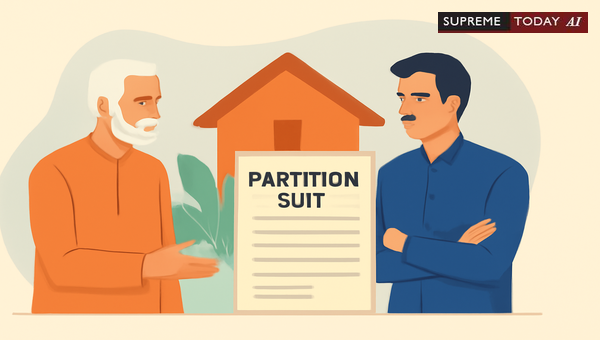
In Hindu joint families, disputes over are common, especially when it comes to partitioning shares. A frequent question arises: When the father is alive, is his son entitled to file a suit? This issue hinges on traditional Hindu law principles governing and joint family status. Understanding this can prevent costly legal battles and clarify inheritance paths.
This article breaks down the legal position, drawing from key judicial precedents and statutory presumptions. While the law generally favors joint family unity during the father's lifetime, specific conditions must be met for a son to succeed in a suit. Note: This is general information based on established cases and should not replace professional legal advice.
Under Hindu law, a son, as a coparcener by birth, typically has the right to seek of only during the father's lifetime if the family remains joint and the property undivided2007 0 Supreme(Kar) 553 2020 0 Supreme(Chh) 192. The Supreme Court has clarified that this right is linked to the existence of a joint family and an undivided estate 1964 0 Supreme(AP) 158.
Once the father passes away , the son's claim shifts from to under the 2018 0 Supreme(Bom) 583. During the father's life, however, the suit is maintainable provided no prior has occurred.
Key Points:- Son's suit is valid only if property is joint and undivided 2007 0 Supreme(Kar) 553 2020 0 Supreme(Chh) 192 1964 0 Supreme(AP) 158.- Family jointness is presumed until proven otherwise 2023 4 Supreme 421 2023 0 Supreme(Del) 2369.- can be total or partial, by agreement or court decree 2007 0 Supreme(Kar) 96 2018 0 Supreme(Chh) 273.- Father's during lifetime can be challenged if unfair or not 2007 0 Supreme(Kar) 96.- Post-death, rights devolve by inheritance, not 2018 0 Supreme(Bom) 583 2023 4 Supreme 421.
Hindu law recognizes a son's inherent right to demand from the father while he is alive, but this is contingent on the family maintaining its joint status. As held in 2007 0 Supreme(Kar) 553, a son can demand of coparcenary property during the father’s lifetime, but only if the property remains undivided and the joint status persists.
Judicial rulings emphasize that mere physical separation in residence or possession does not equate to legal 2006 7 Supreme 383. For instance, the burden of proving separation lies on the party asserting it, reinforcing the 2023 4 Supreme 421. Clear evidence, such as registered deeds or court decrees, is required (135, 137).
In cases like 2024 0 Supreme(AP) 393, strained relationships between father and son do not automatically dissolve joint status. The court noted, there is no strained relationship in between son and father, underscoring that emotional discord alone isn't sufficient without proof of .
The law presumes the Hindu family is joint unless separation is evidenced 2023 0 Supreme(Del) 2369. The party claiming that a has occurred during the father’s lifetime must prove it; mere separation in residence or possession does not constitute a legal 2006 7 Supreme 383. This protects coparceners' rights and maintains family unity.
may occur via mutual agreement, family arrangement, or court suit 2007 0 Supreme(Kar) 96. A father, as , can alienate property for or estate benefit, binding coparceners, as seen in 2024 0 Supreme(AP) 393 where the court upheld sales by the father () since the son failed to prove ancestral nature or invalidity.
However, if the property remains joint, the son's suit during the father's life is valid 2018 0 Supreme(Chh) 273. Partial partitions are possible but must clearly divide status and property.
Upon the father's death, suits give way to claims. The right to claim a share arises only after the death of the male, i.e., through 2018 0 Supreme(Bom) 583. Property devolves by inheritance, not in the strict coparcenary sense post-1956 amendments.
In 2024 0 Supreme(Mad) 2153, a daughter (coparcener by birth under amended Hindu Act) was entitled to a ½ share in ancestral properties after her father's death, invalidating fraudulent transactions. This illustrates post-death shifts, relevant analogously for sons.
Subhas Chandra Sil VS Sumik Sil
2011 0 Supreme(Cal) 182.In disputes, shares devolve per , as in 2007 0 Supreme(MP) 145, where the only son got 2/3rd share post-death.
Consult a lawyer for case-specifics, as outcomes vary by facts and jurisdiction.
Generally, a son may file a suit while the father is alive if the family and property remain joint2020 0 Supreme(Chh) 192. This right evaporates post-death, transitioning to inheritance. Presumptions favor jointness, but robust proof is key.
Takeaways:- Confirm undivided status before suing.- Challenge only with evidence of unfairness.- Post-death: Rely on laws.
This overview draws from precedents like 2007 0 Supreme(Kar) 553, 2020 0 Supreme(Chh) 192, and others. For tailored advice, seek expert counsel.


Father and son settled the issue between them and as per judgment and decree passed in O.S.No.36 of 2006, respondent is absolutely entitled to all the suit properties. ... After the dismissal of the suit in O.S.No.57 of 2006, appellant filed this suit. Appellant was permitted to live in the house in Survey No.123/1B. This suit is filed without any ba....

and sons (and now also daughters) then wife of father as well as widowed mother of the father would get one share equal share to that of a son (or a daughter). ... Article 322 deals with the extraordinary status of the father who has been empowered to effect partition amongst him with his sons irrespective of non-inclination of son. ... instituted after B’s death by one as the adopted son#HL_END....

In such a case if there is a son begotten and born to the father after the partition the share of the ancestral property acquired by the father will immediately become property of a coparcenary consisting of the father and the son or sons begotten and born after such partition (0). ... He would also state that the earlier suit was filed during the lifetime of the father....

case of the son there was a strained relationship in between him and his father by the date of filing of the suit or prior to filing of the suit or during the pendency of the trial before the trial Court. ... and there is no strained relationship in between son and father. ... The recitals in Ex.A1 clearly goes to show that the relationship in between the father and #HL....

Their father Velur Venkataramaiah under Ex.P.6, which is the relinquishment deed, transferred half share in the suit site in favour of his second son - Sathyanarayana Setty. ... Therefore, what emerges from Ex.P.6 is that the plaintiff and defendant's father had retained only half share in the suit site. ... Therefore, if father of plaintiff and defendant has transferred half share in fa....

Under Ex.A.4, Hiriya Gowder had sold the suit property to the son of the 1st defendant. ... The said oral partion was reduced into panchayat mutchalika on 23.12.1997 executed by the plaintiff with his father and brothers, namely, H.Chandra Sekar and H.Suresh Kumar. that as per the family partition, the plaintiff's father was not allotted and land in the suit schedule survey number. ... T....

The suit is laid for partition of one item of immovable property. Broadly, it is the daughters’ suit for partition against their father and brothers claiming a share in the ancestral property as coparceners. ... Karuppan Chettiar [AIR 1979 Madras 1 (FB)], the predominant view has been that when a son takes a share in the property of his father under Sec.8, then it is treated as the personal or the individ....
The suit is laid for partition of one item of immovable property. Broadly, it is the daughters' suit for partition against their father and brothers claiming a share in the ancestral property as coparceners. ... Karuppan Chettiar [AIR 1979 Madras 1 (FB)], the predominant view has been that when a son takes a share in the property of his father under Sec.8, then it is treated as the personal or the individ....
D.W.3, son of the attesting witness - Chinnasamy, has deposed that his father passed away in 2008 and produced his father’s death certificate (Ex-B.23). He and his father are well acquainted with the father of D1 – Mylsamy. ... On June 9, 1994, D1’s father executed 3 Wills in a sound disposing state of mind with regard to the Suit Properties. Through one Will, an extent of 13 Acre 78 Cen....
According to the plaintiff, the second defendant remarried prior to the death of his son viz., the father of the plaintiff. 24. ... The father himself has given a correct age at the time of executing the sale deed in the year 1967 and the same is relevant to prove the age of the son. Therefore, it is his submission that the trial Court has rightly found that the suit is filed beyond the period of three ye....

After death of his father, he, being the only son, succeeded to the suit house. The defendant is the agnatic brother of his father. For legal necessity, his father sold half of the suit house and kept other half with him. He had no right, title and interest over the suit house.
So, after passing of the order dated June 15, 2009 that suit becomes a suit between a son against his father. In the given circumstances, I am to consider whether the learned Trial Judge was justified in rejecting the application under Order 7, Rule 11 of the C.P.C. No doubt, in order to consider that the plaint can be rejected under the provisions of Order 7, Rule 11 of the C.P.C., the Court is to consider the averments made in the plaint and there is no scope to consider th....

In the given circumstances, I am to consider whether the learned Trial Judge was justified in rejecting the application under Order 7 Rule 11 of the C.P.C. No doubt, in order to consider that the plaint can be rejected under the provisions of Order 7 Rule 11 of the C.P.C., the Court is to consider the averments made in the plaint and there is no scope to consider the written statement or any document filed on behalf of the defendant. So, after passing of the order dated June 15, 2009....
In the said suit he claimed himself to be the son of his natural father. Thus, by taking into consideration the pleadings and evidence of the parties in its entirety, the learned Trial Judge came to the conclusion that the defendant was not the adopted son of Harekrishna. The learned Trial Judge also found that not only the defendant failed to produce any valid acceptable evidence in support of his claim for adoption as son by Harekrishna but also he filed a suit against his ....

In view of this to settle the dispute it is concluded that in total disputed land, appellant who is the only son of deceased Budhi will have 2/3rd share in the property (1/3 share of Budhi and 1/3 share of Moti, which has already been devolved in the share of Budhi) and respondent No. 1 Mula will have 1/3rd share of his father deceased Lalji, in the property as and when the partion will take place. As a part of the disputed land has been sold by Mula vide registered sale deed....


An indispensable Tool for Legal Professionals, Endorsed by Various High Court and Judicial Officers
Please visit our Training & Support
Center or Contact Us for assistance

Scan Me!
India’s Legal research and Law Firm App, Download now!


For Daily Legal Updates, Join us on :



 Back to top


