SupremeToday Landscape Ad
AI Thinking

AI Thinking...

Searching Case Laws & Precedent on Legal Query.....!

Scanned Judgements…!

Checking relevance for Narendra VS K. Meena...

2016 7 Supreme 528 : Unsubstantiated allegations levelled by Respondent wife and threats and attempt to commit suicide by her amounted to mental cruelty, which constitutes an act of cruelty under Section 13(1)(ia) of the Hindu Marriage Act, 1955, justifying divorce.Checking relevance for Manju Ram Kalita VS State Of Assam...

Checking relevance for Pankaj Mahajan VS Dimple @ Kajal...

2011 0 Supreme(SC) 960 : Yes, constant threats of suicide by a spouse towards the other spouse amount to mental cruelty under matrimonial law. The court held that repeated threats to commit suicide, especially when accompanied by attempts (such as jumping from a terrace), constitute acts of such magnitude and consequence as to cause pain, agony, and suffering, thereby amounting to cruelty. The court emphasized that such threats create a reasonable apprehension in the mind of the aggrieved spouse that it would be harmful or injurious to live with the other party, which satisfies the legal definition of cruelty.Checking relevance for Vidhya Viswanathan VS Kartik Balakrishnan...

Checking relevance for Suman Kapur VS Sudhir Kapur...

Checking relevance for K. V. Prakash Babu VS State of Karnataka...

Checking relevance for Lata Kumari VS Om Prakash Mandal...

2023 0 Supreme(Del) 3899 : Yes, constant threats of suicide by a spouse towards the other spouse amount to mental cruelty under Indian matrimonial law. The court held that repeated threats to commit suicide, including an attempt to jump from a balcony, constitute mental cruelty because they create a continuous fear for the safety and life of the other spouse, which is harmful and injurious to the conjugal relationship. This was supported by precedents such as Pankaj Mahajan vs Dimple (2011) 12 SCC 1 and Nagendra vs K. Meena (2016) 9 SCC 455, which established that such conduct amounts to cruelty sufficient to entitle the aggrieved spouse to a decree of divorce under Section 13(1)(i-a) of the Hindu Marriage Act, 1955.Checking relevance for Tikeshwari Chouhan W/o Shri Anil Chouhan VS Anil Chouhan S/o Shri Laxman Singh Chouhan...

2022 0 Supreme(Chh) 609 : Yes, constant threats of suicide by a spouse can amount to mental cruelty under Section 13(1)(i-a) of the Hindu Marriage Act, 1955. In the case analyzed, the wife''''s persistent threats to commit suicide, coupled with continuous harassment to live separately from her husband''''s parents and abuse of his parents, were held to constitute physical and mental cruelty. The court emphasized that such conduct over a period of about two years could not be dismissed as mere trivial irritations or normal wear and tear of married life, and that the sustained nature of the threats and behavior made it impossible for the husband to live with her. This aligns with the Supreme Court''''s view in Samar Ghosh vs. Jaya Ghosh (2007) 4 SCC 511, which recognizes that a sustained course of abusive and humiliating treatment, including threats that create grave apprehension, can amount to mental cruelty.Checking relevance for Trilesh Kumar Nahata, S/o. Shri Subhash Chand Nahta VS Manju Nahata, W/o. Shri Trilesh Nahta...

2023 0 Supreme(Chh) 159 : Yes, constant threats of suicide by a spouse towards the other spouse amount to mental cruelty. This is established by the Supreme Court in Narendra Vs. K. Meena (2016) 9 SCC 455, which held that threats and attempts to commit suicide constitute mental cruelty. The Court reasoned that such incidents create a lasting psychological burden, making it impossible for the affected spouse to continue living with the other party, thus satisfying the legal threshold for mental cruelty under Section 13(1)(i-a) of the Hindu Marriage Act, 1955.


AI Overview

AI Overview...

  • Threat of Suicide as Mental Cruelty - Repeated threats of suicide or self-harm by a spouse, especially when persistent, can cause severe mental torture and disturbance of mental peace to the other spouse. Such conduct creates a continuous state of fear and insecurity, impacting the emotional well-being of the affected spouse. Courts have recognized threats of suicide, including attempts, as constituting mental cruelty in matrimonial disputes ["2023 0 Supreme(Del) 3899"], ["2024 0 Supreme(Jhk) 151"].

  • Conduct Causing Mental Apprehension - If a spouse's conduct leads the other to reasonably fear for their mental health or safety, it can amount to cruelty. This includes verbal abuses, insults, and threats, whether or not they result in actual physical harm. The conduct must be examined in its circumstances and background to determine its impact on mental peace ["2023 0 Supreme(Pat) 457"], ["2024 0 Supreme(All) 2168"], ["2023 0 Supreme(Cal) 1272"].

  • Suicide Attempts and Threats - Specific acts such as attempting to poison oneself or threatening to do so are significant indicators of mental cruelty. Courts have held that repeated threats or attempts to commit suicide, especially if used to manipulate or intimidate, qualify as cruelty, justifying divorce if the conduct causes mental suffering ["2025 0 Supreme(Telangana) 177"], ["

    Jolina D/o Anilbhai Patel @ Devanshee W/o Pratik Champaneri VS Pratik Dhiraj Champaneri - Current Civil Cases

    "], ["2024 0 Supreme(Jhk) 151"].
  • Mental Cruelty Defined - Mental cruelty involves a state of mind characterized by prolonged anguish, disappointment, or frustration caused by the spouse's conduct. It is not limited to isolated acts but considers the overall pattern and background, including long-term behavior, which affects the mental health of the other spouse ["2023 0 Supreme(Cal) 1272"], ["2023 0 Supreme(Chh) 636"], ["2023 Supreme(Online)(MP) 27235"].

  • Legal Precedents - Courts have consistently held that threats of suicide, whether to implicate others falsely or as a form of intimidation, amount to cruelty. The Madhya Pradesh High Court and Supreme Court have emphasized that such conduct causes mental suffering and can justify divorce ["2023 0 Supreme(Pat) 985"], ["2023 0 Supreme(Del) 3899"], ["2024 0 Supreme(Jhk) 151"].

Analysis and Conclusion:A constant threat or attempt of suicide by a spouse is recognized as a form of mental cruelty under matrimonial law. Such conduct causes persistent mental suffering, fear, and disturbance of peace, which courts have acknowledged as sufficient grounds for divorce. The key factor is the impact of these threats or acts on the mental health and well-being of the other spouse, making it a serious form of cruelty warranting legal remedy.

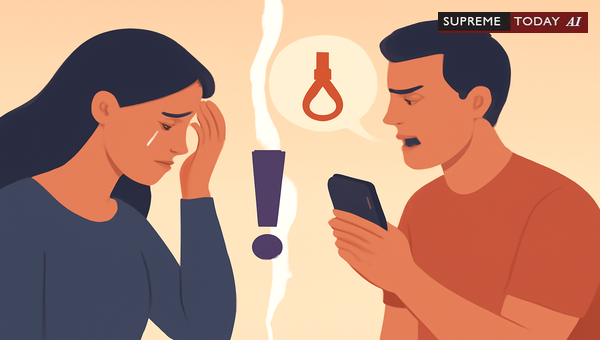
When Spouse Suicide Threats Constitute Mental Cruelty and Valid Grounds for Divorce in India

Spouse Suicide Threats: Mental Cruelty for Divorce?

In the delicate fabric of marriage, emotional turmoil can sometimes escalate to severe psychological distress. Imagine living under the constant shadow of a spouse's threats to end their life—does this amount to mental cruelty? Whether constant threat of suicide by a spouse towards the spouse amounts to mental cruelty is a pressing question in Indian matrimonial law. This blog delves into judicial precedents, legal principles, and practical insights to clarify this issue.

Note: This article provides general information based on legal precedents and is not a substitute for professional legal advice. Consult a qualified lawyer for your specific situation.

Understanding Mental Cruelty Under Indian Law

Mental cruelty is a recognized ground for divorce under Section 13(1)(ia) of the Hindu Marriage Act, 1955. It encompasses conduct by one spouse that causes such mental pain and suffering to the other that cohabitation becomes intolerable. Courts have broadly interpreted cruelty to include both physical and mental harm, intentional or otherwise, creating a reasonable apprehension of injury. 2024 0 Supreme(Jhk) 796

As defined in key rulings, mental cruelty is a state of mind which may be in the feeling of deep anguish, disappointment or frustration in one spouse caused by the conduct of other. 2022 0 Supreme(Jhk) 534 It may cause more serious injury than physical harm, and once proved, the impact need not be deeply inquired into. 2022 0 Supreme(Jhk) 534

The Supreme Court in Samar Ghosh vs Jaya Ghosh, (2007) 4 SCC 511, outlined illustrative guidelines, stating that persistent abusive or humiliating treatment, including threats of self-harm, can constitute mental cruelty if it leads to deep mental anguish. 2016 7 Supreme 528

Do Constant Suicide Threats Constitute Mental Cruelty?

Main Legal Finding: Yes, constant threats of suicide by a spouse can amount to mental cruelty, particularly when persistent, grave, and causing significant mental pain, suffering, and apprehension, making it unreasonable for the affected spouse to continue living together. 2011 0 Supreme(SC) 960

Key Judicial Precedents

  • Pankaj Mahajan vs Dimple, (2011) 12 SCC 1: The Supreme Court held that threats to commit suicide are acts of such gravity that they cause mental pain and suffering, making matrimonial life impossible. 2011 0 Supreme(SC) 960

  • Nagendra vs K. Meena, (2016) 9 SCC 455: Repeated threats or attempts to commit suicide create a continuous state of fear and insecurity, detrimental to the other spouse's mental well-being. 2011 0 Supreme(SC) 960

  • In another case, repeated threats and attempts were deemed mental cruelty due to ongoing mental pain, fear, and disturbance impairing the affected spouse's peace. 2023 0 Supreme(Del) 3899

Courts emphasize that such conduct must be persistent and grave. Single incidents may not suffice, but repeated threats over time, causing continuous distress, justify divorce. 2011 0 Supreme(SC) 960 2022 0 Supreme(Chh) 609 2023 0 Supreme(Del) 3899

Nature and Impact

Threats of suicide are not trivial; they instill a perpetual state of apprehension. As noted, the severity, persistence, and impact of such threats on the mental health and peace of the other spouse are critical. 2011 0 Supreme(SC) 960 This aligns with broader definitions where cruelty is conduct causing mental suffering or fear to the matrimonial life of the other spouse. 2022 0 Supreme(Chh) 174

In Samar Ghosh, persistent conduct leading to impossibility of living together is key. 2016 7 Supreme 528 Similarly, unsubstantiated allegations and threats, including suicide attempts, justify divorce. 2016 7 Supreme 528

Threshold for Proving Mental Cruelty

Not every threat qualifies. Courts require:

Mere allegations without proof fail. Allegations of cruelty must be substantiated with evidence, and mere claims without proof do not warrant a divorce. 2024 0 Supreme(Jhk) 796 The burden lies on the petitioner to show reasonable apprehension of harm. 2024 0 Supreme(Jhk) 796

In one case, aggressive behavior alone didn't suffice without proof of harm. 2024 0 Supreme(Jhk) 796 Cruelty must exceed ordinary wear and tear of family life. 2022 0 Supreme(Chh) 174

Exceptions and Contextual Factors

Isolated threats in temporary distress may not qualify unless part of a broader pattern. Courts examine overall circumstances. 2016 7 Supreme 528 2011 0 Supreme(SC) 960

Other forms of mental cruelty, like false accusations of infidelity or denying conjugal rights, compound the issue. For instance:

  • Uncalled-for allegations of extra-marital affairs cause mental agony.

    Gopal Krishan Dua VS Rajni Dua

  • Denying sexual relationship amounts to mental cruelty. 2017 0 Supreme(Ker) 410
  • Character assassination via illicit relation claims. 2022 0 Supreme(Chh) 174

In persistent harassment cases, including suicide threats, divorce was granted. 2022 0 Supreme(Chh) 609

Practical Recommendations

If facing such threats:

  • Document Incidents: Record dates, times, witnesses, and impacts meticulously to establish pattern.
  • Seek Help: Pursue counseling or mental health intervention for underlying issues.
  • Legal Steps: In proceedings, demonstrate persistence and psychological toll with evidence like medical records or testimonies.
  • Maintenance Considerations: Courts may award alimony, adjustable against Section 125 CrPC claims. 2022 0 Supreme(Chh) 174 2022 0 Supreme(Jhk) 534

Key Takeaways

| Aspect | Judicial View ||--------|---------------|| Repeated Threats | Mental cruelty if causing distress 2011 0 Supreme(SC) 960 || Single Incidents | Generally insufficient 2016 7 Supreme 528 || Proof Required | Substantiated evidence essential 2024 0 Supreme(Jhk) 796 || Outcome | Divorce often granted on persistence 2023 0 Supreme(Del) 3899 |

Conclusion

Constant threats of suicide by a spouse, when persistent and gravely impacting mental health, are typically recognized as mental cruelty under Indian law, enabling divorce petitions. Precedents like Pankaj Mahajan and Nagendra underscore this, emphasizing the intolerable fear they engender. However, context matters—courts demand proof beyond doubt.

For those navigating matrimonial strife, early intervention and documentation are crucial. While these insights draw from established cases, individual circumstances vary. Always seek tailored legal counsel to protect your rights.

References:1. 2016 7 Supreme 5282. 2011 0 Supreme(SC) 9603. 2023 0 Supreme(Del) 38994. 2022 0 Supreme(Chh) 6095. 2024 0 Supreme(Jhk) 7966. 2022 0 Supreme(Jhk) 5347. 2022 0 Supreme(Chh) 1748. 2017 0 Supreme(Ker) 4109.

Gopal Krishan Dua VS Rajni Dua

#MentalCruelty #DivorceIndia #MatrimonialLaw
Chat Download
Chat Print
Chat R ALL
Landmark
Strategy
Argument
Risk
Chat Voice Bottom Icon
Chat Sent Bottom Icon
SupremeToday Portrait Ad
logo-black

An indispensable Tool for Legal Professionals, Endorsed by Various High Court and Judicial Officers

Please visit our Training & Support
Center or Contact Us for assistance

qr

Scan Me!

India’s Legal research and Law Firm App, Download now!

For Daily Legal Updates, Join us on :

whatsapp-icon Back to top