


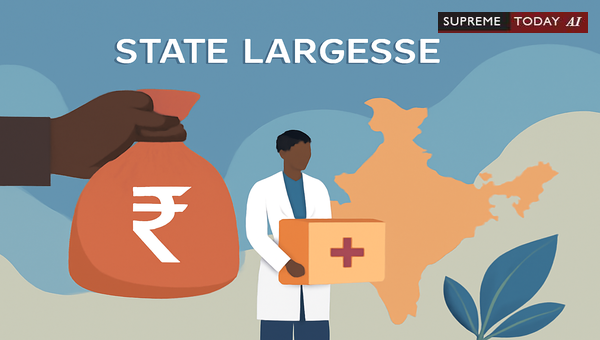
Distribution for Public Health in India
In an era where public health infrastructure is critical, the question arises: should be Distributed in Public Health. This isn't just a policy preference—it's a constitutional imperative in India. , encompassing natural resources, land, licenses, and other benefits, must be allocated transparently and equitably, especially when tied to public health objectives. Drawing from landmark judicial precedents, this post explores the legal framework, key principles, and practical recommendations to ensure fairness and public benefit. Note: This is general information, not specific legal advice. Consult a qualified lawyer for your situation.
Main Legal Finding
The distribution of , including benefits like land, licenses, or privileges for public health, must be , , , and guided by serving the . While the State enjoys broad discretion in policy-making, this is constrained by constitutional principles, notably Articles 14 () and 39(b) (material resources for the common good) of the . Arbitrary distributions risk violating these mandates, particularly in public health where equitable access can be life-saving. 2012 0 Supreme(SC) 671 2018 0 Supreme(SC) 448
Courts have consistently held that the State and its agencies cannot give largesse arbitrarily or at their whim. Every act of distribution must be founded on a well-defined, policy that is publicly known and implemented in a , equitable, and non-discriminatory manner. 2012 0 Supreme(SC) 671
Key Principles Governing Distribution
Here are the cornerstone principles:
- and Publicly Known Policy: must be based on a sound, , and publicly known policy. 2012 0 Supreme(SC) 671 2018 0 Supreme(SC) 448
- and Equitable Manner: Distributions should avoid or , upholding 's guarantee. 2012 0 Supreme(SC) 671 2018 0 Supreme(SC) 448
- Public Purpose Alignment: Natural resources or benefits must be allocated for public purposes, including health, per constitutional mandates. 2012 0 Supreme(SC) 671 2018 0 Supreme(SC) 448
- Limited Judicial Review: Courts assess legality and constitutionality but refrain from policy efficacy unless arbitrariness is evident. 2012 0 Supreme(SC) 671 2018 0 Supreme(SC) 448
- Non-Discrimination in Public Health: Allocations for health must ensure equitable access, free from arbitrary . 2012 0 Supreme(SC) 671 2018 0 Supreme(SC) 448
These principles extend to public health initiatives, where resources like land for hospitals or licenses for health facilities demand scrutiny.
Detailed Legal Analysis
Legal Principles for
The judiciary has repeatedly stressed that undermines : and violate the constitutional guarantee of under . 2012 0 Supreme(SC) 671 2018 0 Supreme(SC) 448. In cases involving public lands or quotas, every state action conferring largesse—such as allotment of land, grant of quota, permit licence, etc.—must be impartial.
Natural Resources and Public Benefits
Natural resources are public assets, to be distributed sub-serving the common good. mechanisms like public auctions or tenders ensure opportunity: The demands that all eligible persons have a opportunity to participate in the distribution process. 2012 0 Supreme(SC) 671 2018 0 Supreme(SC) 448. For public health, this applies to allotments for colleges or health systems. As noted, institutions like the have pioneered public health capacity by conducting experimental course, drafting guidelines for development of colleges of public health. 2024 Supreme(Online)(TS) 7589
Judicial Review and State Discretion
Courts intervene only if processes are , , or violative of constitutional rights. 2012 0 Supreme(SC) 671 2018 0 Supreme(SC) 448. Review focuses on fairness, not merits. In public health, this means verifying if distributions align with without bias.
must also avoid politicization: Government-distributed largesse must be free from political influence and should be solely associated with the government, especially during relief efforts or welfare schemes.
Application to Public Health
Though not always explicitly categorized, public health falls under public welfare. Largesse for health—land grants for clinics or funding for programs—must follow clear policies: Any distribution of benefits or resources... intended to serve public health objectives, must be based on a clear policy that ensures no discrimination or . 2012 0 Supreme(SC) 671 2018 0 Supreme(SC) 448
Supporting this, compassionate appointments highlight state welfare: The basic concept of the family for providing compassionate appointment is only that welfare of the State comes to the rescue of the citizens. 2025 Supreme(Online)(CAT) 400. Similarly, State Government should have resorted to distribute the while adhering to .
Public purpose is central: Initiatives like public health colleges serve the needy, aligning with public purpose and welfare. 2024 Supreme(Online)(Tel) 28700 2024 Supreme(Online)(TEL) 19575
Exceptions and Boundaries
State discretion exists but is bounded: Arbitrary acts violate guarantees. Exceptions like negotiations require justification and adherence to principles. 2012 0 Supreme(SC) 671 2018 0 Supreme(SC) 448
Insights from Broader Case Law
Additional precedents reinforce transparency:
- Compliance with Constitution: Public resources allocated as largesse are meant to serve constitutional objectives, such as under .
- Processes: ... should generally be distributed via procedures like public auctions. 2023 Supreme(Online)(SC) 20856
- Serving the Needy: Resources must target welfare, avoiding misuse: Distribution of land, grants, or other resources must be directed towards the needy and for public purposes, such as... health. 2021 Supreme(Online)(Guj) 1695
These ensure accountability, especially in health where equity impacts lives.
Recommendations for Compliant Distribution
To align with law:
- Formulate and publish clear policies for public health largesse.
- Use mechanisms like open tenders or auctions, barring justified exceptions.
- Courts should scrutinize processes for fairness and non-discrimination.
- Promote , avoiding to serve public good.
States must prioritize: is required to be distributed while... adhering to .
Conclusion and Key Takeaways
for public health must embody transparency, fairness, and , guided by Articles 14 and 39(b). Courts uphold these to prevent arbitrariness, ensuring resources benefit society. Key takeaways:
- Always base distributions on public, policies. 2012 0 Supreme(SC) 671
- Prioritize auctions/tenders for equity.
- Limit political involvement for purity.
- Align with welfare, rescuing citizens in need. 2025 Supreme(Online)(CAT) 400
By following these, states fulfill constitutional duties, building trust and effective health systems. For tailored advice, seek professional legal counsel.
References
- 2012 0 Supreme(SC) 671: Emphasizes policies and fairness in largesse distribution.
- 2018 0 Supreme(SC) 448: Limits state discretion by constitutional principles.
- Additional sources: 2025 Supreme(Online)(CAT) 400, 2024 Supreme(Online)(TS) 7589,
,
,
,
, 2023 Supreme(Online)(SC) 20856, 2024 Supreme(Online)(Tel) 28700, 2024 Supreme(Online)(TEL) 19575, 2021 Supreme(Online)(Guj) 1695.












