Searching Case Laws & Precedent on Legal Query.....!
Analysing the retrieved Case Laws
Scanned Judgements…!



Searching Case Laws & Precedent on Legal Query.....!
Analysing the retrieved Case Laws
Scanned Judgements…!
Christian Marriage Law - The primary law governing Christian marriages in India is the Indian Christian Marriage Act, 1872. It consolidates and amends laws related to the solemnization and certification of Christian marriages, emphasizing that such marriages must be performed according to Christian customs and rites ["2026 Supreme(Online)(Raj) 1993"]. It also mandates registration of marriages and issue of marriage certificates as conclusive proof of marriage ["2026 Supreme(Online)(Raj) 1993"].
Registration and Certification - The Act provides for the registration of Christian marriages, with provisions for issuing marriage certificates that serve as definitive proof of marriage ["2026 Supreme(Online)(Raj) 1993"]. The Cochin Christian Civil Marriage Act, 1095, also regulates marriage registration in certain regions, requiring a notice period and formal registration process ["2025 Supreme(Online)(Ker) 58750"].
Marriage Validity and Religious Requirements - The validity of Christian marriages depends on adherence to Christian customs and rites. Marriages performed in accordance with Christian traditions are recognized, and any marriage not complying with these rites may be considered invalid ["2026 Supreme(Online)(Raj) 1993"]. The law explicitly states that polygamy is not permitted under Christian law, and second marriages during the subsistence of a first marriage are void ["2011 Supreme(Online)(Chh) 90"].
Restrictions and Legal Impediments - The Indian Christian Marriage Act specifies that a Christian marriage is invalid if either party has a living spouse at the time of marriage (Section 60 of the Act). Additionally, the Act does not recognize customary or traditional divorce among Christians; divorce is only permitted on specific grounds outlined under the Indian Divorce Act, 1869 ["2026 Supreme(Online)(Raj) 1993"] ["2026 Supreme(Online)(Raj) 1993"].
Relationship with Other Laws - The Indian Christian Marriage Act does not permit civil marriages; marriages must be performed according to religious rites. In regions where the Act is not extended, Christian marriages may be governed by Canon Law or local customary laws ["2026 Supreme(Online)(Raj) 1993"], ["2026 Supreme(Online)(Raj) 1993"].
Historical and Comparative Context - The law has evolved from British statutes of 1857 and 1864, with subsequent amendments. The Indian Christian Marriage Act, 1872, was enacted to regulate Christian marriages in India, mirroring English law, and to prevent irregular or clandestine marriages ["2025 0 Supreme(Mad) 2996"].
Analysis and Conclusion:The core legal framework for Christian marriage in India is primarily established by the Indian Christian Marriage Act, 1872, supplemented by regional statutes like the Cochin Christian Civil Marriage Act, 1095. These laws mandate that Christian marriages be performed according to religious rites and require official registration. They prohibit polygamy and customary divorces, emphasizing monogamy and specific grounds for divorce. The laws also clarify that marriages performed outside the prescribed religious procedures may be deemed invalid. Overall, these acts form the primary legal instruments governing the solemnization, registration, and validity of Christian marriages in India.
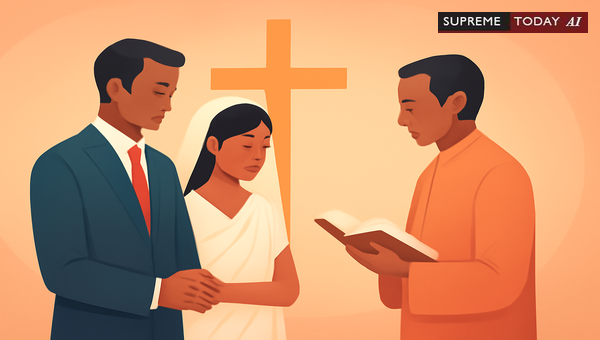
In a diverse country like India, marriage laws are often tailored to religious communities, ensuring that personal laws align with cultural and religious practices. If you've ever wondered, what law or acts deal with Christian marriage?, you're not alone. Many couples, legal practitioners, and families seek clarity on the statutes that govern the , , and of Christian marriages. This blog post dives deep into the primary legislations, judicial interpretations, and related considerations to provide a comprehensive overview.
Note: This article offers general information based on established laws and case references. It is not a substitute for professional legal advice. Consult a qualified lawyer for your specific situation.
The cornerstone of Christian marriage law in India revolves around two key statutes:
: This is the primary legislation applicable across most of India, providing a comprehensive framework for Christian marriages. It outlines conditions for marriage, procedures for , and mechanisms for and legal recognition. Courts have consistently referenced this Act as the foundational law for Christian matrimonial matters. 1992 0 Supreme(Ker) 57
: This Act applies specifically to the former territory of Cochin (now part of Kerala). It facilitates the and of marriages where at least one party is Christian, even if the other is not, under the supervision of a Marriage Registrar. explicitly allows such unions. 2019 0 Supreme(Ker) 268 2017 0 Supreme(Ker) 40
These Acts ensure that Christian marriages receive statutory recognition, superseding mere customary practices in many cases.
Enacted during the British colonial era, the , remains a vital statute today. It specifies who can officiate marriages (e.g., licensed ministers or registrars), the notice requirements, and prohibitions like or marriages within .
Key provisions include:- procedures: Marriages must follow prescribed rites, often in church settings, with witnesses present.- : Mandatory for legal , providing proof for future disputes like inheritance or divorce.- Scope: Applies to Christians nationwide, except in areas with specific local laws like Cochin. 1992 0 Supreme(Ker) 57
Judicial rulings affirm its enduring relevance. For instance, courts have emphasized that only marriages solemnized under this Act qualify for remedies under related laws like the . 2021 0 Supreme(Mad) 2025
Tailored for the Cochin region, this Act complements the 1872 legislation. It states that a marriage between persons, one or both of whom are Christians, can be solemnized by or in the presence of a Marriage Registrar appointed under the Act. 2019 0 Supreme(Ker) 268
Highlights include:- Recognition of mixed marriages (Christian and non-Christian).- Issuance of marriage certificates upon compliance.- Continued post-integration into modern Kerala, as upheld by courts. 2017 0 Supreme(Ker) 40
This Act underscores India's federal approach to personal laws, allowing regional variations while maintaining uniformity in core principles.
Indian courts have shaped the application of these Acts through landmark judgments, clarifying , exceptions, and intersections with other laws.
Christian marriages differ markedly from Hindu ones. Unlike the , which requires both parties to be Hindu, Christian laws do not recognize caste and apply even if one party is non-Christian. The distinction between the two acts namely Hindu Marriage Act and Indian Divorce Act are under the Hindu law caste system prevails however under the Christian Religion, the caste system was not recognized under the Christian law. 2024 0 Supreme(Mad) 2244
In cases where marriages mimic Hindu rites but involve Christians, courts rule them invalid under Hindu law: Mere fact that the parties had solemnized the marriage as per the Hindu rites and ceremonies would not attract the applicability of the Hindu Marriage Act as the mandate of the law is that marriage has to take place between two Hindus. 2022 0 Supreme(AP) 782
Panditi Rathna Raju VS Galipothu Mercy Parimala
For a marriage to be valid, it must adhere to statutory rites. Live-in relationships or customary divorces do not confer under Christian law, especially if a prior spouse exists. is impermissible: Hence I have no hesitation to hold that the plea of is impermissible in the Indian Divorce Act and under envisages as one of the preconditions for valid marriage. 2024 0 Supreme(Mad) 2244
involving Christians may fall under these Acts if solemnized accordingly. However, suppression of religion can lead to claims. In one case, a Hindu-Christian union performed under Hindu rites was deemed void because the Christian party's faith invalidated it under Hindu law. 2018 0 Supreme(Mad) 4446
Recent challenges highlight tensions with anti-conversion laws and calls for a . Courts have noted that current laws compel conversions for interfaith unions, urging legislative reform. 2021 0 Supreme(All) 889
The , complements marriage laws but applies only to church-solemnized unions. A one-year waiting period for mutual consent divorce was struck down as unconstitutional in exceptional cases. 2022 Supreme(Online)(KER) 17560
Succession follows the , for Christians, excluding illegitimate children from legitimacy unless proven otherwise. 2018 0 Supreme(Mad) 4108
While these Acts cover and , they may not address:- Conversion disputes: Post-marriage conversions can ground divorce but require proof of cruelty.
- Non-statutory marriages: Customary or unregistered unions lack full recognition.- Live-in relationships: Do not equate to legal marriage. 2024 0 Supreme(Mad) 2244
Recommendations:- Always register marriages promptly.- Use licensed officiants.- For interfaith couples, consider the , as an alternative.- Seek court declaration for in disputes.
In summary, the , and , form the bedrock of Christian marriage regulation in India, ensuring , , and enforceability. 1992 0 Supreme(Ker) 57 2019 0 Supreme(Ker) 268 2017 0 Supreme(Ker) 40 Judicial precedents reinforce their primacy while distinguishing from other faiths' laws.
Key Takeaways:- Prioritize statutory compliance for .- Understand regional variations like Cochin.- Be aware of linkages to divorce and succession laws.- For modern challenges like interfaith unions, stay updated on reforms.
By grasping these frameworks, couples can approach marriage with confidence. If facing specific issues, professional guidance is essential.
References: Cited document IDs correspond to judicial precedents discussed.
#ChristianMarriageLaws, #IndiaFamilyLaw, #MarriageActsIndia


Christian marriage certificates. ... can it be read as curtailing the enabling framework established under the Acts of 1886 and 1969. ... for the following reliefs: “a) Direct the respondent no.2 to register the marriage certificates issued under the Christian Marriage Act, 1872 / making entries of the marriages solemnized under Part IV of the Christian Marriage Act, 1872 in the register maintained ... The matter is situated within the statutory fram....

The Hindu Marriage Act, 1955, is the law relating to the marriage among Hindus and the Indian Christian Marriage Act, 1872, is the law relating to the solemnization in India of the marriages of Christians. ... The preamble of the Indian Christian Marriage Act, 1872, itself would mirror the position of law that the said Act is : “An Act to consolidate and amend the law relating to the solemnization in India of the marriages of Christ....

The distinction between the two acts namely Hindu Marriage Act and Indian Divorce Act are under the Hindu law caste system prevails however under the Christian Religion, the caste system was not recognized under the Christian law. ... Hence I have no hesitation to hold that the plea of customary divorce is impermissible in the Indian Divorce Act and under Section 60 of the Indian Christian Marriage Act envisages as one of the preconditions for valid marriage....

The Divorce Act and the Acts of 1864 and 1865 are in pari materia in the sense that they both deal with marriage; but they deal With it from different points of view, and for different purposes, the earlier Acts treating primarily of the form of marriage, the Divorce Act of its dissolution and kindred ... And we do not suppose the law could permit native converts (if one can imagine their desiring such a thing) to choose for themselves some marriage ....

Mere fact that the parties had solemnized the marriage as per the Hindu rites and ceremonies would not attract the applicability of the Hindu Marriage Act as the mandate of the law is that marriage has to take place between two Hindus.” ... The marriage was performed according to the tradition and customs prevailing in Christian community. Christian Fathers Mathai and Balasundaram officiated the marriage as per Christian customs and therefore the div....

Polygamy is not permitted under the Christian law and during substance of first marriage Christian man is not permitted of second marriage. This is not a case of Mohhamadan man competent to solemnized 4 marriages. Definitely, in Exs. D - 1 & D - 2 Mst. ... Alfred alias Alfi was Indian Christian and the Indian Christian Marriage Act, 1872 was applicable to Alfred alias Alfi. ... As per S.60 of the Indian Christians Marriage Act, 1872....

Mere fact that the parties had solemnized the marriage as per the Hindu rites and ceremonies would not attract the applicability of the Hindu Marriage Act as the mandate of the law is that marriage has to take place between two Hindus.” ... The marriage was performed according to the tradition and customs prevailing in Christian community. Christian Fathers Mathai and Balasundaram officiated the marriage as per Christian customs and therefore the div....

and solemnize the marriage on expiry of the 4 days notice and to issue the marriage certificate as conclusive proof of their marriage in compliance with the provisions of the Cochin Christian Civil Marriage Act , 1095. ... The petitioners approached the 1st respondent and submitted a notice under Section 7 of the Cochin Christian Civil Marriage Act , 1920 as they intended to register their marriage in accordance with the said Act. ... Issue a writ ....

Their marriage was solemnized on 30.01.2022, in accordance with the Christian rites and ceremonies. They realised that their marriage was a mistake. The marriage was not consummated. ... Article 8 of the Universal Declaration of Human Rights declares that everyone has the right to an effective remedy by the competent national Tribunals for acts violating fundamental rights granted by the constitution or by law. ... The Law Commission of India in its 164th report recom....
This is an admitted position in this case that the marriage between the parties was solemnized as per the Hindu law and rituals but the appellant/wife and her family members are followers of christian religion. ... that would govern the marriage among the Christians in those areas to which Indian Christian Marriage Act has not been made applicable. ... Dilip Kumar ((1992) 1 KLT 651) would show that Indian Christian Marriage Act in force in other part....

Both these Acts separately provide for registration of marriage. Under the Christian Marriage Act, a Christian can solemnize marriage with a non-christian.
Only if the marriage has been solemnized under the Christian Marriage Act, the petition can be filed invoking the provisions of the Divorce Act. It is a settled position of law that a petition or a suit or a plaint can be rejected only on the basis of the averments in the petition along with the documents filed with the petition. 7. It is a settled position of law that, even if one of the parties is a Christian by religion, the marriage could be conducted under the Christian Marriage Act.
If the marriage between two persons is solemnised by following the procedures prescribed under this Act, then one of the parties to the marriage can invoke the provisions of The Indian Christian Marriage Act. The Indian Christian Marriage Act, 1882, governs the marriage between persons, one or both of whom is a Christian. Even though the respondent is a Christian by birth, since her marriage with the appellant was not solemnised as per the provisions contained under The Indian Christian Marriage Act it cannot also be made applicable to the facts of this case.

This Court held that such a marriage or such a living together is unknown to Christian Law. After referring to the provisions of the Indian Christian Marriage Act, 1872 which deals with the essential conditions of a Christian Marriage, the learned Judge had concluded that the alleged marriage evidenced by a instrument which was produced as Ex.A10 in the said case cannot be construed as a valid marriage. This Court had considered the validity of marriage between two Christians (Uncle and Niece) evidenced by a deed which recorded the fact that they have been living together a....

We must do substantial justice between the parties and in doing so hope that we have vindicated the principles of justice and right or equity and good conscience. The English law only deals and can only deal with Christian marriages and with grounds for dissolving a Christian marriage. Therefore we must decide according to justice and right, or equity and good conscience independently of any provisions of the English law. But there is no rule of English law which can be made applicable to a suit for divorce by a Muslim wife against her Zoroastrian husband.


An indispensable Tool for Legal Professionals, Endorsed by Various High Court and Judicial Officers
Please visit our Training & Support
Center or Contact Us for assistance

Scan Me!
India’s Legal research and Law Firm App, Download now!


For Daily Legal Updates, Join us on :



 Back to top


