


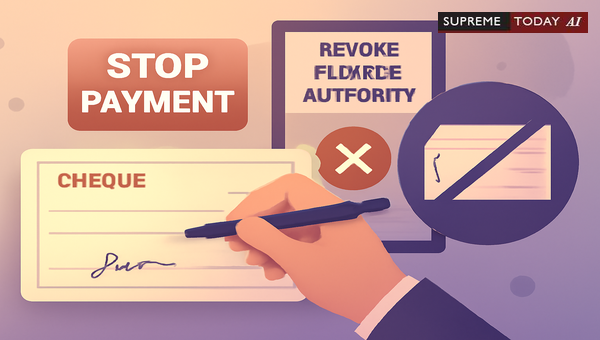
How to Stop a Signed Cheque's Utility Legally
Imagine handing over a signed cheque to settle a deal, only to later regret it due to a dispute or changed circumstances. What if the recipient tries to cash it? Can you render it useless? This is a common dilemma in financial transactions across India. If a person signs a cheque and gives it to another person, how can we end its utility? Understanding the legal nuances under the () is crucial to navigate this safely.
This post explores the legal framework, practical methods, and insights from key judgments. Note: This is general information based on established laws and cases. It is not legal advice—consult a qualified lawyer for your specific situation.
Legal Framework Governing Signed Cheques
Presumption of Liability
Once you sign and deliver a cheque, the law presumes it was issued to . Under , a person who signs a cheque is presumed to have issued it in discharge of a debt or liability. This presumption remains unless the signer can provide evidence to it 2022 7 Supreme 412 2019 3 Supreme 129. This shifts the burden to the drawer (signer) to prove otherwise.
Authority to Complete Blank or Incomplete Cheques
If the cheque was handed over blank or incomplete, grants the holder to fill it. According to , if a person signs and delivers a blank or incomplete cheque, they grant to the holder to complete it. The signer remains liable for the cheque as long as it is filled out within the limits of the authority given 2008 3 Supreme 196.
Case law reinforces this. In one ruling, the court noted: Act the person who has handed over a blank cheque to another person, gives him authority to fill up the contents therein
. Courts have quashed frivolous claims where blank cheques were issued as security for loans, but only if no underlying liability exists 2019 0 Supreme(Cal) 534.
Proven Methods to End a Signed Cheque's Utility
While completely eliminating liability can be challenging, several steps can prevent encashment or dishonor the cheque. Here's a step-by-step guide:
- Revoke the Authority to Fill or Present the Cheque
- Notify the payee in writing that any authority to complete or present the cheque is revoked. This must be communicated effectively, preferably via registered post or email with acknowledgment.
However, revocation may not absolve you if the cheque is presented post-revocation and an underlying debt exists. Courts emphasize timely communication.
Issue a Stop Payment Instruction to the Bank
- Contact your bank immediately with the cheque number, date, and amount to place a stop payment order. This is formal, often requires a written request, and may involve fees.
Caution: Stop payment doesn't erase liability. If dishonored due to this, it may trigger proceedings, treating it as 1999 4 Supreme 378. The holder can still sue for recovery.
Close the Bank Account
- Closing the account renders the cheque unpayable. Yet, this is risky: If the drawer closes the bank account on which the cheque is drawn, this can lead to the cheque being dishonored due to . This action constitutes an offense under Section 138 1999 4 Supreme 378.
A key judgment clarifies: At the time when cheque is given by a person to another, the giver of cheque gives it as a valid negotiable instrument. The words 'on an account maintained by him' cannot be read as 'on an account being maintained by him'. If the cheque is given against a closed account... Section 138 would not be attracted? No—the liability persists if the account was once maintained by you
.
Ensure Incorrect Filling Leads to Dishonor
If the payee fills it wrongly (e.g., mismatched amount/date), banks may reject it. But prove no valid debt exists, or face complications under Section 139.
Seek Court Intervention
- File for a declaration invalidating the cheque if obtained by fraud, duress, or mistake. Substantial evidence is needed. For instance, in loan disputes with blank cheques as security, courts have quashed counter-proceedings as abuse of process if a valid loan default occurred
.
- Another case highlighted: The gravamen of the allegation... petitioners converted blank banking instruments into valuable documents... Factum of issuance of blank cheques by complainant is admitted... complainant made default in payment of loan—proceedings quashed
.
Insights from Landmark Cases on Cheque Liability
Indian courts have addressed similar issues extensively:
in Companies: Directors or authorized signatories are presumed responsible. Evidently, a person who signs the cheque... can, prima facie, be assumed to be in charge... But complaints need specific averments on roles 2023 0 Supreme(P&H) 315.
and Mistake: If money is paid by mistake, applies: A person is enriched if he has received a benefit, and he is unjustly enriched if retention... would be unjust 2023 0 Supreme(Chh) 363. This can presumptions.
Limitation and Enforceability: A cheque acknowledges liability, even if the original debt is . Thereafter, if the cheques is dishonoured... such a person shall not be entitled to plead that... the claim had become barred by limitation 2004 0 Supreme(Ker) 449
Thomas VS Thomas
.Blank Cheque Disputes: Proceedings often quashed if cheques were loan security and default proven, avoiding abuse of process 2019 0 Supreme(Cal) 534.
These cases show courts balance holder and drawer rights, prioritizing genuine debts.
Key Risks and Best Practices
- Penalties: Dishonor (any reason except technical) invites 30-day notice, then prosecution under Section 138—up to 2 years jail or fine twice the amount.
- Alternatives: Prefer digital payments or written agreements specifying cheque conditions.
- Prevention: Never issue blank signed cheques; use '' crossing.
Pro Tip: Document everything—communications, disputes—to presumptions.
Conclusion and Key Takeaways
Ending a signed cheque's utility typically involves stop payment, account closure, or revocation—but these don't guarantee freedom from liability under the . Presumptions favor the holder, so evidence of no debt is vital. Cases like those on blank cheques and closed accounts underscore judicial scrutiny 2008 3 Supreme 196
.
Takeaways:- Act swiftly with written notices.- Understand Sections 20, 138, 139 implications.- Seek legal counsel to avoid Section 138 traps.- References: 2022 7 Supreme 412 2019 3 Supreme 129 2008 3 Supreme 196 1999 4 Supreme 378
and others noted.
For personalized guidance, contact a legal expert. Stay informed, transact wisely!
#ChequeBounceLaw #NIAct138 #StopChequePayment


















