


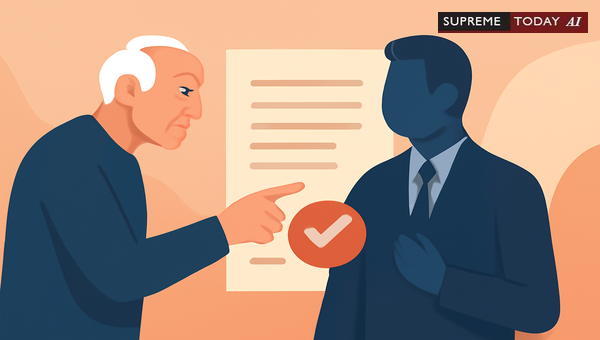
Can a Stranger Challenge a Will Deed? Essential Legal Insights
In estate planning and inheritance disputes, one common question arises: A Person Challenging the Will Deed Must Raise Sufficient Grounds Amounting to . But what if the challenger is a stranger—someone with no direct interest as an heir or beneficiary? Can they contest the validity of a will deed? This blog post explores the legal framework, drawing from established case law and principles under Indian law, to clarify when such challenges may succeed (or fail). While this provides general information, it is not legal advice—consult a qualified attorney for your specific situation.
Wills are sacred instruments reflecting a testator's final wishes. However, allegations of , , or improper execution can lead to courtroom battles. Understanding (legal standing) is crucial, especially for outsiders to the estate.
Core Legal Principles on Challenging a Will Deed
General Rule: Who Can Challenge?
A will deed is typically a private document outlining property distribution post-death. Generally, only those with a —like heirs, beneficiaries, or legal representatives—can challenge it. Strangers lack automatic standing. 2019 0 Supreme(SC) 1065
Yet, exceptions exist. A stranger may contest if they prove the will is , fraudulent, or improperly executed. The burden of proof rests squarely on the challenger, requiring sufficient grounds amounting to . Mere suspicion isn't enough; compelling evidence is mandatory. 1999 3 Supreme 102 1999 3 Supreme 102
Key tests include:- Proof of Invalidity: Demonstrate , coercion, , or non-compliance with (for wills).- Direct Harm: Show how the will affects their rights, such as claiming ownership of disputed property.
Landmark Case Law: Stranger's Limited Rights
In (), it was held that a stranger cannot dispute a deed's consideration unless proven or collusive. This principle extends to wills: a stranger may argue the document was a sham or executed under duress. 1999 3 Supreme 102 1999 3 Supreme 102
Courts emphasize: A stranger cannot dispute the payment of consideration in a sale deed unless the deed is shown to be or collusive. Similar logic applies to wills, where strangers must elevate claims beyond speculation. 1999 3 Supreme 102
Other precedents reinforce this:- Strangers generally lack authority to challenge deeds like adoptions or sales unless void ab initio. For instance, A stranger lacks the authority to challenge the adoption deed.
Dr.M.A.M.Ramaswamy Chettiar vs The Tahsildar - 2022 Supreme(Online)(MAD) 27958 - 2022 Supreme(Online)(MAD) 27958
- In property disputes, It is highly inconceivable that the plaintiff will execute a gift deed in favour of a stranger, highlighting judicial skepticism toward stranger-led challenges. 2018 0 Supreme(Ori) 331Limitations and Barriers for Strangers
Lack of Standing
Strangers typically have no without proving direct injury. Courts dismiss petitions if no legal interest is shown. For example, third parties cannot interfere in suits unless directly affected. 2003 3 Supreme 85 2023 0 Supreme(Kar) 1261 2023 0 Supreme(Kar) 1266
Stranger to the contract cannot sue has no substance. A stranger to the contract, if he is the real owner of the said property, can certainly challenge the transaction. But ownership must be proven first. 2013 0 Supreme(Guj) 490
by Admission
If a party previously accepted the will's validity or benefited from it, they may be estopped from challenging later. 2010 0 Supreme(SC) 584
Procedural Hurdles
Even if impleaded, strangers cannot dictate proceedings. Whether a stranger/third party is entitled to be added under only on the ground that...—courts apply strict tests. 2022 0 Supreme(UK) 92
From additional cases:- Proceedings under initiated by strangers face scrutiny: whether the State Authorities were justified in initiating proceedings... at the behest of a stranger to the transaction. 2024 Supreme(Online)(GUJ) 1392- Gift deeds challenged as fraudulent require civil court adjudication, but strangers need strong evidence. 2024 0 Supreme(Kar) 133
Exceptions: When Strangers May Succeed
Rarely, courts allow challenges if:- The deed is void (e.g., forged signature, no witnesses). 2024 0 Supreme(All) 2332- or Misrepresentation proven, as in the gift deed was executed by and misrepresentation. 2024 0 Supreme(Kar) 133- Stranger proves real ownership pre-dating the will. 2013 0 Supreme(Guj) 490
In 2024 Supreme(Online)(GUJ) 1392, stranger-initiated delays were questioned, underscoring need for serious grounds. Similarly, whether a stranger to sale deed can challenge payment or non-payment of consideration requires sustainable proof. 2016 0 Supreme(Ori) 691
Courts summarize: Strangers lack standing unless demonstrating illegal injury or deed's invalidity on all grounds. 2022 Supreme(Online)(Mad) 84686
Broader Context from Indian Jurisprudence
Indian courts, from Orissa to , consistently limit stranger interventions:- Adoption Deeds: Who can challenge the adoption and whether defendants have any ... A stranger lacks the authority.
Dr.M.A.M.Ramaswamy Chettiar vs The Tahsildar - 2022 Supreme(Online)(MAD) 27958 - 2022 Supreme(Online)(MAD) 27958
- Sale/Gift Deeds: Third parties cannot convert suits into their own unless directly harmed.SANJAY KUMAR NAGALIA vs SM MILKOSE LIMITED -
2019 0 Supreme(Ori) 71This aligns with for adding parties—strangers must pass necessity tests. 2022 0 Supreme(UK) 92
Practical Advice for Potential Challengers
- Gather Evidence: Collect witness statements, medical records (for ), or forensic analysis.
- File Timely: Wills challenges often fall under ( from knowledge).
- Seek Relief: Approach courts with caveats.
Disclaimer: Outcomes depend on facts. Generally, a stranger to a transaction or deed has no . Consult counsel. 2023 0 Supreme(Kar) 1261
Key Takeaways
| Aspect | Stranger's Position ||--------|---------------------|| Default Standing | None—must prove interest. 2003 3 Supreme 85 || Required Proof | , sham, . 1999 3 Supreme 102 || Burden | On challenger. 2019 0 Supreme(SC) 1065 || Success Rate | Low without compelling evidence. |
In conclusion, while a stranger can challenge a will deed, they must raise sufficient grounds amounting to like or collusion. Courts protect testator intent but scrutinize invalid instruments. For estate matters, proactive legal consultation is vital to navigate these complexities.
Key References:- 2019 0 Supreme(SC) 1065 1999 3 Supreme 102 1999 3 Supreme 102 2003 3 Supreme 85 2010 0 Supreme(SC) 584- 2024 Supreme(Online)(GUJ) 1392
Dr.M.A.M.Ramaswamy Chettiar vs The Tahsildar - 2022 Supreme(Online)(MAD) 27958 - 2022 Supreme(Online)(MAD) 27958
2022 0 Supreme(UK) 92 2024 0 Supreme(Kar) 133 2018 0 Supreme(Ori) 331 #WillChallenge #EstateLaw #ProbateDisputes












