


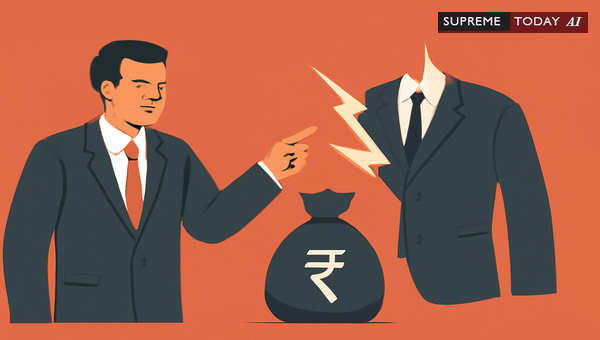
Suing Officials for Excessive Power Abuse in India
In today's world, encounters with public officials can sometimes cross the line from duty to abuse. Imagine a scenario where an official wields authority excessively, violating rules and causing harm. This raises a critical question: – can you pursue a damage suit against such an official under Indian law?
This blog post dives deep into the legal framework, landmark cases, and practical recommendations. While this is general information based on judicial precedents and not specific legal advice, it empowers you to understand your rights. Consult a qualified lawyer for personalized guidance.
Understanding the Legal Principle
Indian law firmly recognizes that public officials' is actionable in tort. Courts have consistently held that arbitrary or excessive actions by officials can lead to liability, with damages – often exemplary – awarded to deter such misconduct. A pivotal case is (), where the court affirmed that warrants . 1996 7 Supreme 747
serve as a strong deterrent, punishing the wrongdoer and compensating the victim beyond actual losses. This principle underscores accountability in public administration.
Key Findings from Judicial Precedents
Excessive Use of Power
Courts have identified numerous instances of officials exceeding authority. For example:- In (), were scrutinized. 2022 0 Supreme(Ker) 832- () highlighted violations in official conduct. 2021 0 Supreme(SC) 254- Similar patterns appear in 2022 3 Supreme 17, 2020 0 Supreme(Ker) 876, and others like 2013 0 Supreme(SC) 982, 2006 2 Supreme 284, and 1975 0 Supreme(SC) 397.
These cases collectively demonstrate that breaches legal bounds. 1996 7 Supreme 747
Additional sources reinforce this. In a police context, () noted excessive actions but tied them to duty. 2015 0 Supreme(SC) 643 2015 0 Supreme(SC) 362
Connection to Official Duty and
A crucial hurdle is Section 197 of the Criminal Procedure Code (CrPC), which protects officials when actions are connected to official duties. Even if involving abuse or force, sanction from the government may be required for prosecution. See (Kerala). 1963 0 Supreme(Ker) 231
However, this doesn't bar civil damage suits entirely. In (), courts balanced protection with accountability. 2012 7 Supreme 529
From other sources, 2016 0 Supreme(All) 369 states: There is ample evidence on record that the police official had acted in discharge of their official duty and any excessive act would not be a ground to prosecute the public servant. This illustrates the defense often raised, but civil claims for damages persist if harm is proven.
In contrast, US cases like 2022 Supreme(US)(ca8) 395 discuss excessive force under , concluding officers acted reasonably – a comparative note on global standards, though Indian law prevails here.
in Practice
Courts wield power to award for power misuse. explicitly supports this. 1996 7 Supreme 747 In (), similar remedies were explored. 2013 0 Supreme(SC) 1040
Practical Recommendations for Filing a Suit
To build a strong damage suit:1. Establish Specific Actions: Pinpoint exact oversteps, e.g., arbitrary decisions or force beyond necessity. As in (Kerala), detail the violations. 2009 0 Supreme(Ker) 2072. Demonstrate Harm: Prove direct losses – physical, financial, or emotional. Evidence like medical reports or financial records is vital.3. Navigate : Assess if actions link to duties. If criminal, seek sanction; civil suits may proceed differently.4. Argue for : Highlight deterrence value to prevent recurrence.
Other sources offer insights. In
, defenses like rule violations (e.g., Road Traffic Rules) were countered, emphasizing evidence of fault. Similarly,
notes: the Council should 'make full compensation for any damage done' post-statutory power exercise, unless .
In industrial contexts, 2019 0 Supreme(Mad) 2464 warns against excessive punishment: Such an exercise of power is excessive and in violation of the established principles of law. 2011 0 Supreme(Gau) 478 stresses acting within authority: you acted beyond your authority and power violating restrictions... exposed the Bank to total financial loss.
For police encounters, 2015 0 Supreme(Bom) 25 justifies actions: Deponent acted as per rule of law to save damage to life and property, but courts demand proportionality.
Broader Context and Challenges
Challenges include proving intent versus duty. Cases like 2009 0 Supreme(Ker) 383 limit judicial intervention unless statutory breach is clear: power being made out or the statutory body being shown to have acted in breach of law.
Police misconduct cases, such as 2016 0 Supreme(All) 369, often invoke self-defense, quashing sanctions if duties are discharged. Yet, civil tort claims remain viable for damages.
Internationally, 2023 Supreme(US)(ca10) 58 requires showing law clearly established excessive force, mirroring India's need for precedents.
Conclusion and Key Takeaways
A damage suit against an official for excessive power use is viable under Indian law, backed by precedents like Shivsagar Tiwari. By proving specific violations, harm, and navigating protections like , claimants can seek compensation and .
Key Takeaways:- is ; deter abuse.- Link to official duty triggers safeguards, but civil suits proceed.- Gather robust evidence of actions and harm.- This is general guidance – seek professional legal counsel.
Stay informed, assert your rights responsibly, and hold power accountable.
#DamageSuitIndia #OfficialMisconduct #LegalRights















