



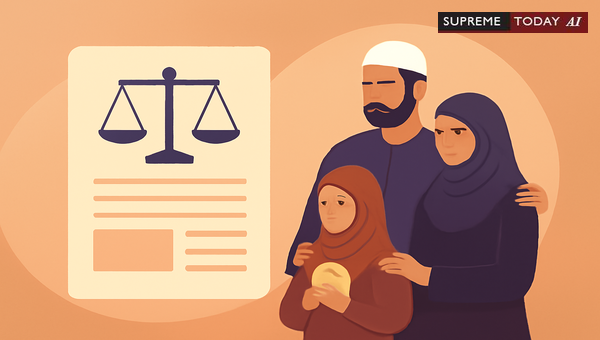
Muslim Inheritance: Wife & Daughters' Property Shares After Death
Losing a loved one is challenging enough, but navigating inheritance laws can add unnecessary stress—especially under religious personal laws like . A common question arises: Muslim Male Expired he have One Wife and Three Female Children what is the Share of his Properties after his Death? This post breaks down the shares of property for the wife and daughters under Islamic inheritance principles, drawing from key legal documents and Quranic directives. Note: This is general information based on standard principles commonly applied in India; consult a qualified lawyer for personalized advice, as specifics like other heirs or will (if permitted) can alter outcomes.
Understanding Inheritance Under Mohammadan Law
Under Mohammadan law, inheritance rights are strictly governed by the , triggered only upon the death of the property owner. The inheritance rights are only triggered upon the death of the owner; there is no provision for partition or transfer of the property by the owner during his lifetime, except through permissible modes like gift () 2025 2 Supreme 624.
Property—whether self-acquired or ancestral—is treated as the deceased's estate and divided among heirs into (with fixed fractions) and (who take the remainder). Males typically receive twice the share of females of equal degree: males generally entitled to twice the share of females 2025 2 Supreme 624. Daughters are recognized entitled to specific portions, and the wife is a primary sharer.
During the father's lifetime, he retains full control: The father owns the property personally and has the right to sell, gift, or transfer it during his lifetime 2025 2 Supreme 624. Heirs, including daughters, gain no rights until death.
Key Heirs in This Scenario: Wife and Three Daughters
Assuming no other heirs (e.g., sons, parents, siblings), the estate divides as follows under standard Sunni law:
Wife's Share
- The wife receives a fixed 1/8th share when there are children (direct descendants). This is a Quranic mandate for widows with offspring. Without children, it would be 1/4th, but here it's reduced due to daughters 2025 2 Supreme 624.
- Example: On a ₹100 lakh estate, wife gets ₹12.5 lakhs.
Daughters' Shares
- With no sons, the three daughters collectively take 2/3rd as (Quranic fixed share for daughters in absence of sons). This is divided equally: each daughter gets 2/9th (i.e., 22.22% of the total).
- Remaining residue (after wife and daughters' shares: 1 - 1/8 - 2/3 = 13/24 or ~54%) typically goes to daughters as if no other agnates (male relatives). Thus, daughters often take the bulk of the estate beyond their fixed share 2025 2 Supreme 624.
- Quote: Daughters are entitled to a specific share of the inheritance—generally half of what a son would receive—unless there are other heirs or specific circumstances 2025 2 Supreme 624. Here, no sons mean daughters upgrade to .
- Example: Each daughter: ~2/9 fixed + equal residue share, potentially ~7/24 total per daughter (adjusted for three).
Total Breakdown (No Other Heirs):- Wife: 1/8 (12.5%)- Daughters (collective): 7/8 (87.5%), divided equally (~29.17% each)
If distant male relatives exist, they may claim residue, reducing daughters' portion 2025 2 Supreme 624.
Post-Death Property Rights and Sales
Upon death: When a Muslim dies, his estate is divided among heirs according to prescribed shares, and the property rights are conferred upon the heirs only after death 2025 2 Supreme 624.
- Sale by Heirs: A male heir (if any) or even daughters can sell their own share post-inheritance, but not others'. A male Muslim, after inheriting property, can sell his share or his interest in the estate during his lifetime 2025 2 Supreme 624. Daughters cannot sell during father's life: Daughters are entitled to their prescribed share of the inheritance after the owner’s death, not during his lifetime 2025 2 Supreme 624.
- Undivided property may require for sale.
Insights from Related Legal Sources
While Mohammadan law is distinct, other cases highlight contrasts:- Under Hindu law (for comparison), pre-2005 only males had , but amendments grant daughters equal shares: As per the ... unmarried daughters alone are entitled to equal share with that of the male members
. Not applicable here.- Muslim-specific: Under Muslim law, property inheritance favors male members, who generally inherit a larger share... while female members inherit a half share of what a male would receive (from analysis of sources like 2022 Supreme(Online)(All) 23480). Reinforces double male share rule.- Sales examples: Heirs selling shares post-death, e.g., She sold her share to the third plaintiff
, mirrors Islamic post-inheritance sales.- Coparcenary notes (Hindu context) like all the three male lineal descendants acquired interest... by birth 2023 Supreme(Online)(DEL) 423 contrast with Islamic vesting only at death.
These underscore: Islamic law prioritizes fixed Quranic shares over birth rights, protecting females while favoring male responsibility (e.g., maintenance) 2025 2 Supreme 624 2017 3 Supreme 267.
Exceptions, Limitations, and Practical Steps
- Will (): Up to 1/3rd can be bequeathed freely; rest per shares.
- Gifts (): Father could gift during life, bypassing inheritance.
- Other Heirs: Brothers/sisters may claim residue: Daughters cannot claim a share... unless they are co-owners or have inherited a share beforehand 2025 2 Supreme 624.
- Partition: Heirs may mutually agree or seek court for division/sale.
Recommendations:- Document estate inventory immediately.- Apply for .- or executor for administration.- Consult for Shia vs. Sunni variations (Shia may differ slightly) 2025 2 Supreme 624.
Key Takeaways
| Heir | Share (No Other Heirs) | Notes ||------|-------------------------|-------|| Wife | 1/8 | Fixed with children || Each Daughter | ~7/24 (collective 7/8) | + |
- Rights vest only after death2025 2 Supreme 624.
- Daughters are entitled to significant shares, countering myths of exclusion.
- Males (if present) get double, but here daughters dominate.
In summary, the wife takes 1/8th, and the three daughters share the rest equally under Mohammadan law—empowering female heirs per Quran. This is not legal advice; laws vary by sect, jurisdiction, and facts. Seek professional counsel. (Word count: 1028)
References:- 2025 2 Supreme 624: Core Mohammadan inheritance rules.- 2017 3 Supreme 267: Property transfer frameworks.- Additional:
, 2023 Supreme(Online)(DEL) 423, 2022 Supreme(Online)(All) 23480. #MuslimInheritance, #IslamicLaw, #PropertyShares







