Key Supreme Court Orders in 2024: What You Need to Know
In the dynamic landscape of Indian jurisprudence, the Supreme Court of India continues to shape legal precedents and uphold constitutional values. For those searching for details on 2024 SC2 Supreme Court decisions, 2024 has seen pivotal orders addressing electoral transparency, municipal elections, child welfare, and more. These rulings not only resolve immediate disputes but also set benchmarks for governance and justice. This post breaks down the key orders, drawing from official documents and related cases, to provide clarity on their implications.
Whether you're a legal professional, citizen, or stakeholder, understanding these developments is crucial. Note that this is general information and not specific legal advice—consult a qualified lawyer for personalized guidance.
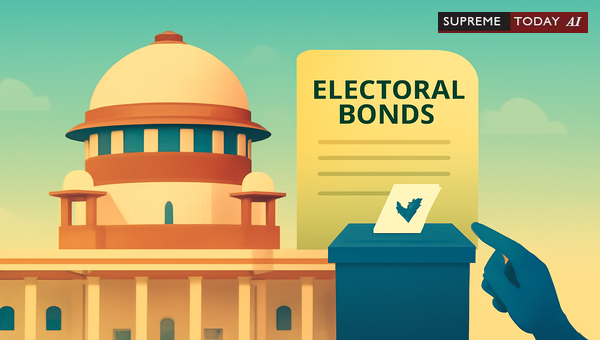
Electoral Bond Scheme: Push for Transparency
One of the most significant interventions in 2024 involved the Electoral Bond Scheme. The Supreme Court directed the State Bank of India (SBI) to submit details of Electoral Bonds purchased and redeemed by political parties between April 12, 2019, and February 15, 2024. 2024 0 Supreme(SC) 220 Specifically, The Supreme Court directed the State Bank of India (SBI) to submit details of Electoral Bonds purchased and redeemed by political parties between April 12, 2019, and February 15, 2024. 2024 0 Supreme(SC) 220
SBI was ordered to furnish these details to the Election Commission of India (ECI) by March 6, 2024, with the ECI required to publish the information on its website by March 13, 2024. 2024 0 Supreme(SC) 220 This move underscores the Court's commitment to electoral transparency, aiming to link donors with beneficiaries and curb anonymous funding in politics.
This order builds on prior scrutiny of the scheme, emphasizing accountability in political financing. It may influence future regulations on campaign funding, promoting a level playing field.
Chandigarh Municipal Corporation Election: Addressing Malpractices
In a landmark ruling on municipal governance, the Supreme Court addressed alleged irregularities in the Chandigarh Municipal Corporation (MCC) Mayor election. The Court set aside the election results due to malpractices by the Presiding Officer. 2024 0 Supreme(SC) 149 It declared Kuldeep Kumar as the validly elected Mayor and directed action against the Presiding Officer under Section 340 of the Code of Criminal Procedure, 1973. 2024 0 Supreme(SC) 149 As per the order, The Supreme Court set aside the result of the election for the post of Mayor of the Chandigarh Municipal Corporation due to alleged electoral malpractices by the Presiding Officer. 2024 0 Supreme(SC) 149
This decision highlights the judiciary's role in safeguarding democratic processes at the local level. By intervening, the Court prevented potential miscarriages of justice and reinforced public trust in elections. Key takeaways include:
- Strict scrutiny of presiding officers' conduct.
- Swift declaration of rightful winners based on evidence.
- Initiation of criminal proceedings for electoral fraud.
Custody of Minor Child: Prioritizing Welfare
Child welfare remains a priority, as seen in a 2024 order where the Supreme Court set aside a High Court interim order granting custody of a minor to respondent no. 2. SHAIFIYA VAJIUDDIN CONTRACTOR vs THE STATE OF GUJARAT - Supreme Court The Court found the order ex-facie against the interest of the minor child. SHAIFIYA VAJIUDDIN CONTRACTOR vs THE STATE OF GUJARAT - Supreme Court It directed the High Court to consider the appellants' criminal miscellaneous application and allowed the child to remain with the appellants pending disposal. SHAIFIYA VAJIUDDIN CONTRACTOR vs THE STATE OF GUJARAT - Supreme Court
This ruling reiterates that child custody decisions must center on the minor's best interests, often overriding parental claims. Courts typically evaluate factors like emotional bonds, stability, and safety. Relatedly, in habeas corpus contexts, the Supreme Court has clarified that confinement in a Protection Home under judicial order isn't illegal detention warranting writs. 2020 0 Supreme(Pat) 86 Sending a girl to a Protection Home/Nari Niketan can never be equated with any punishment. 2020 0 Supreme(Pat) 86
Other Notable Supreme Court Orders in 2024
The Court's docket in 2024 was diverse:
- Mediation Referrals: Several matters were referred to the Supreme Court Mediation Centre for amicable settlements. SHAIFIYA VAJIUDDIN CONTRACTOR vs THE STATE OF GUJARAT - Supreme CourtSHAIFIYA VAJIUDDIN CONTRACTOR vs THE STATE OF GUJARAT - Supreme CourtSHAIFIYA VAJIUDDIN CONTRACTOR vs THE STATE OF GUJARAT - Supreme Court
- Dismissals: Special Leave Petitions (SLPs) arising from common High Court orders were dismissed. SHAIFIYA VAJIUDDIN CONTRACTOR vs THE STATE OF GUJARAT - Supreme Court
- Criminal Trials: The State of Orissa was directed to produce remaining witnesses. SHAIFIYA VAJIUDDIN CONTRACTOR vs THE STATE OF GUJARAT - Supreme Court
These orders reflect efficient case management and alternative dispute resolution.
Insights from Related Legal Developments
While focusing on Supreme Court actions, parallel High Court rulings provide context. For instance, in land conservation matters under Kerala rules, authorities must process conversion applications promptly, mirroring SC emphasis on timely justice. 2024 Supreme(Online)(KER) 1469 Authorities have a duty to consider applications for conversion of land under the Kerala Conservation of Paddy land and Wetland Rules, 2008, within a reasonable time. 2024 Supreme(Online)(KER) 1469
In auction contracts, courts direct consideration of extension requests for payments due to financial hardship, aligning with equitable principles. 2024 Supreme(Online)(KER) 4310 Bail applications cannot be dismissed as pre-trial punishment, presuming innocence. 2025 0 Supreme(HP) 355 Bail applications cannot be dismissed as pre-trial punishment; applicants are presumed innocent until trial concludes.
01800047841
Insolvency cases reinforce presumptions under the Presidency Towns Insolvency Act, with the burden on the debtor. 2021 0 Supreme(Mad) 3443 Subsequent purchasers in injunction suits deserve impleadment for fair adjudication, as affirmed by SC precedents like Savitri Devi. 2019 0 Supreme(Mad) 2165 A subsequent purchaser in a suit for permanent injunction is entitled to be impleaded as a party. 2019 0 Supreme(Mad) 2165
These cases illustrate how lower courts apply SC guidance, creating a cohesive legal framework.
Key Findings and Broader Implications
The 2024 orders demonstrate the Supreme Court's proactive stance on rule of law, fair elections, and vulnerable groups' protection. These orders demonstrate the Court's commitment to upholding the rule of law, ensuring fair elections, protecting the interests of minors, and promoting amicable settlements. They may influence:
- Stricter electoral oversight.
- Enhanced child welfare protocols.
- Promotion of mediation.
Conclusion and Key Takeaways
The 2024 SC2 Supreme Court orders mark a year of judicial assertiveness. From unmasking electoral bonds 2024 0 Supreme(SC) 220 to rectifying municipal polls 2024 0 Supreme(SC) 149, these rulings foster accountability.
Key Takeaways:- Transparency in political funding is paramount.- Electoral integrity demands judicial vigilance.- Child interests guide custody battles.- Timely justice spans all forums.
Stay informed on evolving jurisprudence. This overview is for educational purposes; legal matters require professional advice.
Word count: Approximately 1050
#SupremeCourt2024 #ElectoralBonds #LegalUpdates