


on Inhuman Conditions in 1382 Prisons: Protecting Under-Trial Prisoners' Rights
Introduction
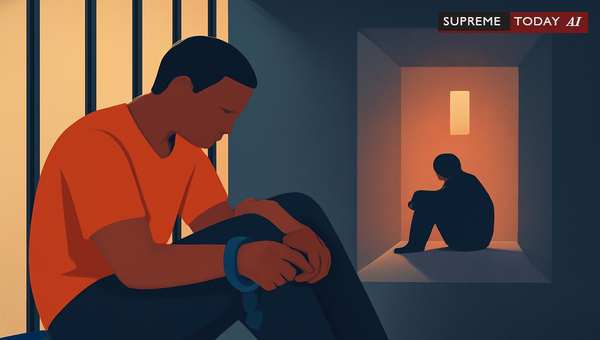
Prisons in India have long faced scrutiny for overcrowding, poor facilities, and treatment that strips inmates of their basic humanity. A pivotal moment came with the 's case addressing inhuman conditions in 1382 prisons, raising critical questions like: What does the judgment say on inhuman treatment of prisoners, especially under-trial prisoners? This ruling reaffirms that even behind bars, individuals retain fundamental rights under of the Constitution. It condemns practices like solitary confinement, arbitrary handcuffing, and degrading conditions, emphasizing human dignity for all prisoners, including those awaiting trial. This blog explores the judgment's key findings, implications for under-trial prisoners, and ongoing reforms.
Note: This is general information based on judicial precedents and not specific legal advice. Consult a qualified lawyer for personalized guidance.
The Landmark 1382 Prisons Judgment: Core Legal Findings
The explicitly recognized that prisoners, including under-trial ones and those on death row, retain their human dignity and fundamental rights. Inhumane treatment is unconstitutional, violating equality (), freedom (), and life with dignity () 2016 2 Supreme 269. The Court has condemned practices such as:
- Inhuman conditions like overcrowding and neglect 2016 2 Supreme 269.
- Solitary confinement and barbarous treatment 2016 2 Supreme 269.
- Indiscriminate handcuffing, chaining, or fetters without justification 2020 0 Supreme(SC) 797 2016 2 Supreme 269.
The judgment underscores that the State must ensure humane treatment, subjecting any degrading practices to .
Recognition of Prisoners' Human Dignity
At the heart of the ruling is the affirmation that prisoners are still humans, have the right to live with dignity and are entitled to basic human rights 2016 2 Supreme 269. The right to live with dignity is integral to . Even in custody, these rights persist, and State actions cannot extinguish them. Justice R.C. Lahoti's letter highlighted issues like overcrowding, unnatural deaths, staff shortages, and untrained personnel, prompting the Court to direct reforms 2016 2 Supreme 269.
have echoed this. For instance, in a case involving a prisoner, the court noted: Mohamed Shalin is no doubt a prisoner but he is a person too. He is entitled to certain fundamental rights even while in custody (vide
. This aligns with the 's reference to the
.
Condemning Inhuman Conditions and Practices
The Court addressed overcrowding, torture, health neglect, and inhumane treatment. During the COVID-19 crisis, it directed controls on prison populations and consideration for releasing eligible prisoners, stressing humane treatment in emergencies 2020 0 Supreme(SC) 797.
Practices like solitary confinement were deemed incompatible with constitutional protections, causing severe mental and physical suffering 2000 4 Supreme 742. The Court stated: The position of law... is that not only is a prisoner not deprived or denuded of his fundamental right guaranteed under when he is confined within a prison but in special circumstances the walls of the prison can be breached to allow release of an accused from custody 2000 4 Supreme 742.
Other precedents reinforce this. In custodial death cases, courts have awarded compensation, citing the 1382 Prisons judgment and emphasizing for negligence 2021 0 Supreme(Ori) 405. One ruling directed Rs. 5,00,000 compensation for a custodial death due to police negligence in medical care, upholding rights 2021 0 Supreme(Ori) 405.
Prohibition on Cruel Restraints: Handcuffs and Fetters
A key condemnation targets indiscriminate handcuffing, chaining, or use of fetters. The Court described such routine use as sadistic, capricious, despotic and demoralizing to humble a man by manacling him 2009 3 Supreme 760. Restraints are permissible only as a last resort, with:
- Concrete justification (e.g., escape risk).
- Judicial approval.
- Recorded reasons.
- No less severe alternatives.
Arbitrary use violates 2009 3 Supreme 760.
Special Focus on Under-Trial Prisoners
Under-trial prisoners, often detained for years without conviction, receive heightened protection. The Court mandates humane conditions, communication rights, medical care, and release considerations during crises 2025 0 Supreme(Mad) 4339. Committees like the Under-trial Review Committee must meet weekly to assess releases based on offense nature, sentence duration, and other factors 2021 0 Supreme(Ker) 462 2020 0 Supreme(Ker) 935.
During COVID-19 lockdowns, extensions of interim orders and e-bail applications were authorized, referencing the 1382 case to decongest prisons 2021 0 Supreme(Ker) 462. have granted interim bail citing these principles, even in serious cases, to prevent inhumane overcrowding
.
Court's Directions for Reforms
The issued proactive measures:
- Prohibit routine handcuffing and chaining 2009 3 Supreme 760.
- Mandate reasons and judicial oversight for restraints 2009 3 Supreme 760.
- Address overcrowding, especially in pandemics 2020 0 Supreme(SC) 797.
- Ensure medical treatment and communication rights 2025 0 Supreme(Mad) 4339.
- Recommend staff training and monitoring 2016 2 Supreme 269.
These draw from cases like unnatural deaths in custody, urging comprehensive reforms 2021 Supreme(Online)(Gau) 447. Compensation for violations, including custodial deaths, is now standard 2020 0 Supreme(Gau) 722.
Exceptions and Security Balances
While prioritizing dignity, the Court allows restraints for genuine security threats, but only exceptionally with documentation. Routine practices remain unlawful.
Key Takeaways and Ongoing Impact
The 1382 Prisons judgment marks a turning point in Indian prison law, mandating dignity for under-trial and convicted prisoners alike. It has influenced bail grants, COVID releases, and compensation awards, with frequently citing it
2024 Supreme(BD)(SC) 14664. Prison authorities must comply to avoid constitutional violations.
Recommendations for reform:- Adhere to judicial directions on restraints.- Conduct regular inspections.- Implement release mechanisms.- Train staff on human rights.
In summary, the has robustly protected prisoners from inhumanity, ensuring 's promise of dignified life extends behind bars. Stay informed on these evolving rights, and remember, this overview is for educational purposes—seek professional advice for specific matters.
References:- 2016 2 Supreme 269 – Prisoners' rights and prison reforms.- 2020 0 Supreme(SC) 797 – COVID-19 prison directions.- 2009 3 Supreme 760 – Handcuffing and fetters.- 2000 4 Supreme 742 – Solitary confinement and releases.
#1382Prisons, #PrisonersRights, #SupremeCourtIndia















