


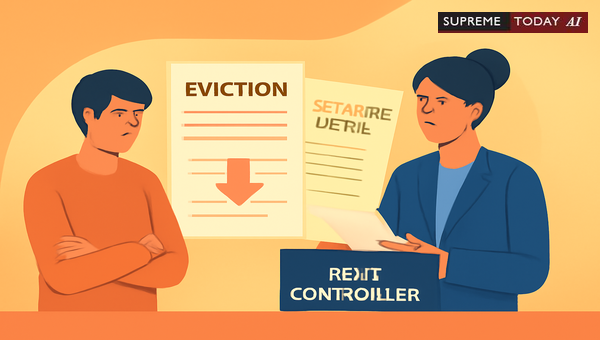
's Power to Set Aside Eviction Orders
Facing an eviction order passed without your presence? As a tenant in Tamil Nadu, you might wonder: Does the have the power to set aside eviction orders? This is a common concern in rent control disputes, where orders—those issued without hearing both sides—can lead to significant injustice if service of notice was improper or unavoidable circumstances prevented appearance.
In this post, we explore the legal framework, key judgments, and practical steps under the and Rules. Note: This is general information based on precedents and not specific legal advice. Consult a qualified lawyer for your case.
Understanding Eviction Orders
orders occur when the landlord proceeds with eviction without the tenant's participation, often due to alleged non-service of summons or the tenant's absence. These orders can be devastating, but Indian rent control laws provide safeguards. Courts and like the have mechanisms to review and potentially reverse them to uphold .
The core question— has Power to Set Aside Eviction Order—is affirmatively answered in multiple rulings. The , as a , holds to set aside such orders on showing , such as improper service or valid reasons for non-appearance 1971 0 Supreme(Mad) 179.
Inherent Power of the
The possesses akin to civil courts to prevent miscarriage of justice. A key judgment states that the can set aside orders of eviction, emphasizing flexibility beyond strict procedures 1971 0 Supreme(Mad) 179. The , being a , possesses similar to civil courts to prevent injustice, including the power to set aside orders on 1971 0 Supreme(Mad) 179.
This power ensures fairness, especially when orders are obtained improperly. Courts have consistently upheld this, distinguishing orders from contested ones and prioritizing proper service 2021 0 Supreme(Raj) 1934 1993 0 Supreme(AP) 212.
Statutory Support: Rule 12(3) of Tamil Nadu Buildings Rules
, explicitly reinforces this authority. It allows a party to apply within of knowledge of the order. If is shown—such as non-service, unavoidable absence, or other valid reasons—the shall set aside the order, potentially imposing costs or terms 1993 0 Supreme(AP) 212.
Rule 12(3)... specifically confers a right on a party to file an application within of knowledge of the order, and if is shown..., the shall set aside the order 1993 0 Supreme(AP) 212. This procedural safeguard complements .
Conditions for Setting Aside Orders
While broad, this power has clear conditions:- Timely Application: Generally within from knowledge of the order 1971 0 Supreme(Mad) 179 1993 0 Supreme(AP) 212.- : Proof of improper service, fraud, misrepresentation, or genuine reasons like illness 2021 0 Supreme(Raj) 1934 1989 0 Supreme(SC) 574 1990 0 Supreme(SC) 380.- Judicious Exercise: Discretionary but aimed at justice, not bad faith delays 1971 0 Supreme(Mad) 179.
The does not strictly bind the , allowing flexibility 1971 0 Supreme(Mad) 179. However, undue delay without cause may lead to rejection.
Insights from Broader Jurisprudence and Other Sources
This principle extends beyond Tamil Nadu. Courts generally hold that authorities empowered to pass orders can also undo them if justified, including eviction orders 2022 Supreme(Online)(KER) 54742 2022 Supreme(Online)(KER) 29260 2022 Supreme(Online)(KER) 47178. Courts inherently possess the authority to set aside orders, including eviction orders, as they can do what they are empowered to do... and must also have the power to undo them.
In rent laws, similar provisions under allow setting aside eviction orders and remanding to the
-558_2020). The authority is entitled to set aside an order of eviction passed under Section 14(1)(e)... and can remand the matter to the
.
Applications to condone delay are maintainable if are shown, evaluating reasons like lack of notice 2023 Supreme(Online)(Ker) 73478 2023 Supreme(Online)(KER) 29401 2025 Supreme(Online)(Ker) 56176 2021 Supreme(Online)(KER) 3288. Appellate remedies exist for refusals, ensuring review 2023 Supreme(Online)(KER) 5550.
Judgments like 1989 0 Supreme(SC) 574 and 1990 0 Supreme(SC) 380 affirm setting aside orders obtained by fraud or improper service, stressing .
Practical Steps and Recommendations
If affected by an order:1. File Promptly: Submit an application under Rule 12(3) within , with affidavits proving (e.g., non-service evidence).2. Gather Proof: Notices, postal records, or witness statements.3. Seek Condone Delay if Needed: Courts assess 2023 Supreme(Online)(Ker) 73478.4. Appeal if Denied: Approach or .
Legal practitioners should prioritize proper service verification. Rent Controllers must exercise powers judiciously to uphold fairness.
Key Takeaways
- Yes, Generally: Rent Controllers have inherent and rule-based power to set aside eviction orders on and within time limits 1971 0 Supreme(Mad) 179 1993 0 Supreme(AP) 212.
- Focus on Justice: Prevents abuse, ensures hearing opportunity.
- Act Quickly: Delays weaken claims.
- Broader Precedent: Supported across jurisdictions for equity.
In conclusion, while orders pose risks, robust legal remedies exist. Tenants should act swiftly with professional guidance to invoke the 's powers. This framework balances landlord rights with tenant protections under rent control laws.
Disclaimer: This article summarizes general legal principles from cited sources and is not a substitute for personalized legal advice. Laws may vary by jurisdiction and facts.
References
- 1971 0 Supreme(Mad) 179: Confirms inherent power on .
- 1993 0 Supreme(AP) 212: Details Rule 12(3) procedure.
- 2021 0 Supreme(Raj) 1934: Upholds discretionary exercise.
- 1989 0 Supreme(SC) 574, 1990 0 Supreme(SC) 380: Fraud/improper service cases.
- Additional: 2022 Supreme(Online)(KER) 54742,
, etc., for comparative insights.












