Searching Case Laws & Precedent on Legal Query.....!
Analysing the retrieved Case Laws
Scanned Judgements…!



Searching Case Laws & Precedent on Legal Query.....!
Analysing the retrieved Case Laws
Scanned Judgements…!
Specifically, in cases where a landlord or malin has collaborated with electricity department officials to disconnect power, courts have sometimes dismissed such actions if they violate legal standards, emphasizing the importance of lawful notice and procedure.
Role of Electricity Department & Collusion in Disconnection Cases
The courts have also emphasized that if the electricity department acts in collusion with landlords or malin to unlawfully disconnect power, such actions can be challenged successfully in court, often resulting in judgments favoring the tenant or consumer.
Legal Precedents & Judgments Supporting Tenant Rights
Analysis and Conclusion- The main insight is that in cases of electricity disconnection involving landlords or malin, the legality hinges on proper notice service and adherence to legal protocols. Disconnections carried out without valid notices or through collusion are contestable and often overturned in court.- Courts tend to side with tenants or consumers when disconnection is shown to be illegal, improper, or collusive, emphasizing the importance of lawful procedures.- Therefore, tenants or affected parties can seek judicial remedy if they prove that the electricity department's action was unlawful, especially if favoring landlords or malin was achieved through illegal collusion or procedural lapses.
References:- ["2002 0 Supreme(All) 1299"]- ["1984 0 Supreme(All) 515"]- ["COMMISSIONER OF INCOME TAX DELHI vs LATE SH KM BIJLI THRU LRS - Delhi"]- ["COMMISSIONER OF INCOME TAX DELHI vs LATE SH KM BIJLI THRU LRS - Delhi"]- ["COMMISSIONER OF INCOME TAX DELHI vs LATE SH KM BIJLI THRU LRS - Delhi"]- ["2015 Supreme(Online)(Del) 9606"]- ["1998 0 Supreme(All) 743"]
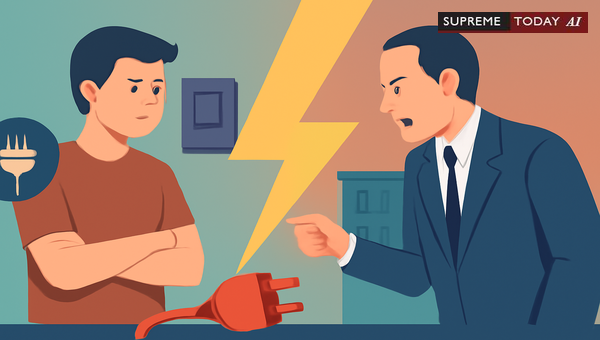
Imagine returning home after a long day, only to find your lights off and fridge silent—no power. Worse, your landlord admits to colluding with the to disconnect your supply without any prior notice. Is this legal? For many tenants in India facing such high-handed actions, the answer is a resounding no. Courts have repeatedly ruled in favor of tenants, protecting their right to basic amenities like electricity.
This post dives deep into a common query: Makan malik ne bijli department se milkar bagair notice ke kirayedar ki bijli cut kar di hai. Favor of judgment for tenant. (Translation: The landlord, in collusion with the , has cut off the tenant's electricity without notice. Judgment in favor of tenant.) We'll explore key legal principles, court judgments, and practical steps, drawing from established precedents.
Electricity is an , and tenants in have a protected right to it. Courts have consistently held that disconnection without proper notice or legal justification is arbitrary and illegal1993 0 Supreme(SC) 777. Landlords cannot take the law into their own hands, even in rent disputes.
In one precedent, courts directed the restoration of electricity where disconnection was arbitrary
. This underscores that tenant rights to basic amenities cannot be curtailed without .
Indian judiciary has a tenant-friendly stance in such disputes. Here's a breakdown:
Courts emphasize adherence to statutory procedures. For instance:- Disconnection of electricity without proper notice and in violation of legal provisions is arbitrary and unlawful 1993 0 Supreme(SC) 777.- Landlords acting unilaterally face judicial rebuke, with orders for reinstatement 2018 0 Supreme(HP) 1723.
Precedents highlight that collusion between landlord and without notice is unlawful2023 0 Supreme(SC) 555. Courts protect tenants' lawful occupation and amenities, often ruling in their favor 2018 0 Supreme(HP) 1723.
Even for dues, disconnection isn't automatic:- cannot disconnect supply for non-payment of 1978 0 Supreme(Bom) 12.- This protects tenants from harassment over old, unenforceable claims 2007 7 Supreme 374.
Beyond direct landlord-tenant disputes, consumer forums have addressed lapses. In complaints against , tenants and consumers succeeded where services were deficient. For example:
BHIM SINGH vs
2025 Supreme(Online)(SCDRC) 28622.These cases reinforce that electricity providers must follow , aligning with tenant protections against arbitrary cutoffs. While not identical, they highlight accountability for utilities colluding in unfair practices.
If you're a tenant in this situation:1. Document Everything: Take photos, note dates, and gather evidence of collusion or lack of notice.2. Send : Demand restoration, citing relevant laws like the .3. Approach Authorities: File complaints with the electricity ombudsman or .4. Seek Court Relief: often grant favoring tenants 1993 0 Supreme(SC) 777.5. Eviction Protections: Rent disputes don't justify amenity cutoffs—pursue rent control laws separately.
Note: These are general insights based on precedents. Consult a local lawyer for advice tailored to your case, as outcomes may vary by jurisdiction and facts.
Tenant-landlord laws, including state-specific , prioritize fair procedures. Electricity, as a basic need, falls under and . Courts condemn by landlords, promoting legal channels.
Related precedents, like those against arbitrary actions by utilities
BHIM SINGH vs
, show a pattern: service providers must issue notices and justify actions. Tenants in typically prevail..
In summary, if a landlord cuts your electricity without notice, especially via collusion, judgments strongly favor tenants. Act swiftly to restore your rights—electricity isn't a bargaining chip in disputes.
References:1. Unlawful disconnection in collusion 2023 0 Supreme(SC) 555.2. Due includes 2007 7 Supreme 374.3. No cutoff without cause 2018 0 Supreme(HP) 1723.4. Arbitrary disconnections illegal 1993 0 Supreme(SC) 777.
This post provides general information, not legal advice. Laws evolve; verify with professionals.
#TenantRights #IllegalPowerCut #LandlordTenantLaw


IN LONGO KA EK SANGATHIT GIROH HAI HAMARI HI TARAH KAI LONGO KE SATH DHOKHA DHARI KARKE ATHWA DARA DHAMKA KAR PAISA LE LIYA HAI. ISKE BHAY VA ATANK SE KOI BHEE VYAKTI GAWAHI DENE KO TAIYAR NANHI HAI. ... AAJ RAFAT ULLAH VA ACHCHHE MINYA MERE GHAR PAR AAYE AUR MUJHSE KAHA KI 15000/- WALI RASEED DO NANHI TUMHARE PURE PARIWAR KO SAMAPT KAR DENGE PRARTHINI NE DAR KAR MOOL RASEED JO IN LONGO NE DEE THEE UNKO DE DEE TATHA USKI PHOTOCOPY PRARTHANI KE PAS HAI PRARTHANI TATHA ....
The relevant portion of the notice is extracted as below : - ... "chunki tum kiraya makan bawajood notice hamko ada Nahin Kartc ho, hamko tumahara makan me kirayedar kabiz rakhna manzoor nahin hai. Lehaza zariya notice haza tumko muttella kiya jata hai ki hamara makan 20 Sept. ... Aap notice pahunchane ke ek maah men kiraya wa sud ada kar den warna default ho jayega aur yasi sural me aap ko wajib ....

The reassessment notice was opposed by the legal representatives of Sh. Bijli but without success. ... Bijli [hereafter “Sh. Bijli”] was a tax payer. ... Bijli died on 11.01.1992. ... It also took note of the letter written by the UK revenue department in reply to the letter of Joint Secretary of the Govt. of India on 24.11.1988. ... For these reasons, we are of the opinion that the question of law framed should be answered against the revenue and in favor o....

The reassessment notice was opposed by the legal representatives of Sh. Bijli but without success. ... Bijli [hereafter “Sh. Bijli”] was a tax payer. ... Bijli died on 11.01.1992. ... It also took note of the letter written by the UK revenue department in reply to the letter of Joint Secretary of the Govt. of India on 24.11.1988. ... For these reasons, we are of the opinion that the question of law framed should be answered against the revenue and in favor o....

WA VIRENDRA PAL SINGH IS SARI GHATNA KE ZIMMEDAR HAI AUR INKI SHAH SE YEH GEHUN GAYAB KIYA GAYA HAI. ... The comments may be quoted below :"yeh SARI KARYAWAHI GEHUN KRAYA-KENDRA KE KARMACHARIGAN PULIS KE SAAZ SE KI GAYEE AUR SARKAR KO 700 BORE GEHUN KA NUQSAN PAHUNCHAYA GAYA. " and "is PRAKAR 700 BORE GEHUN IN KARMCHARIYON NE MILKAR GABAN KAR DIYA. " and "yeh TINON KARMCHARI, DHIRENDRA SINGH, VEERPAL SINGH

Finally, he sent a legal notice on 30.08.2017 to the OPs, but, to no avail. Thus there being clear cut deficiency in service on the part of the OPs, so this complaint. 2. Upon notice, Opposite parties filed reply. ... Superintending Engineer, Dakshin Haryana Bijli Vitran Nigam, Hisar, Distt. Hisar. Managing Director, Dakshin Haryana Bijli Vitran Nigam Vidyut Sadan, Vidyut Nagar, Hisar, Distt. Hisar. ... Perusal of the ExR-2 shows that the premises was checked by members of a team of OPs #HL_ST....
Finally, he sent a legal notice on 30.08.2017 to the OPs, but, to no avail. Thus there being clear cut deficiency in service on the part of the OPs, so this complaint. 2. Upon notice, Opposite parties filed reply. ... Executive Engineer, Dakshin Haryana Bijli Vitran Nigam, Operation circle, Hansi, Distt. Hisar. Superintending Engineer, Dakshin Haryana Bijli Vitran Nigam, Hisar, Distt. Hisar. ... Managing Director, Dakshin Haryana Bijli Vitran Nigam Vidyut Sadan, Vidyut Nag....

Notice of motion was issued on 23.08.2018. As per written statement filed by the respondents, the department has found that it was felling of kikar trees which were cut down from the land of 33 KV Sub Station, Danonda. ... As per the consensus arrived amongst the staff members, the trees were cut and after due CWP No.16616 of 2017(O&M) Date of Decision:08.03.2022 BELI RAM ......Petitioner Vs DAKSHIN HARYANA BIJLI ... Sale price of Rs.1800/- was deposited vide receipt....
Isi ranjish se Satya Narain wa unke sathi Rajesh, Shyam Narain aur Gopal ne milkar in dono ko golimar di hai. Meri report darj kar ke uchit karyawahi ki jaye. Prarthi Badri Prasad lekhak Lakshmi Shanker Misra 3 Bagh Sher Jang Lucknow. Dated 2110-1971. ... Mujhe bolne men taklif ho rahi hai. Isliye zyada batchit nahin kar sakunga. Meri Kamiz men khoon laga tha wah aaj subah meri man ai thi le gai hai. Police men wah dakhil karegi. Use na dhone ki hidayat meni ki hai. .....
Bijli [hereafter “Sh. Bijli”] was a tax payer. ... The reassessment notice was opposed by the legal representatives of Sh. Bijli but without success. In these circumstances, the assessment was completed and the Assessing Officer (AO) brought to tax the sum of Rs.2.4 crores. ... It also took note of the letter written by the UK revenue department in reply to the letter of Joint Secretary of the Govt. of India on 24.11.1988. ... For these reasons, we are of the opinion that the question of law framed shou....

The questions put to the accused under Section 313 Cr.P.C. are recorded hereunder for a ready reference: - Question: aapke virudh shakchya hai ki dinank 12.06.91 ko gaon Andhara Chowki, thana – Vikram, Zila – Patna me Chandramani Devi jo aapki patni thi, dahej me Hero Honda Motorcycle ki mang karte the thatha Hero Honda Motorcycle dahej me nahi milne par aap apni patni ko pratarit kiya karte the? Kya kahana hai” Answer: Jee Nahi. Question” yah bhi shakchya hai ki aap dinank 12.06.91 ko aap ooparokt dahej nahi milne ke karan anya mudalehoom se milkar aap apni patni Chandramani Devi ....

The DD report (Delhi Police Control Room - Form 1) also records the information as under:- DCR No. Received 122 Report received from VAN ACD 5 MIN CALL IS TRUE X (NAME WITHHELD) D/O LAXMI KASHYAP AGE 10 YRS R/O XXX (ADDRESS WITHHELD) JO YAHA KIRAYE PAR RAHATE HAI KE SATH RAVI S/O VISHAV NATH AGE 19 YRS R/O C-3 GAJIPUR GOAN JO YE BHI YAHA KIRAYE PAR RAHATE HAI NE RAPE KIYA HAI JISE PAKAD RAKHA HAI LADKI KO USKE GHARWALO NE PAHALE HI HEAD GAWAR HOSP MAI ADMIT KARAY DIYA LADKI KI MAA MEENA MOKA PAR MILI HAI IP MOKA PAR.”(EX.PW-4/A) “Incident info: Kalu ka makan near Nasib singh MLA ka....
#Jaitley Kalmadihai" Defendant No. 5: In Press Conference on 17.12.2015, the Defendant No.5 stated: "The DDCA was a den of corruption under Jaitley.." On 21.12.2015 (at 3.04 am), the Defendant No.3 tweeted as follows: "Arun Jaitley is a 'Maha Bhrashtachari' & we will_fight against him: AAP's Sanjay Singh to CNN-IBN #Kejriwal Vs Jaitley" Defendant No. 4: On 20.12.2015, the Defendant No.4 on his twitter account (@Dr Kumar Vishwas) tweeted as follows: (Bhakto ka naya naara) apna Arun Kamaoo nikla, Kalmadi ka tau nikla” "OK-OK Sorry to Arun Kalmadi Ji n Suresh Jaitley Ji both.... #Jaitley Kalamd....

“OK-OK Sorry to Arun Kalmadi Ji n Suresh Jaitley Ji both.... # JaitleyKalamdihai nahi hai..Ab theek.. “Loji maan khud loot diya our keh rake hai ki haani hum ne kar di?
Vipakshi ne chand paiso ke lalach mei plate na lagaakar nut bolt se hi hathauda bajakar chhed kar ke dehati ganwar doctor ki tarah kary kar ke seva ki ghor kami dikhai hai".


An indispensable Tool for Legal Professionals, Endorsed by Various High Court and Judicial Officers
Please visit our Training & Support
Center or Contact Us for assistance

Scan Me!
India’s Legal research and Law Firm App, Download now!


For Daily Legal Updates, Join us on :



 Back to top


