


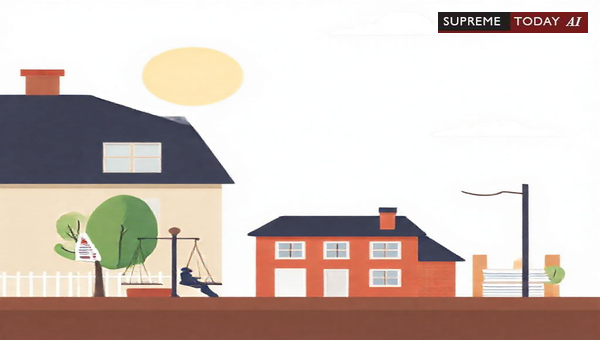
What Happens to a Tenant's Possession When the Landlord Turns Out to Be a
Tenants rarely anticipate that the person collecting their rent could one day be dragged before an insolvency tribunal. Yet when a landlord — particularly a corporate landlord — defaults on its debts and enters the under the (), the tenant's position becomes a genuine legal question: can the landlord (or its creditors) still recover the premises, terminate the lease, or demand rent, and what protections does the tenant enjoy?
The short answer is that the under of the shields the premises so long as the occupies or possesses them — but the tenant's own obligations, including payment of rent and taxes, do not vanish.
The Barrier: (1)(d) of the
On the insolvency commencement date, the declares a that, among other things, prohibits:
- the recovery of any property by an owner or lessor where such property is 2021 2 Supreme 528
This provision is directly relevant where the tenant is the . A lessor cannot recover the leased premises during the if the is using or holding them. The purpose is to keep the 's assets together and preserve the company as a during resolution 2017 2 Supreme 534.
Crucially, the protection is tied to the 's occupation or possession of the property — not to the tenant's personal comfort. Once that possession ends, the statutory bar falls away.
: A Critical Distinction
Courts have drawn a careful line between the two expressions used in (1)(d). According to judicial interpretation:
The expression occupied by would mean or be synonymous with being in actual physical possession of or being actually used by, in contra-distinction to the expression possession, which would connote possession being either constructive or actual and which, in turn, would include legally being in possession, though factually not being in physical possession. 2020 0 Supreme(SC) 616
In practical terms:
- Occupation requires actual physical presence or use of the premises.
- Possession is wider and may be constructive or legal — a tenant who has legal possession even without active physical use may still fall within the 's protection 2020 0 Supreme(SC) 616.
This distinction matters enormously for tenants who have sublet part of the premises, vacated portions, or hold the property through agents or licensees.
What the Does Not Do
A frequent misconception is that a landlord's insolvency freezes everything. It does not. Key limits on the protection include:
- The tenancy survives. The is a calm period for resolving insolvency; it neither terminates the lease nor extinguishes the rights and liabilities of the parties under general tenancy law.
- Rent and tax obligations continue. The landlord remains primarily liable for municipal taxes but retains the right to recover from the tenant the portion attributable to the tenant's use of the property 2018 0 Supreme(SC) 798.
- Essential services cannot be cut off. Supplies of to the cannot be suspended or terminated during the , even by the premises owner.
- Third parties get no shelter. The protects only the 's assets, not those of sureties or guarantors.
Parallel Principles from General Tenancy Law
The broader case law on landlord–tenant relations reinforces several points relevant here:
- A defaulting tenant stands in a weaker position. A tenant who fails to pay rent even after a decree loses much of the protective cushion available to an ordinary tenant; courts have generally held that decreed arrears remain and the liability persists until paid 1995 0 Supreme(All) 1013.
- The landlord–tenant relationship can transform into . Where the cause of action shifts from rent recovery to a money claim, the special remedies of a landlord (such as eviction for arrears) may no longer be available; the previous landlord becomes, in effect, a creditor 2025 0 Supreme(Mad) 3031 and 1997 0 Supreme(Mad) 170.
- Special statutory remedies depend on a subsisting relationship. The right to enforce a charge on a tenancy, for instance, belongs only to a person who is actually the landlord when the remedy is invoked 1914 0 Supreme(SC) 9.
- Notice requirements and procedures still apply. General tenancy statutes typically prescribe how arrears are realized and how ejectment proceeds, and tenants are usually entitled to an opportunity to pay up and avoid losing the holding 1992 0 Supreme(Gau) 24.
Read together with the , these principles suggest that while a tenant facing a defaulting landlord-debtor cannot simply be dispossessed during CIRP, neither can the tenant use the insolvency as a shield against legitimate rent and tax liabilities.
Practical Steps for Tenants in This Situation
If you learn that your landlord has entered insolvency, the following steps are generally advisable:
- Verify the CIRP status. Confirm whether a under is actually in force, since it applies only to corporate debtors undergoing CIRP.
- Redirect payments appropriately. Under , management of the 's affairs vests in the or ; rent payments should typically be made to, or as directed by, the IRP/RP 2021 2 Supreme 528.
- Keep paying rent and your share of taxes. Continuing performance protects the tenant against eviction claims for and preserves goodwill in any resolution plan negotiation.
- Challenge unlawful recovery attempts. Any attempt by the landlord or its agents to dispossess the -tenant during the can be restrained by the .
- Document possession. Since the protection hinges on occupation or possession, maintaining clear records of actual use of the premises strengthens the tenant's position 2020 0 Supreme(SC) 616.
Key Takeaways
- (1)(d) of the bars an owner or lessor from recovering property occupied by or in the possession of a during the 2021 2 Supreme 528.
- Occupied means actual physical use; possession extends to 2020 0 Supreme(SC) 616.
- The does not dissolve the tenancy — rent, taxes, and contractual obligations continue, generally routed through the .
- Tenants remain liable for their share of municipal taxes, which the landlord may recover from them 2018 0 Supreme(SC) 798.
- Once possession is lost, the 's protective umbrella over the premises effectively closes.
Tenants navigating a landlord's insolvency should treat the as a shield, not a sword — and, since outcomes turn on the specific facts and the stage of the insolvency process, obtaining advice tailored to the particular lease and proceedings is generally prudent.
#InsolvencyLaw #TenantRights #IBC2016 #Moratorium #LandlordTenant












