


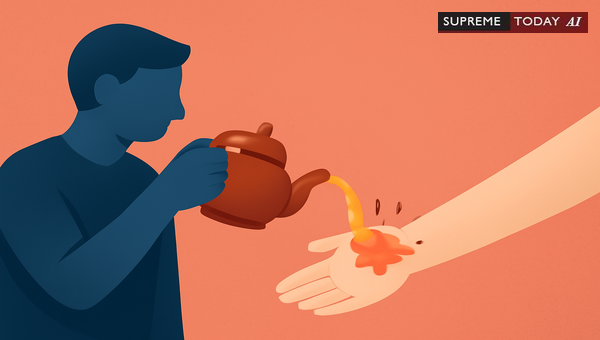
Does Throwing Hot Water Fall Under IPC Section 324?
In heated domestic disputes or public altercations, acts like throwing hot water can lead to serious legal consequences. But does such an action fall within the ambit of (IPC)? This question arises frequently in cases involving burns or scald injuries. deals with by or means, and understanding its scope is crucial for victims seeking justice and individuals facing charges.
This article breaks down the legal interpretation, key elements, judicial precedents, and practical considerations. Note: This is general information based on legal precedents and not specific legal advice. Consult a qualified lawyer for your situation.
What is ?
punishes whoever voluntarily causes by means of any instrument for shooting, stabbing, or cutting, or any instrument which, used as a weapon of offence, is likely to cause death, or by means of or any , or by means of any or any , or by means of any , or by means of any substance which it is deleterious to the human body to inhale, to swallow, or to receive into the blood, or by means of any animal 2022 4 Supreme 753.
The punishment can extend to three years imprisonment, or fine, or both. The core ingredients are:- : Intentional causing of .- : Defined under as , , or caused to any person 2022 4 Supreme 753.- : Including explicitly heated substances.
Accidental injuries do not qualify; the act must be deliberate 2022 4 Supreme 753.
Does Throwing Hot Water Qualify as a ''?
Yes, hot water can fall within if it is heated to a temperature capable of causing burns or injury, and thrown voluntarily to cause . The law recognizes heated substances as means likely to cause , encompassing liquids like water when scalding hot 2022 4 Supreme 753.
For instance, the provision explicitly includes or any , and hot water fits this as it can cause physical pain or burns upon contact 2022 4 Supreme 753. Courts assess the temperature and capacity to harm: lukewarm water might not suffice, but boiling or near-boiling water does.
Judicial Precedents: Hot Liquids and Heated Substances
Indian courts have applied to similar cases involving hot liquids, reinforcing that heated water aligns with the section.
In a notable case, the appellant was convicted under for pouring hot oil on the complainant, causing burn injuries. The court set aside a higher charge under () but upheld Section 324, stating: It is a case of causing by hot oil, and therefore the crime committed by the appellant falls within the purview of Section 324 2012 0 Supreme(MP) 1084. This precedent extends to hot water, as both are heated liquids causing burns.
Another judgment considered injuries by heated substances like a heated iron, holding them under if voluntary 2022 0 Supreme(SC) 1759. The principle applies analogously to hot water, which can scald skin similarly.
In cases downgrading from graver sections, courts have modified convictions to Section 324 for non-fatal hot liquid assaults. For example, pouring hot tea was factored into reducing a charge to Section 324
. These rulings emphasize injury nature over the exact substance, provided it's heated and harmful.
Further, in a group assault with stones and bottles, convictions under were upheld for causing , highlighting that everyday objects become '' when used offensively
.
The Crucial Element: Voluntariness and Intent
Not every splash of hot water triggers Section 324. The act must be voluntary—deliberate with knowledge it will cause 2022 4 Supreme 753.
- Intent matters: Throwing to injure satisfies this; accidental spills do not.
- Evidence needed: Eyewitnesses, medical reports showing burns consistent with hot water, and documentation of water temperature.
Courts scrutinize context. In one appeal, conviction under was altered to for knife and axe assaults causing simple hurts, stressing evidence of intent over lethality 2014 0 Supreme(Chh) 326. Similarly, for hot water, prosecution must prove deliberation.
Exceptions and Limitations
Section 324 does not apply in all scenarios:- Unintentional acts: Accidental pouring or self-defense claims may lead to acquittal or lesser charges like ().- Insufficient harm: If water isn't hot enough or injury is negligible, it may not qualify 2022 4 Supreme 753.- No direct causation: Incidental contact without deliberate throwing won't suffice.
In rioting cases, mere pelting of stones without specific attribution led to acquittals under higher sections, but Section 324 held for proven injuries 1996 0 Supreme(Bom) 11.
Practical Recommendations for Cases Involving Hot Water Assaults
For victims and lawyers:- Gather evidence: Medical certificates detailing burns, photos, and witness statements.- Document conditions: Note water temperature (e.g., from a kettle) to prove '' status.- Prosecution strategy: Emphasize voluntariness via motive (e.g., quarrel) and reject accident defenses.
For the accused:- Challenge intent: Prove accident or lack of heat capacity.- Medical scrutiny: Argue under Section 323 if no .
Appellate courts interfere sparingly with acquittals unless perverse, but review full evidence for convictions
.
Conclusion and Key Takeaways
Throwing hot water deliberately to cause typically falls under , as it qualifies as a likely to cause injury 2022 4 Supreme 753 2022 0 Supreme(SC) 1759. Precedents like hot oil pourings confirm this for scalding liquids 2012 0 Supreme(MP) 1084. However, voluntariness is key—accidents escape liability.
Key Takeaways:- Hot water = if scalding 2022 4 Supreme 753.- Prove intent and harm for conviction.- Similar cases (hot oil, tea) downgraded to Section 324 from graver charges.- Always collect medical and circumstantial evidence.
Understanding these nuances can guide legal strategies. If facing such a situation, seek professional legal counsel promptly to navigate the effectively.
#IPCSection324, #HotWaterAssault, #IndianPenalCode















