
SupremeToday Landscape Ad
AI Thinking

AI Thinking...

Searching Case Laws & Precedent on Legal Query.....!

Analysing the retrieved Case Laws

Scanned Judgements…!


AI Overview

AI Overview...

Should all co-owners be a party to the suit or can only one co-owner initiate the suit?

Main Points and Insights

  • Necessity of Joining All Co-owners:
  • Generally, a co-owner cannot unilaterally file a suit for eviction or exclusive possession without joining other co-owners as parties. The possession of one co-owner is presumed to be that of all co-owners, and a suit for eviction typically requires the inclusion of all co-owners unless specific conditions apply. ["2006 0 Supreme(Bom) 1369"], ["2012 0 Supreme(MP) 338"]
  • In cases where a co-owner claims exclusive title or possession, they must prove ouster of other co-owners; otherwise, possession is deemed to be on behalf of all co-owners. ["2025 0 Supreme(P&H) 306"], ["1979 0 Supreme(Ori) 48"]
  • The law recognizes exceptions, such as suits for partition or for actual joint possession, which are appropriate remedies for co-owners not in exclusive possession. ["2025 0 Supreme(P&H) 306"]

  • Parties in Suit and Necessary Parties:

  • The absence of a co-owner who claims a share or exclusive interest can be fatal if that co-owner is a necessary party, especially when the suit involves title or possession rights. Failure to implead such co-owners can render the suit defective. ["2024 0 Supreme(Ker) 439"], ["1985 0 Supreme(Ker) 401"]
  • In eviction or trespass suits, a co-owner or landlord can file the suit without necessarily including all co-owners, provided the suit does not seek to settle title disputes. The plaintiff (or landlord) is usually the dominus litis and can proceed independently unless the co-ownership rights are directly challenged. ["2019 0 Supreme(All) 1537"], ["1981 0 Supreme(All) 1108"]
  • The courts have clarified that in eviction proceedings, it is not always necessary to join all co-owners unless the dispute pertains to their rights or title. For example, a co-owner or colandlord can file a suit for eviction against the tenant without requiring other co-owners to be parties, unless their rights are directly in dispute. ["2019 0 Supreme(All) 1537"]
  • Conversely, if a co-owner claims exclusive possession or title, and other co-owners' rights are affected, they must be joined as necessary parties; otherwise, the suit may be dismissed or considered defective. ["2024 0 Supreme(Ker) 439"]

  • Legal Principles and Exceptions:

  • The law permits a co-owner to initiate a suit for possession, partition, or injunction, but not typically for ejectment unless they establish exclusive possession or ouster of others. ["00400087776"], ["2025 0 Supreme(P&H) 958"]
  • In cases involving ouster, the co-owner claiming exclusive possession must prove denial of rights by others; otherwise, possession is presumed joint. ["2025 0 Supreme(P&H) 306"]
  • The Supreme Court and various judgments emphasize that a suit by one co-owner for eviction or possession generally does not require the presence of all co-owners unless title or exclusive rights are contested. ["2006 0 Supreme(Bom) 1369"], ["2012 0 Supreme(MP) 338"]

Analysis and Conclusion

  • Can only one co-owner initiate the suit? Yes, a single co-owner can initiate a suit for possession, injunction, or eviction without joining all co-owners, especially when the suit concerns possession or trespass. The courts recognize that a co-owner's possession is presumed to be on behalf of all, and suits for possession or injunction are often maintainable by one co-owner.
  • However, if the suit involves title, partition, or claims of exclusive possession, the other co-owners or co-sharers must be joined as necessary parties. Failure to do so can make the suit defective or liable to dismissal.
  • In eviction proceedings, the law is more flexible, allowing a co-owner or landlord to file suit without necessarily including all co-owners unless their rights are directly involved. ["2019 0 Supreme(All) 1537"], ["1981 0 Supreme(All) 1108"]

  • Main Takeaway:

  • For possession or trespass cases, a suit can be initiated by one co-owner without requiring all co-owners to be parties, provided the suit does not seek to settle title or partition.
  • For disputes involving title, partition, or exclusive rights, all co-owners must be made parties to ensure the suit is effective and binding.

References:- ["2025 0 Supreme(P&H) 306"]- ["2024 0 Supreme(Bom) 573"]- ["2024 0 Supreme(Ker) 439"]- ["1979 0 Supreme(Ori) 48"]- ["2019 0 Supreme(All) 1537"]- ["2012 0 Supreme(MP) 338"]- ["2025 0 Supreme(P&H) 958"]

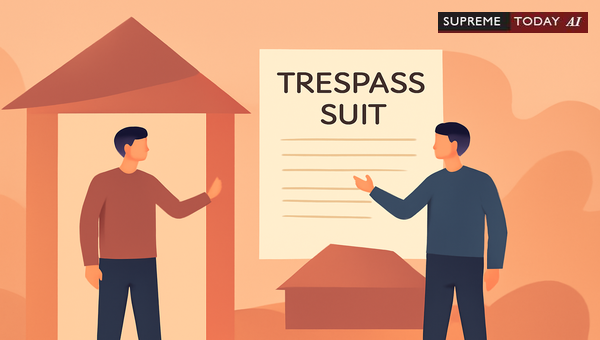
Trespass Suits by Co-Owners: When Is Exclusive Possession Required in Indian Law?

Can One Co-Owner Sue for Trespass Alone in India?

Owning property jointly with family or partners can lead to disputes, especially when one co-owner feels another—or a third party—is trespassing. A common question arises: should all the co-owners be a party to the suit or can only 1 co-owner initiate the suit for trespass? This issue is particularly relevant in India, where co-ownership rights are governed by principles of undivided shares and collective use.

In this post, we'll break down the legal landscape, drawing from key judgments and procedural rules under the Code of Civil Procedure (CPC). Note that this is general information based on established case law and should not be taken as specific legal advice—consult a qualified lawyer for your situation.

Understanding Co-Ownership Rights in India

Co-owners hold undivided shares in the property, meaning each has the right to use and occupy the entire property collectively, without excluding others. As outlined in relevant precedents, each co-owner's right to use and occupy the property is mutual and without the necessity of mutual consent for each act of use, provided it does not prejudice others.

GOH GIOK BEE LWN. GOH KIAN SENG - 2014 MarsdenLR 937

A co-owner is generally not liable to pay rent to another for occupation unless there's an agreement or wrongful exclusion.

GOH GIOK BEE LWN. GOH KIAN SENG - 2014 MarsdenLR 937

This mutual right underscores why trespass claims among co-owners are tightly restricted.

When Can a Single Co-Owner Initiate a Trespass Suit?

Generally, no—a single co-owner cannot file a trespass suit alone against another co-owner or third party unless they have been ousted or dispossessed. The rationale is clear: trespass requires interference with exclusive possession, but co-owners enjoy joint possession by default.

Key principle: An action of trespass cannot be maintainable if the co-owner is not ousted from using the co-owned property.

LAW KING PO & ORS vs SACOFA SDN BHD & ORS - 2008 MarsdenLR 264

Courts have consistently held that actual ouster is prerequisite for such actions among co-owners.

LAW KING PO & ORS vs SACOFA SDN BHD & ORS - 2008 MarsdenLR 264

GOH GIOK BEE LWN. GOH KIAN SENG - 2014 MarsdenLR 937

Without ouster, one co-owner's use doesn't constitute trespass against another, as all share the right to the whole property.

Why All Co-Owners Should Typically Be Parties to the Suit

To ensure comprehensive adjudication, all co-owners must generally be joined as parties. This prevents fragmented decisions that could prejudice absent owners' undivided interests.

Under Order 1 Rule 10 CPC, courts may implead parties at any stage if their presence is necessary for effective decree. However, the plaintiff is the master of the suit, and no person can be added as a party against their wishes unless the court concludes that the presence of the applicant is necessary for the proper disposal. 2013 0 Supreme(P&H) 1111

In trespass or injunction suits involving joint property, non-joinder often renders the suit not maintainable. For instance, in a suit for permanent injunction restraining a co-owner from cutting trees or farming, any relief including an interim injunction cannot be allowed unless all co-owners are impleaded as party to suit. 2013 0 Supreme(All) 103

Similarly, in partition disputes, courts frame issues like: whether all properties are included in the suit and all co-sharers, co-parceners, co-owners or joint owners are made parties to the suit. 2021 0 Supreme(Del) 2133 2019 0 Supreme(All) 517 2015 2 Supreme 153

Failure to join all co-owners can lead to dismissal, as seen where all the co-sharers or co-owners of the suit properties are not impleaded as parties. 2017 0 Supreme(Bom) 1600

Insights from Case Law on Impleadment and Trespass

Judgments reinforce the need for complete parties:

  • In a tenant ejectment appeal, a co-owner's impleadment application under Order 1 Rule 10 was rejected because their presence wasn't necessary or proper for the determination of the real matter in dispute. The court noted disputes over title belong in separate suits. 2013 0 Supreme(P&H) 1111

  • Another ruling stressed: All the co-owners are necessary parties to a suit as the plaintiff cannot appropriate the right for enjoyment of the property only for himself. 2013 0 Supreme(All) 103

  • In property disputes post-death, courts examine shares but remand if appellate courts fail to assess all co-owners' claims properly. 2015 2 Supreme 153

These cases highlight that necessary parties are those without whom no effective decree can pass, while proper parties aid complete adjudication. 2013 0 Supreme(P&H) 1111

Exceptions: When One Co-Owner May Act Alone

There are limited scenarios where a lone suit is viable:- Actual ouster or dispossession: If a co-owner is wrongfully excluded, they can sue for trespass independently.

LAW KING PO & ORS vs SACOFA SDN BHD & ORS - 2008 MarsdenLR 264

- Disputes not touching ownership, like pure possession claims without ouster (though often still requiring joinder).

Even here, courts may direct impleadment to safeguard all interests.

Practical Recommendations for Co-Owners

Facing a potential trespass dispute? Consider these steps:- Verify ouster: Confirm actual dispossession before filing solo.- Join all co-owners: Implead them as plaintiffs or defendants to avoid dismissal.- Seek partition if needed: For ongoing conflicts, a partition suit ensures metes and bounds division, with all parties joined. 2021 0 Supreme(Del) 2133- Apply for impleadment judiciously: Use Order 1 Rule 10 if essential, but respect the plaintiff's choice. 2013 0 Supreme(P&H) 1111- Maintain status quo: Courts may grant interim relief only with all parties present. 2013 0 Supreme(All) 103

In injunction suits, prove irreparable harm beyond compensable damages. 2013 0 Supreme(All) 103

Conclusion and Key Takeaways

Typically, all co-owners should be parties to a trespass suit to protect collective rights and enable holistic resolution—unless ouster allows a single action. This approach aligns with Indian jurisprudence, emphasizing equity in joint ownership.

LAW KING PO & ORS vs SACOFA SDN BHD & ORS - 2008 MarsdenLR 264

GOH GIOK BEE LWN. GOH KIAN SENG - 2014 MarsdenLR 937

Key takeaways:- Co-owners share joint possession; no trespass without ouster.- Non-joinder risks suit failure under CPC Order 1 Rule 10.- Prioritize comprehensive parties for lasting justice.

Property disputes can escalate—early legal consultation prevents costly errors. For tailored advice, reach out to a property law expert.

References:1.

LAW KING PO & ORS vs SACOFA SDN BHD & ORS - 2008 MarsdenLR 264

: Trespass maintainable only post-ouster.2.

GOH GIOK BEE LWN. GOH KIAN SENG - 2014 MarsdenLR 937

: Co-owner use rights.3. Additional precedents on impleadment and partition as cited. #PropertyLaw #CoOwnerRights #TrespassSuit
Chat Download
Chat Print
Chat R ALL
Landmark
Strategy
Argument
Risk
Chat Voice Bottom Icon
Chat Sent Bottom Icon
SupremeToday Portrait Ad
logo-black

An indispensable Tool for Legal Professionals, Endorsed by Various High Court and Judicial Officers

Please visit our Training & Support
Center or Contact Us for assistance

qr

Scan Me!

India’s Legal research and Law Firm App, Download now!

For Daily Legal Updates, Join us on :

whatsapp-icon Back to top







