




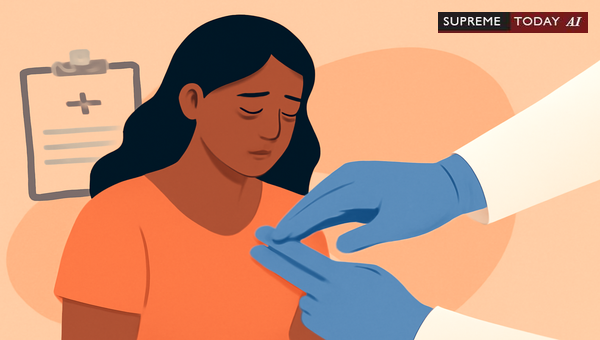
Declared in India
In the realm of sexual assault investigations, few practices have drawn as much controversy as the . Often performed during medical examinations of rape survivors, this invasive procedure has been widely criticized for its lack of scientific validity and profound impact on victims. If you've ever wondered about the two finger test and its legal standing, this post breaks it down based on key judicial decisions and official guidelines in India.
The , also known as the , involves a doctor inserting two fingers into the victim's vagina to assess laxity or the hymen's condition, purportedly to determine prior sexual activity or virginity. However, Indian courts have unequivocally condemned it as , , and a gross violation of . Let's explore the legal landscape, judicial stance, and why this practice must end.
Legal Status of the in India
The is explicitly prohibited by judicial directives and government guidelines. The has issued clear instructions stating that the test must not be conducted for establishing rape or sexual violence, emphasizing that the hymen's status is irrelevant 2023 0 Supreme(Del) 2005. Courts have reinforced this, holding that it violates rights to , , and
Rajivgandhi VS State Rep. by the Inspector of Police - Crimes ()
2019 0 Supreme(SC) 1394.Key points include:- Prohibition by Authorities: Guidelines from the ban the test, noting its irrelevance and rights violations 2023 0 Supreme(Del) 2005.- No : The test is and cannot infer sexual history or consent 2023 0 Supreme(Del) 2005
Rajivgandhi VS State Rep. by the Inspector of Police - Crimes ()
.- Judicial Bans: and have declared it , especially for minorsRajivgandhi VS State Rep. by the Inspector of Police - Crimes ()
2022 0 Supreme(Mad) 1557 2019 0 Supreme(SC) 1394.- Trauma-Inducing: It causes additional harm to survivors, making it ethically and legally impermissibleRajivgandhi VS State Rep. by the Inspector of Police - Crimes ()
.Landmark Judicial Pronouncements
Indian courts have consistently struck down the . In a pivotal ruling, it was held that the test violates the victim’s right to , , and
Rajivgandhi VS State Rep. by the Inspector of Police - Crimes ()
. The went further, declaring it , with no and is degrading and irrelevant2019 0 Supreme(SC) 1394.The directed the government to ban the practice, recognizing its nature and harmful effects 2022 0 Supreme(Mad) 1557. These rulings emphasize that medical exams must prioritize victim consent and avoid cruel procedures 2023 0 Supreme(Del) 2005.
Other cases highlight the test's unreliability. For instance, the rejected it as a reliable indicator of penetration, stating, The did not accept the finger test as a reliable test to infer penetration... PW10 herself stated that the vagina admitted one finger only with difficulty. The finger test is not a sure test to give an opinion suggesting penetration2019 0 Supreme(Ker) 576. Similarly, medical opinions note, It is therefore submitted that the two finger test has no evidentiary or medical/2020 0 Supreme(Del) 963.
Government Guidelines and Enforcement
The 's guidelines are unequivocal: the has no place in modern 2023 0 Supreme(Del) 2005. Courts have ordered training for medical professionals, curriculum reviews, and strict enforcement 2022 8 Supreme 298. Violations constitute misconduct, with directives for disciplinary action.
In cases involving minors, courts scrutinize such tests closely. One ruling upheld a conviction based on victim testimony alone, underscoring that guilt can rest on uncorroborated testimony of the if it is cogent and reliable, without needing flawed tests 2020 0 Supreme(Del) 963. Another noted that even if a two finger test could be easily done on the vagina of the , it doesn't prove consent or age 2018 0 Supreme(Guj) 1164.
Rights Violations and Medical Ethics
The test infringes on , embodying cruel, inhuman treatment. It's described as and degrading, causing re-traumatization
Rajivgandhi VS State Rep. by the Inspector of Police - Crimes ()
. Ethical medical practice demands respect for survivors' autonomy.Related cases illustrate risks. In a molestation acquittal, courts stressed that prosecution must prove cases , rejecting vague claims of finger insertion without clear
. This reinforces that invasive tests add little value and may undermine justice.
International and Human Rights Perspective
Globally, the UN Declaration of Basic Principles of Justice for Victims of Crime condemns virginity and two-finger tests as , harmful, and a violation of human rights2024 0 Supreme(Telangana) 85. India's stance aligns with this consensus, prioritizing survivor-centered justice.
Exceptions? None in Practice
While theoretically limited to consensual, non-degrading contexts, current law prohibits it outright. It cannot determine consent, history, or virginity—scientifically invalid and legally barred 2023 0 Supreme(Del) 2005
Rajivgandhi VS State Rep. by the Inspector of Police - Crimes ()
.Recommendations for Stakeholders
To eradicate this practice:- Medical Institutions: Adhere strictly to bans and train staff.- Authorities: Enforce guidelines statewide with penalties.- Education: Revise curricula to exclude the test 2022 8 Supreme 298.- Survivors: Know your rights—report violations.- Legal Professionals: Challenge its admissibility in court.
Conclusion and Key Takeaways
The is legally dead in India—, outdated, and harmful. Courts and guidelines mandate its immediate cessation to protect victims' 2019 0 Supreme(SC) 1394 2023 0 Supreme(Del) 2005. This shift promotes reliable forensics like over archaic methods.
Key Takeaways:- Banned by and ministries.- Violates and .- ; no evidentiary value.- Focus on .
This post provides general information based on public legal sources and is not legal advice. Consult a qualified lawyer for specific cases.
References
- 2023 0 Supreme(Del) 2005: Ministry guidelines prohibiting the test.
- 2019 0 Supreme(SC) 1394: High Court on unconstitutionality.
Rajivgandhi VS State Rep. by the Inspector of Police - Crimes ()
: rights violations.- 2022 0 Supreme(Mad) 1557: ban directive.
- 2022 8 Supreme 298: Enforcement orders.
- 2024 0 Supreme(Telangana) 85: UN human rights view.
- 2019 0 Supreme(Ker) 576: Unreliability in penetration cases.
- 2020 0 Supreme(Del) 963: No evidentiary value.
- 2018 0 Supreme(Guj) 1164: Contextual medical opinion.
: Prosecution burdens.















