


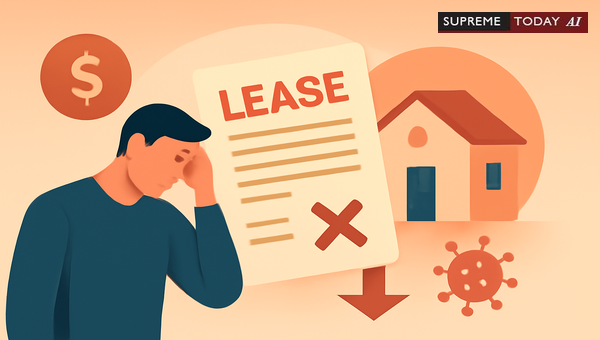
Can a Lease Be Cancelled Unilaterally After ?
In today's volatile economy, tenants facing financial hardships often wonder: Can a lease be cancelled unilaterally after ? This question arises particularly when the initial lease term has passed, but ongoing obligations like lock-in periods or renewal clauses bind the parties. While tenants may feel trapped by mounting debts, Indian law—primarily governed by the , and the —imposes strict rules on . This post breaks down the legal landscape, drawing from key principles and case insights to help you navigate this complex issue.
Disclaimer: This article provides general information based on legal precedents and is not a substitute for professional legal advice. Consult a qualified lawyer for advice tailored to your situation.
Overview of Lease Termination by Tenant
When a tenant seeks to terminate a lease early due to financial difficulties, the process hinges on the lease agreement's terms and statutory provisions. Leases are contracts, and parties are bound by their explicit conditions. Unilateral cancellation—meaning one-sided termination without mutual consent—is rarely straightforward, especially post- (i.e., after the primary term ends but during lock-in or renewal phases).2011 0 Supreme(Raj) 952 2011 0 Supreme(SC) 925
Financial crisis alone does not automatically dissolve the lease. Courts emphasize adherence to contractual obligations, such as rent payments and property maintenance, excluding normal wear and tear.2011 0 Supreme(Raj) 952 2011 0 Supreme(SC) 925
Key Legal Principles Governing
1. Contractual Obligations and Breach
Lease agreements outline duties like timely rent payment. Failure to comply empowers the landlord to terminate, but the reverse—tenant-initiated exit—requires following specified procedures. For instance, if a tenant breaches terms, landlords can evict via civil court, but tenants lack similar unilateral power without clauses permitting it.2011 0 Supreme(Raj) 952 2011 0 Supreme(SC) 925
In one case, the authority terminated a lease for failure to construct within the stipulated period, upholding the need for notice before termination in breach scenarios. The court noted: The authority has the power to terminate a lease in case of breach, and a notice must be served before termination.2024 0 Supreme(Cal) 426
2. Lock-in Periods: A Major Barrier
Many commercial and residential leases include a , often 1-3 years, during which neither party can terminate without penalties. Even after the initial term (), if within lock-in, unilateral cancellation by the tenant triggers liability for remaining rent.2011 0 Supreme(Mad) 1907 2010 0 Supreme(Mad) 3424
A lease clause exemplifies this: After the expiry of lock in period, only the LESSEE, if for any reason, wishes to terminate the agreement prior to the expiry of Lease period, shall serve upon a notice in writing to the LESSOR in their behalf at-least 3 (Three) months in advance. In other words the LESSOR cant terminate the agreement before the expiry of lease agreement.2020 0 Supreme(Gau) 505
Premature exit during lock-in may require paying rent for the unexpired portion, as seen in disputes where tenants faced full liability.2010 0 Supreme(Mad) 3424
Another agreement states: In the event of the Lessee terminates the present agreement before the completion of the First Two Years and Six Months, the Lessee shall be liable to pay the Lease Rent for the balance of the months remaining.2014 0 Supreme(Del) 411
3. Doctrine
allows frustration if unforeseen events make performance impossible. However, financial difficulties typically do not qualify unless they render the contract utterly impossible—not merely more burdensome.1959 0 Supreme(Kar) 82
Courts distinguish mere hardship from impossibility, rejecting frustration claims in economic downturns alone.
4. Notice Requirements Post-
After the primary term, leases may auto-renew or require notice for exit. Unilateral cancellation without notice exposes tenants to damages. For example: That in case Lessee desires to terminate the Lease Agreement, for any reason, whatsoever, earlier than the initial period of Three Years, the Lessee shall give two months notice in writing, in advance.2013 0 Supreme(Del) 915
In a matter, due service of notice per lease proviso was upheld, preventing premature termination.
April Two Thousand and Twenty Two PRESENT The Hon`ble Mr.Justice B.PUGALENDHI CRL MP(MD) No.11292
2024 0 Supreme(Cal) 426Implications for Tenants Attempting Unilateral Cancellation
Liability for Remaining Rent: Vacating without compliance may mean paying arrears or . One ruling affirmed liability for unpaid rent due to non-punctual payments, leading to termination.2014 0 Supreme(Del) 411
Eviction Proceedings: Landlords can sue for possession and damages. In a case, failure to pay rent via dishonored cheques triggered automatic termination under Clause 17.2013 0 Supreme(Del) 915
Criminal Risks Rare: Disputes over breach are civil, not criminal, absent fraud. A court quashed FIRs under , holding: The mere breach of agreement does not necessarily constitute cheating and .2020 0 Supreme(Gau) 505
RERA Applicability: Long-term 'leases' (e.g., 999 years) may be treated as sales under , but standard leases fall outside unless registered projects involve sales.2018 0 Supreme(Bom) 1358
Integrating Case Law: Real-World Examples
Consider a scenario from : A tenant's conduct prompted a vacation request letter, but the 11-month lease terms governed. Post-term unilateral moves were contested.
April Two Thousand and Twenty Two PRESENT The Hon`ble Mr.Justice B.PUGALENDHI CRL MP(MD) No.11292
In another, termination followed breach without construction, with notice served per Clause 4.2024 0 Supreme(Cal) 426
Arbitration cases reinforce contract interpretation: Tribunals reject claims if clauses clearly bar unilateral exits without notice.2018 0 Supreme(Mad) 731
Recommendations for Tenants in Financial Crisis
Review the Lease Thoroughly: Check for lock-in, notice (e.g., 2-3 months), and penalty clauses.2011 0 Supreme(Mad) 1907
Negotiate Mutually: Approach landlords for rent waivers, reductions, or buyouts—often more viable than litigation.2021 Supreme(Online)(Mad) 73582
Serve Proper Notice: Even post-efflux, written notice is crucial to mitigate claims.2020 0 Supreme(Gau) 505
Seek Legal Counsel: Professionals can assess frustration arguments or defenses against eviction.2011 0 Supreme(Raj) 952
Document Everything: Keep records of payments and communications to counter breach allegations.
Conclusion and Key Takeaways
Unilaterally cancelling a lease after is fraught with risks, primarily due to lock-in periods, notice mandates, and limited frustration grounds. Tenants typically cannot exit without consequences like rent liability or court battles. Prioritize negotiation and compliance to avoid escalation.
Key Takeaways:- Adhere to lease terms; breaches favor landlords.2011 0 Supreme(SC) 925- Financial woes ≠ frustration; prove impossibility.1959 0 Supreme(Kar) 82- Always give notice; unilateral moves invite penalties.2010 0 Supreme(Mad) 3424- Consult experts early for personalized strategies.
By understanding these principles, tenants can make informed choices. For specific guidance, reach out to a legal professional.
References:2011 0 Supreme(Raj) 952 2011 0 Supreme(SC) 925 2011 0 Supreme(Mad) 1907 2010 0 Supreme(Mad) 3424 1959 0 Supreme(Kar) 82
April Two Thousand and Twenty Two PRESENT The Hon`ble Mr.Justice B.PUGALENDHI CRL MP(MD) No.11292
2024 0 Supreme(Cal) 426 2020 0 Supreme(Gau) 505 2014 0 Supreme(Del) 411 2013 0 Supreme(Del) 915 #LeaseTermination, #TenantRights, #IndianRentalLaw















