


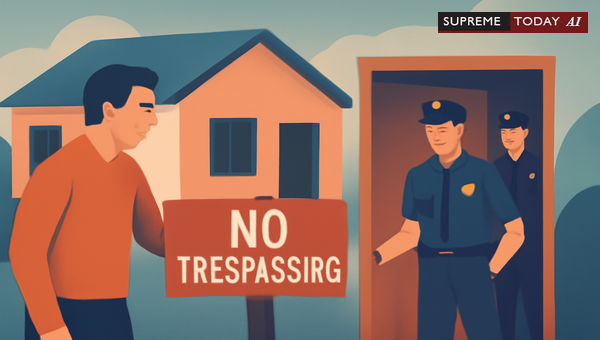
Illegal Police Occupation: Know Your Property Rights
Imagine returning home to find police personnel occupying your property without permission or legal basis. This scenario, while alarming, has been addressed in several court cases, highlighting the tension between law enforcement duties and fundamental property rights. The question of Illegal Occupation of the Police Person against the Rightful Owner raises critical concerns about , , and remedies available to property owners.
In this comprehensive guide, we explore key legal principles, court findings, and practical steps for protecting your property. While this information draws from established case law, it is for educational purposes only and not a substitute for professional legal advice. Consult a qualified attorney for your specific situation.
Understanding Illegal Occupation by Police Personnel
Illegal occupation occurs when police or other authorities take control of private property without the owner's consent, a written contract, or valid legal authority. Courts have consistently ruled such actions as arbitrary and unconstitutional, emphasizing the protection of property rights under the law.
For instance, in a notable case, the court determined that the occupation of property by police personnel can be deemed illegal and unconstitutional if there is no written contract or consent from the property owner. This was evident where police occupied a religious premises without legal basis, leading to a declaration of their actions as unlawful 1989 0 Supreme(Mad) 549.
Key Court Findings on Police Occupation
- No Legal Basis Equals Illegal Action: Without formal agreement or consent, even state authorities like police must vacate. The absence of protocols renders occupation invalid 1989 0 Supreme(Mad) 549.
- Judicial Mandate for Restoration: Courts have a duty to restore possession to the rightful owner when police or advocates unlawfully occupy property. This deters future illegal actions 2018 0 Supreme(Mad) 3979.
- Damages as Remedy: Rightful owners may be awarded damages for the period of unlawful occupation, reinforcing that such possession cannot be tolerated 1989 0 Supreme(Mad) 549.
These principles underscore that property rights prevail over unauthorized state actions.
The Court's Role in Restoring Possession
Judges play a pivotal role in addressing illegal occupations. The judiciary has a clear mandate to intervene in cases of illegal occupation, particularly when advocates or police unlawfully occupy property. Courts ensure prompt restoration and hold occupiers accountable 2018 0 Supreme(Mad) 3979.
In broader contexts, similar rulings apply to unauthorized occupants. For example, under the , Findings of illegal occupation by an unauthorized occupant, against the claim of a true owner, rendered by the Court, operate as the lawful basis for eviction of such illegal occupant through execution proceedings. No fresh suit for any further adjudication is necessary.2019 0 Supreme(All) 2784. This extends to police-related disputes, allowing efficient eviction without prolonged litigation.
Additionally, cases involving police quarters highlight misuse risks. One petitioner complained about a higher official's illegal occupation of police quarters, leading to retaliatory actions by police, which courts scrutinized for 2018 0 Supreme(Mad) 1857.
Awarding Damages for Unlawful Occupation
Victims of illegal occupation aren't left without recourse. Courts often award compensation to cover losses from arbitrary actions. This remedy not only compensates but also deters future violations 1989 0 Supreme(Mad) 549.
Related precedents reinforce this. In licensee disputes, courts clarify that terminated licenses strip any claim to possession, entitling owners to vacant handover and usage charges. The defendant's status on the suit property was held to be that of a licensee, and he could not have acquired any right or title in the suit property once the license stood terminated by the owners.2022 0 Supreme(P&H) 1481. While not directly police-related, this principle applies analogously to unauthorized police stays.
Legal Principles Established
From the reviewed cases, several core principles emerge:
- Illegal Occupation Defined: Any possession without owner's consent or legal basis is illegal 1989 0 Supreme(Mad) 549.
- Restoration Authority: Courts can order immediate return of property to owners 2018 0 Supreme(Mad) 3979.
- Damages Availability: Compensation for infringement of rights is typically granted 1989 0 Supreme(Mad) 549.
- Eviction Efficiency: Court findings enable direct execution for eviction, no new suits needed 2019 0 Supreme(All) 2784.
- Police Accountability: Even in official capacities, adherence to protocols is mandatory; misuse invites judicial review 2018 0 Supreme(Mad) 1857.
These tenets protect owners from both private and state encroachments.
Broader Context: Police Actions and Property Disputes
Police involvement in property matters isn't limited to direct occupation. Raids or investigations can intersect with occupation claims, but courts demand strict compliance. For example, in searches under , procedural lapses like non-production of FIRs or improper seizures vitiate trials, indirectly safeguarding property integrity 2013 0 Supreme(Bom) 1057.
In another vein, opened against complainants of police illegalities have been quashed as violative of , with directives for compensation in misuse cases 2018 0 Supreme(Mad) 1857. This is a clear case of misuse of power by the Police to open a history sheet against a person for no compelling reasons.
Property owners facing such issues should document everything, from initial occupation to communications, to build a strong case.
Practical Recommendations for Property Owners
If you suspect illegal occupation by police or others:
- Document Thoroughly: Gather evidence like photos, witness statements, and correspondence.
- Seek Immediate Legal Help: File for or to restore possession.
- Pursue Damages: Claim or compensation for losses.
- Leverage Court Precedents: Reference cases like those cited for judicial support 1989 0 Supreme(Mad) 549 2018 0 Supreme(Mad) 3979.
Property owners may also apply for FIR copies under RTI if police actions underpin the occupation, ensuring transparency 2015 0 Supreme(Ker) 1272.
Conclusion and Key Takeaways
The judiciary firmly opposes illegal occupation by police personnel, prioritizing rightful owners' rights through restoration, eviction, and damages. Cases affirm that cannot be tolerated, empowering owners to reclaim their property efficiently 1989 0 Supreme(Mad) 549.
Key Takeaways:- Unauthorized occupation by police is generally illegal without consent or contract.- Courts typically intervene to restore possession and award remedies 2018 0 Supreme(Mad) 3979.- Document and act swiftly to enforce your rights.
While these insights provide general guidance, laws vary by jurisdiction. Always consult a legal professional for tailored advice. Stay vigilant—your property rights are protected by law.
References:- 1989 0 Supreme(Mad) 549- 2018 0 Supreme(Mad) 3979- 2019 0 Supreme(All) 2784- 2018 0 Supreme(Mad) 1857- 2022 0 Supreme(P&H) 1481- 2013 0 Supreme(Bom) 1057- 2015 0 Supreme(Ker) 1272
#IllegalOccupation












