


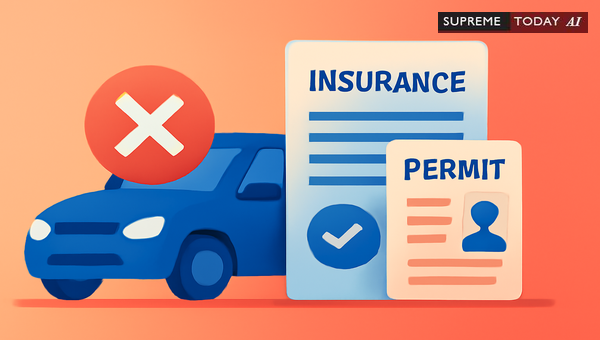
Driving Without a Permit: Is It a of Your Insurance Policy?
In the fast-paced world of road travel, especially for commercial vehicles, compliance with legal requirements is crucial. But what happens when a driver takes the wheel without the proper permit? Is Driving a Motor Vehicle Without having Permit a of the Insurance Policy? This question strikes at the heart of insurance coverage in India, governed primarily by the . For vehicle owners, drivers, and insurers, understanding this can mean the difference between claim approval and outright denial.
This post explores the legal implications, drawing from court rulings and statutory provisions. Note: This is general information based on precedents and not specific legal advice. Consult a qualified lawyer for your situation.
Overview of the Legal Issue
Under the , operating a transport vehicle without a valid permit isn't just a traffic violation—it's often seen as a of the insurance policy. This breach typically voids the insurer's obligation to reimburse claims arising from accidents involving such vehicles. Courts have repeatedly emphasized that insurance policies are contracts tied to , and flouting permit rules undermines the entire agreement.
PUNEET KUMAR VS NATIONAL INSURANCE CO. LTD. -
2018 0 Supreme(HP) 2160For instance, mandates: no person shall drive a transport vehicle... without a valid permit. Violating this directly impacts insurance validity, as policies require adherence to permit conditions.
PUNEET KUMAR VS NATIONAL INSURANCE CO. LTD. -
2018 0 Supreme(HP) 2160Key Legal Principles: Explained
A occurs when the violation goes to the root of the contract, defeating its purpose. Driving without a permit fits this category because:
Policy Terms Violation: Insurance covers vehicles used lawfully. Without a permit, the vehicle is operated illegally, breaching core conditions. Courts have ruled that this justifies .
NILESH TIWARI VS UNITED INDIA INSURANCE CO. LTD. - Consumer ()
Bir Singh VS Shriram General Insurance Co. Ltd. - Consumer ()
Statutory Mandate: Section 66 is non-negotiable for transport vehicles like taxis or buses. As one ruling notes, using a vehicle as a taxi sans permit constitutes a .
NILESH TIWARI VS UNITED INDIA INSURANCE CO. LTD. - Consumer ()
Insurer's Defense under Section 149(2): Insurers can avoid liability if they prove the breach. However, they must show it was fundamental and linked to the accident. 2016 0 Supreme(Del) 730 2016 0 Supreme(Del) 787
Exact court language reinforces this: The absence of a valid permit at the time of an accident constitutes a of the insurance policy.
PUNEET KUMAR VS NATIONAL INSURANCE CO. LTD. -
Court Findings and Precedents
Indian courts have consistently upheld claim denials in permit violation cases. In multiple judgments, vehicles used commercially without permits led to insurer exoneration. For example:
- Cases involving taxis or buses without permits saw claims rejected, with courts stating such use violates both the terms of the insurance policy and the Motor Vehicles Act.
NILESH TIWARI VS UNITED INDIA INSURANCE CO. LTD. - Consumer ()
Bir Singh VS Shriram General Insurance Co. Ltd. - Consumer ()
However, nuances exist. Not every breach is fatal. In 2020 0 Supreme(Kar) 1294, the court held: Deviation in plying the vehicle outside the permit area does not amount to of the terms of the policy. Here, driving beyond territorial limits wasn't deemed fundamental unless fraud was proven. The insurer couldn't absolve liability solely on permit violation, emphasizing that the breach of conditions of the permit cannot be construed as a purpose for the permit.
Similarly, in 2020 0 Supreme(J&K) 660, the insurer's defense under Section 149(2)(a)(i) was scrutinized: the insurer can very well seek to avoid its liability... if it pleads and demonstrates that there has been breach of condition of the policy excluding the use of vehicle... for a purpose not allowed by the permit. But if the permit was valid at the accident time, the defense failed.
Distinguishing Permits from Driving Licences
Permit issues (Section 66) differ from driving licence breaches (Sections 3 and 5). While both can be breaches, courts treat them variably:
Licence Cases: In 2021 0 Supreme(Raj) 446, allowing a light motor vehicle licence holder to drive a heavier vehicle long-term was called a . Yet, the court upheld policy validity and driver's licence findings, dismissing insurer appeals. 2021 0 Supreme(Raj) 1145 echoed: if the owner allowed the driver to drive the vehicle for a long time though he was holding only a driving licence of light motor vehicle, the same is a .
But outcomes vary; tribunals often presume premium payment and policy validity absent proof of cancellation. 2021 0 Supreme(Raj) 1145
In 2020 0 Supreme(Mad) 2466, driving a motorcycle without a licence was a clear case of breach, but insurers must prove fundamentality per .
Exceptions and Counterarguments
The rule isn't absolute. Courts may allow claims if:
No Causal Link: The breach didn't contribute to the accident. Insurers bear the burden: the insurer must prove that the breach was fundamental and contributed to the accident. 2016 0 Supreme(Del) 730 2016 0 Supreme(Del) 787
Valid Permit Exists: Even with minor deviations, coverage holds if no fraud. 2020 0 Supreme(Kar) 1294
: Insurers might pay claimants first, then recover from owners. This applies in licence cases but less so for permits. 2020 0 Supreme(Mad) 2466
These exceptions highlight the fact-specific nature of claims.
Practical Implications for Vehicle Owners and Drivers
Commercial Operators: Always secure permits for transport use. Verify renewals under Section 81. 2020 0 Supreme(J&K) 660
Accident Scenarios: Post-accident, check permit status immediately. Lack thereof risks claim denial.
Insurer Strategies: Prove breach with documents; argue causality.
For claimants, third-party rights under Section 149 offer protection, but policy breaches complicate recovery.
Recommendations
For Vehicle Owners: Conduct pre-trip compliance checks. Use authorized drivers with matching licences/permits.
For Insurers: Document breaches thoroughly to invoke .
For Claimants/Legal Practitioners: Gather evidence on permit validity and accident causation. Challenge 'fundamental' labels with precedents like 2020 0 Supreme(Kar) 1294.
Conclusion and Key Takeaways
Generally, driving a motor vehicle without a valid permit is treated as a under the Motor Vehicles Act, leading to insurance claim denials. Supported by rulings like
PUNEET KUMAR VS NATIONAL INSURANCE CO. LTD. -
2018 0 Supreme(HP) 2160NILESH TIWARI VS UNITED INDIA INSURANCE CO. LTD. - Consumer ()
, this protects insurers from unlawful risks. Yet, exceptions for non-causal breaches or valid permits provide hope, as seen in 2020 0 Supreme(Kar) 1294 and others.Key Takeaways:- Comply with Section 66 to safeguard coverage.- Breaches must be proven fundamental and accident-linked.- Permits ≠ Licences; each has distinct rules.- Seek professional advice for claims.
Stay legal on the roads—your insurance depends on it. References:
PUNEET KUMAR VS NATIONAL INSURANCE CO. LTD. -
2018 0 Supreme(HP) 2160NILESH TIWARI VS UNITED INDIA INSURANCE CO. LTD. - Consumer ()
Bir Singh VS Shriram General Insurance Co. Ltd. - Consumer ()
2016 0 Supreme(Del) 730 2016 0 Supreme(Del) 787 2021 0 Supreme(Raj) 446 2021 0 Supreme(Raj) 1145 2020 0 Supreme(Kar) 1294 2020 0 Supreme(Mad) 2466 2020 0 Supreme(J&K) 660 #MotorInsurance #DrivingPermit #LegalInsights















