


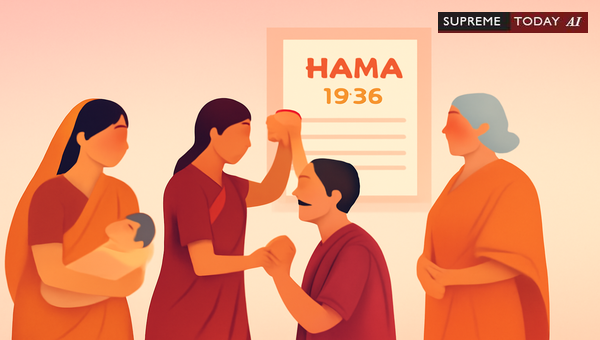
Is Father-Only Adoption Valid if Wife Left Decades Ago?
In the realm of family law, adoption can be a deeply personal and legally complex decision. A frequent question arises: In Case of Adoption Solely by the Father Wife has Left Decades Ago can the Adoption be Said to be Valid? This query touches on key provisions of the (HAMA), particularly consent requirements for married individuals and the effects of such adoptions on property rights. While validity hinges on specific circumstances like the wife's status, understanding related doctrines like 'relation back' provides crucial context. This post explores these issues under Hindu law, drawing from judicial precedents and statutory provisions. Note: This is general information, not legal advice. Consult a qualified lawyer for your situation.
Understanding Adoption Validity Under
Under HAMA, adoption rules differ for married males and females. For a married male Hindu (the father), requires the adoption to be by the husband with the consent of his wife. However, consent is not needed if the wife has:- , or- , or- Been declared by a court.
If the wife has 'left decades ago,' it may raise arguments about her effective absence or renunciation, but courts typically require proof. Mere abandonment doesn't automatically dispense with consent; judicial validation might be needed. Once valid, the adoption's effects—like inheritance—are governed by , which deems the child part of the adoptive family from the date of adoption2023 1 Supreme 239.
This leads to the , historically prominent in widow adoptions but limited post-HAMA. Though the query concerns a father, parallels exist in assessing retroactive rights when one spouse is absent.
The : Historical and Modern View
Historical Context
Pre-HAMA Hindu law applied the 'relation back' doctrine, deeming an adopted son by a widow as born at the time of the adoptive father's death. This preserved family continuity and inheritance rights retroactively 1967 0 Supreme(SC) 150 2008 0 Supreme(AP) 310.
Under the Hindu Law an adopted son continues the line of the adoptive father for secular and spiritual purposes and when a widow adopts a son to her husband the makes sonship retroactive from the moment of the death of the late husband. 2005 0 Supreme(All) 2356
Changes Under
HAMA revolutionized this. states:- The adopted child is deemed the child of adoptive parents from the date of adoption.- All birth family ties sever from that date.- Crucially, the child shall not divest any person of any estate vested before the adoption2023 1 Supreme 239 2023 0 Supreme(Kar) 342.
Thus, relation back is curtailed. It doesn't allow reclaiming properties vested or alienated pre-adoption 1962 0 Supreme(SC) 185 1960 0 Supreme(Kar) 12.
The fiction employed in the first part of this Section is applicable for all purposes from the date of adoption and the person adopted would be considered having been born in the family only on the date of adoption and not before. 1991 0 Supreme(Kar) 376
In father-only adoptions (if valid sans consent), similar limits apply—no retroactive divesting of others' rights.
Judicial Interpretations and Key Cases
Courts have clarified these limits:
Sawan Ram vs. Kalawanti
The held an adopted child by a widow joins the deceased husband's family but doesn't retroactively affect others' inherited rights2023 1 Supreme 239.
Banabai vs. Wasudeo
This case confirmed HAMA curtailed relation back; adopted sons can't claim pre-vested properties 2022 0 Supreme(Bom) 189.
Other precedents reinforce:- Whether the doctrine of 'Relation back' applies to this case and what is the effect of adoption after enactment of the adoption Act. Courts assessed if claims relate to adoptive father's assets post-HAMA 2024 Supreme(Online)(Bom) 6966 2024 Supreme(Online)(Bom) 10926 2024 Supreme(Online)(Bom) 10486.- In , adopted sons can't reopen prior partitions: of the , which makes adoption effective only from the date of adoption, preventing the adopted son from reopening the partition 1991 0 Supreme(Kar) 376.
Limitations on Alienated Properties
Adopted children can't challenge pre-adoption sales or gifts if valid (e.g., for ). All lawful alienations made by defendant No. 1 will bind appellant/plaintiff under relation back limits 2025 1 Supreme 28.
In one case, sales before adoption () bound the later-adopted son (), as relation back doesn't disturb legal alienations by like widows 2005 0 Supreme(All) 2356.
Where , namely, a Hindu widow, or co-parceners, alienate property for , there was no justification to disturb such rights of purchases 2005 0 Supreme(All) 2356.
Application to Father-Only Adoption
If a father's sole adoption is deemed valid (e.g., wife deemed incapable), the child's rights start from adoption date. No broad relation back to pre-wife-departure events. This protects , like siblings' shares or prior transfers.
From sources: Adopted child's interest is subject to the but limited by HAMA, as in Shripad Gajanan Suthankar Vs. Dattaram (AIR 1974 SC 878) 2018 0 Supreme(Kar) 633.
In succession, widows' enlarged estates () aren't fully divested: Adopted child shall not divest any person of any estate which vested him or her before adoption 2025 1 Supreme 28.
Practical Implications and Exceptions
- Properties alienated pre-adoption: Binding on adopted child 1963 0 Supreme(SC) 115 1981 0 Supreme(AP) 335.
- Vested rights: Unaffected 1967 0 Supreme(SC) 150
K. Satyamma (died) per LR A-5 VS Bhoodevi - Current Civil Cases (2014)
. - Gifts/Sales: Valid if accepted/delivered; concurrent findings upheld 2025 1 Supreme 28.
Exceptions are narrow, tied to adoptive parent's undisposed estate.
Conclusion and Key Takeaways
Adoption solely by a father when his wife left decades ago may be valid under HAMA if consent exceptions apply, but requires case-specific proof. Post-adoption, the is largely obsolete, with rights effective only from adoption date—no divesting prior vested estates or challenging old alienations.
Key Takeaways:- Verify wife consent or exceptions before adopting.- HAMA protects pre-adoption interests.- Consult precedents like Sawan Ram and Banabai.- Time property transfers carefully.
Legal practitioners must review timelines and vested rights. For personalized guidance, seek expert advice.
References:- 1967 0 Supreme(SC) 150 2023 1 Supreme 239 1962 0 Supreme(SC) 185 2022 0 Supreme(Bom) 189 1963 0 Supreme(SC) 115 1981 0 Supreme(AP) 335
K. Satyamma (died) per LR A-5 VS Bhoodevi - Current Civil Cases (2014)
2024 Supreme(Online)(Bom) 6966 2025 1 Supreme 28 2018 0 Supreme(Kar) 633 2005 0 Supreme(All) 2356 1991 0 Supreme(Kar) 376 #HinduAdoptionLaw #HAMA1956 #RelationBackDoctrine












